.png)
 1 hour ago
17
1 hour ago
17
Article content
Article content
Article content
Latest News
Article content
Article content
Article content
Article content
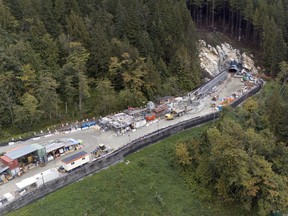
A project by FortisBC to build a pipeline to supply natural gas to the Woodfibre LNG export facility near Squamish has been dumping effluent into a creek for over a year in violation of its environmental permit.
Article content
A Postmedia analysis of weekly water quality reports published by Fortis showed the volume of wastewater discharged from a water treatment plant at a construction site associated with the project exceeded allowable amounts almost every single day from March 2025 to the end of March 2026.
Article content
On at least 35 of those days, more than twice the allowable amount of effluent was discharged into East Creek, on Howe Sound’s western shore, south of Squamish.
Article content
“Fortis has failed to comply with their permit since as early as September 2024, I believe, by dumping pollution loaded with heavy metals into the Átl’ka7tsem/Howe Sound biosphere, which is a fragile and recovering ecosystem,” said Tracey Saxby, executive-director of My Sea To Sky, an environmental non-profit. Átl’ka7tsem is one of three Squamish Nation names for Howe Sound.
Article content
Article content
Between January 2025 and March 2026, Fortis dumped 365 million litres more effluent into a creek than its permit allowed.
Article content
Article content
—Nathan Griffiths
Article content
Article content
This week’s early season hot spell pushed electricity demand to a new record for the month of May, says B.C. Hydro.
Article content
Customers across B.C. used 7,600 megawatts, “the highest level ever seen in May, especially this early in the month,” said the Crown utility in a news release Tuesday. The peak hourly demand was on Monday and, with temperatures expected to start dropping again Wednesday, that is likely to remain the peak.
Article content
In spite of the spike, B.C. Hydro said its clean-electricity grid was up to the task of meeting the demand. And it pales in comparison with demand during the coldest months of winter.
Article content
The record was likely reached in part because of the proliferation of air conditioners across the province as temperatures rise.
Article content
—Joseph Ruttle
Article content
Article content
India is facing inflation threats from heat waves and below normal rainfall this year, creating new economic pressures for policymakers already grappling with soaring energy costs.
Article content
Article content
Temperatures of as high as 47 C gripped parts of northern India last week, and power demand has surged to a record in the country as households cranked up air conditioners and fans to cool down. The government is also predicting below-normal rains between the June and September monsoon season, which is crucial for farming activity.
Article content
For most of last year, inflation in India languished below the Reserve Bank of India’s target of four per cent, largely because of declining vegetable prices. This year’s adverse weather conditions will likely push inflation above five per cent in the fiscal year beginning April 1, exceeding the RBI’s projection of 4.6 per cent, according to economists.
Article content
“The ongoing heat wave and erratic monsoon will all impart upside risk to food prices that have remained well behaved so far,” said Dhiraj Nim, an economist at Australia & New Zealand Banking Group. The rain forecasts “along with high energy prices and agricultural inputs costs, make for a perfect storm for food prices down the line,” he said. Nim expects inflation to average close to five per cent this fiscal year.





























 Bengali (BD) ·
  English (US) ·