.png)
 1 hour ago
6
Article content
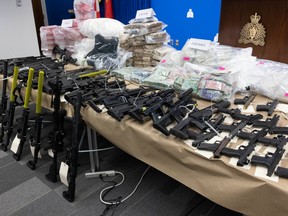
British Columbia’s new conservative government has vowed to overhaul the province’s drug policies, but perhaps that should include an investigation into whether local RCMP leaders downplayed the dangers of “safer supply.”

THIS CONTENT IS RESERVED FOR SUBSCRIBERS
Enjoy the latest local, national and international news.
- Exclusive articles by Conrad Black, Barbara Kay and others. Plus, special edition NP Platformed and First Reading newsletters and virtual events.
- Unlimited online access to National Post.
- National Post ePaper, an electronic replica of the print edition to view on any device, share and comment on.
- Daily puzzles including the New York Times Crossword.
- Support local journalism.
SUBSCRIBE FOR MORE ARTICLES
Enjoy the latest local, national and international news.
- Exclusive articles by Conrad Black, Barbara Kay and others. Plus, special edition NP Platformed and First Reading newsletters and virtual events.
- Unlimited online access to National Post.
- National Post ePaper, an electronic replica of the print edition to view on any device, share and comment on.
- Daily puzzles including the New York Times Crossword.
- Support local journalism.
REGISTER / SIGN IN TO UNLOCK MORE ARTICLES
Create an account or sign in to continue with your reading experience.
- Access articles from across Canada with one account.
- Share your thoughts and join the conversation in the comments.
- Enjoy additional articles per month.
- Get email updates from your favourite authors.
THIS ARTICLE IS FREE TO READ REGISTER TO UNLOCK.
Create an account or sign in to continue with your reading experience.
- Access articles from across Canada with one account
- Share your thoughts and join the conversation in the comments
- Enjoy additional articles per month
- Get email updates from your favourite authors
Sign In or Create an Account
or
Article content
An obscure document produced by the B.C. RCMP, which originates from late 2025 and was provided to National Post last week by a concerned community member, raises questions about whether the mounties have been fully honest with the public about the failures of “harm reduction.”
Article content
Article content
Advertisement 1
Article content
The 59-page slide deck delves into the myriad failures of the province’s harm-reduction policies. The presenter named on the cover page, Sgt. Arvind Dongriah, is the B.C. RCMP’s drug decriminalization co-ordinator and a member of its Investigative Services and Organized Crime division.
Article content
By signing up you consent to receive the above newsletter from Postmedia Network Inc.
Article content
Dongriah did not present original investigative findings, and instead relied on publicly available materials and media reports that he — and presumably his colleagues — evidently found credible. His sources included the National Post, CBC and several academic papers and government resources (my own reporting was cited five times).
Article content
From the content of the sergeant’s presentation, it is clear that the B.C. RCMP believed in 2025 that safer supply drugs were being diverted to the black market; that organized gangs were redistributing these drugs across Canada; and that decriminalization and the availability of safer supply may have worsened the opioid crisis.
Article content
Dongriah also questioned whether safer supply is supported by reputable research and acknowledged that there was a “failure to address diversion risks and associated harms” because, not only had reports of diversion been “initially dismissed,” there had been “no evaluation” of its existence or effects.
Article content
Advertisement 2
Article content
The sergeant recommended that safer supply drugs be consumed under medical supervision — a reform that British Columbia had already implemented by then, and which will soon be coming to Ontario — and that there be a public awareness campaign to educate Canadians about “the risks of increased hydromorphone availability.”
Article content
Article content
The person who provided me the slide deck, Victoria-based entrepreneur Jason Heit, framed it as an internal RCMP document. His interpretation was supported by the cover page, which warns that it is “property of the RCMP” and that it is not to be “reclassified, copied, reproduced, used in whole or part or further disseminated” without the mounties’ consent.
Article content
When I emailed the B.C. RCMP’s communications team, they contested that the document was private. They wrote that the slide deck had been presented at the National Association of Drug Diversion Investigators (NADDI) conference in October 2025, and that it was “readily available” through NADDI’s online learning centre.
Article content
However, this American online learning centre is an incredibly obscure (and sparse) resource that only NADDI’s membership can access. Individuals can only become NADDI members if they professionally work in drug control (the organization reviews and approves all applications), and Googling Dongriah’s presentation yielded no relevant search results for me.
























 Bengali (BD) ·
 English (US) ·