.png)
 1 day ago
12
Some of the best-written anime villains made us root for them without even realising that we have started sympathizing with them. They lose because the world breaks them, teaches them the wrong lessons, and leaves them too damaged to imagine another way forward.
Forget paper-thin antagonists craving world domination just because. These six figures were forged in the fires of trauma, betrayal, and unbearable systemic failure. Ranked by the sheer devastation of their final fates, the cruel irony of their paths, and the bitter pang of what could have been, these anime outcasts deserved far more than the tragic curtains they drew.
6 Twice Was Too Good for a World That Used and Betrayed Him
 Jin Bubaigawara (Twice) from My Hero Academia. [Credit: Bones]
Jin Bubaigawara’s crime was simply wanting a safe place to land. Crippled by isolation and an identity-shattering duplicate trauma, Jin found his first true family in the Meta Liberation Army and the League of Villains—people who finally embraced his fractured psyche. His quirk, Double, made him a walking weapon, but his heart remained fiercely loyal and protective of his comrades.
When Hawks ruthlessly exploited that vulnerability under the guise of deep-cover surveillance, Jin’s tragic demise felt less like justice and more like state-sanctioned cruelty. He deserved safety and real rehabilitation, not a manipulated betrayal. He sits at #6 because his vulnerability was absolute, though his violent enmeshment with a terrorist syndicate left his fate uniquely tragic yet difficult to pardon.
5 Pain’s Tragic Fall Made His Ending Even More Devastating
 Pain from Naruto: Shippuden. [Credit: Pierrot]
Nagato didn’t set out to become a monster; he was a terrified war orphan molded by the brutal geopolitical chess moves of the Hidden Leaf Village. Witnessing the deaths of his parents and his soulmate, Yahiko, hollowed him out into the god of Pain, driven by the harrowing belief that only mutual, catastrophic suffering could permanently halt humanity’s endless cycle of war.
When Naruto finally broke through his philosophy, Nagato didn’t die unrepentant, he used his final life force to resurrect everyone he killed in Konoha. He deserved a world that understood peace before war tore him apart, earning #5 because his ideological redemption carried immense emotional weight, even if the body count he left behind precluded any happy ever after.
4 Madara Was Wrong About Peace, But He Understood Its True Cost
 Madara from Naruto: Shippuden. [Credit: Pierrot]
For decades, Madara fought an unwinnable generational war, losing every brother he had to the meat grinder of the Warring States period. His vision for the Infinite Tsukuyomi—a dream world free of pain, loss, and conflict—was totalizing madness, yet it was born from a profound, agonizing disillusionment with reality. Madara saw right through the hollow hypocrisies of the shinobi system, recognizing that “peace” was just a fragile truce built on mountains of corpses.
He didn’t deserve to rule the world, but he deserved a life where he didn’t have to become a ghost to seek solace. He takes #4 because his grand-scale tragedy was monumental, though his hubris and manipulation made his ultimate betrayal by Black Zetsu a grimly ironic poetic justice.
3 Stain’s Ideals Were Twisted, But His Heart Was in the Right Place
In a commercialized hero society obsessed with merchandise, clout, and superficial rankings in My Hero Academia, Chizome Akaguro (the Hero Killer) saw a systemic rot that no one else dared to address. While his methods were ruthlessly bloody and legally indefensible, his core critique of fake heroes prioritizing fame over altruism forced an entire nation to look in the mirror. Stain wasn’t fighting for power or personal gain; he was violently attempting to purge a corrupt institution to resurrect true selflessness.
He deserved an ideological reckoning and a society willing to reform, not just containment in Tartarus. He lands at #3 because his razor-sharp moral clarity exposed the hypocrisy of his world, even if his lethal fanaticism made compromise impossible.
2 Geto Represents the Youth Who Gave Up on Hope and Dreams
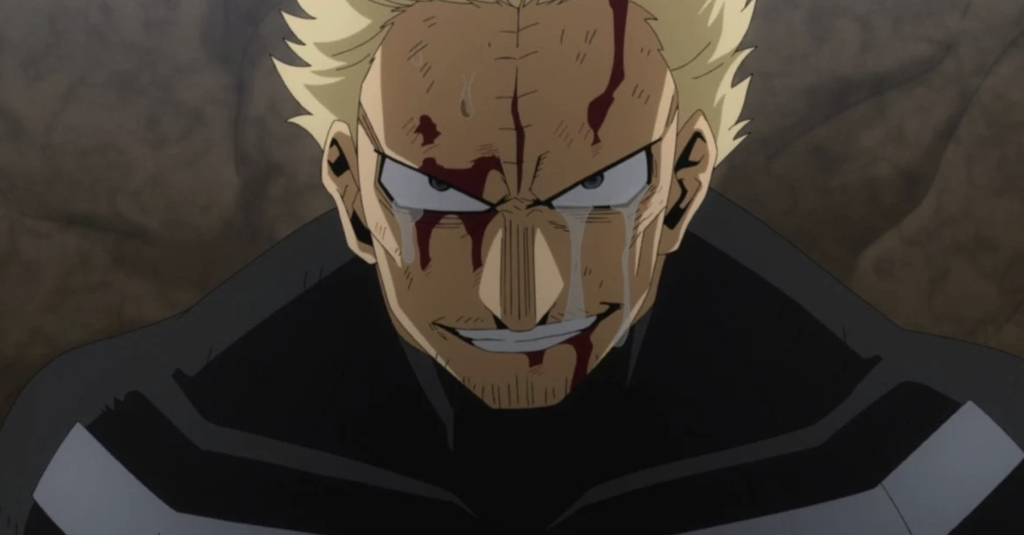
 Suguru Geto from Jujutsu Kaisen. [Credit: MAPPA]
Suguru Geto started as a righteous jujutsu sorcerer striving to protect the weak, but carrying the psychic and physical burden of consuming cursed spirits slowly poisoned his soul. The breaking point wasn’t a grand evil design; it was the exhausting, daily reality of protecting ungrateful, non-sorcerer masses who sneered at the very people dying for them, compounded by Riko Amanai’s senseless murder.
Geto’s descent into the belief that non-sorcerers were “monkeys” needing culling was a heartbreaking monument to burnout, disillusionment, and institutional failure. He deserved a mentor who noticed his drowning mind before it was too late. He sits at #2 because his transformation from idealistic protector to genocidal cult leader is one of anime’s most devastating portraits of psychological collapse.
1 Meruem’s Final Moments Remain Among Anime’s Most Heartbreaking
 Meruem and Gungi from Hunter × Hunter. [Credit: Madhouse]
Born as the ultimate apex predator designed to conquer humanity, the Chimera Ant King Meruem began his existence as a cruel, arrogant tyrant. Yet, through his quiet, recurring games of Gungi with a blind, unassuming human girl named Komugi, the king underwent a staggering philosophical and emotional evolution. He learned the value of human fragility, art, and love, ultimately choosing to spend his final, radiation-poisoned breaths playing one last game with the person who taught him what it meant to have a soul.
Meruem didn’t need conquest anymore; he just wanted connection. He deserved a full lifetime to explore that newfound humanity, cementing his spot at #1 for an ending that masterfully subverted expectations and delivered an unforgettable emotional gut-punch.
Do you agree with our ranking? Drop your thoughts in the comments below and let’s debate!















 Bengali (BD) ·
 English (US) ·