.png)
 1 hour ago
8
1 hour ago
8
There’s a recurring, valuable strain of thought about The Odyssey director Christopher Nolan that says his cinema is a cinema of clocks. Time as antagonist, time as structure. It is the very thing his characters combat with slide rules and stopwatches. In Tenet‘s case, their own bodies move backward through it (it was a great movie, though I know not everyone agrees).
Nolan’s movies are also obsessed with control. His heroes are usually men who believe that if the mechanism is understood well enough, entropy itself might be outmaneuvered. Homer’s Odyssey, the epic Nolan is adapting, asks for surrender instead. Odysseus doesn’t outplan the sea. He, somehow, survives it, badly. He weeps on beaches, at the mercy of uncaring gods.
This is the conflict that viewers should ponder as The Odyssey, featuring Matt Damon in the lead role, releases later this month. Of course, Nolan can do a movie on a big scale. He has done so time and again. The question is whether the muscle memory that he used to make Interstellar and Inception would serve him for this myth. Below are five reasons this could be the least “Nolan” film of his career.
| Title | The Odyssey |
| Director | Christopher Nolan |
| Premise | Based on Homer’s epic poem, the film follows Odysseus’ perilous decade-long journey home to Ithaca after the Trojan War. |
| Cast | Matt Damon, Tom Holland, Anne Hathaway, Zendaya, Lupita Nyong’o, Robert Pattinson, Charlize Theron, Jon Bernthal, Benny Safdie, John Leguizamo, Elliot Page, Mia Goth |
| Release Date | July 17, 2026 |
1 It Marks Christopher Nolan’s First Full-Fledged Fantasy Film
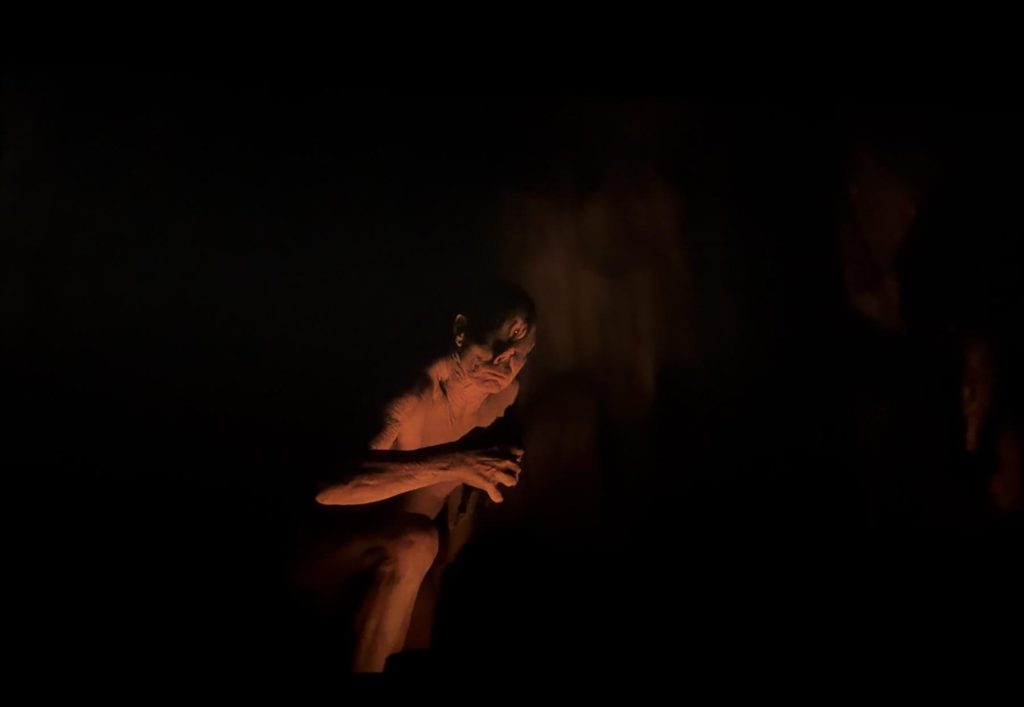 A cyclops lurks in the shadows in Christopher Nolan’s The Odyssey | Credits: Universal Pictures
Nolan has played with the impossible before. But he always had an alibi (so to speak). The twisting corridor in Inception (perhaps the most perplexing film of Nolan’s career) is a dream, and can be explained away. The wormhole in Interstellar, which seems to be the product of a fantasist’s feverish imagination, comes with the weight of scientist Kip Thorne’s consultancy behind it. Nolan is a director who has built a brand on making the fantastic feel earned and believable. This is why his characters go overboard with exposition like Leonardo DiCaprio‘s Dom Cobb in Inception.
The Odyssey offers no such cover. This is a story that has to let gods be gods and monsters be monsters. Nolan’s ability to suspend rationalization of the myth at least once would make or break the film.
2 It Leaves Little Room for Narrative Twists
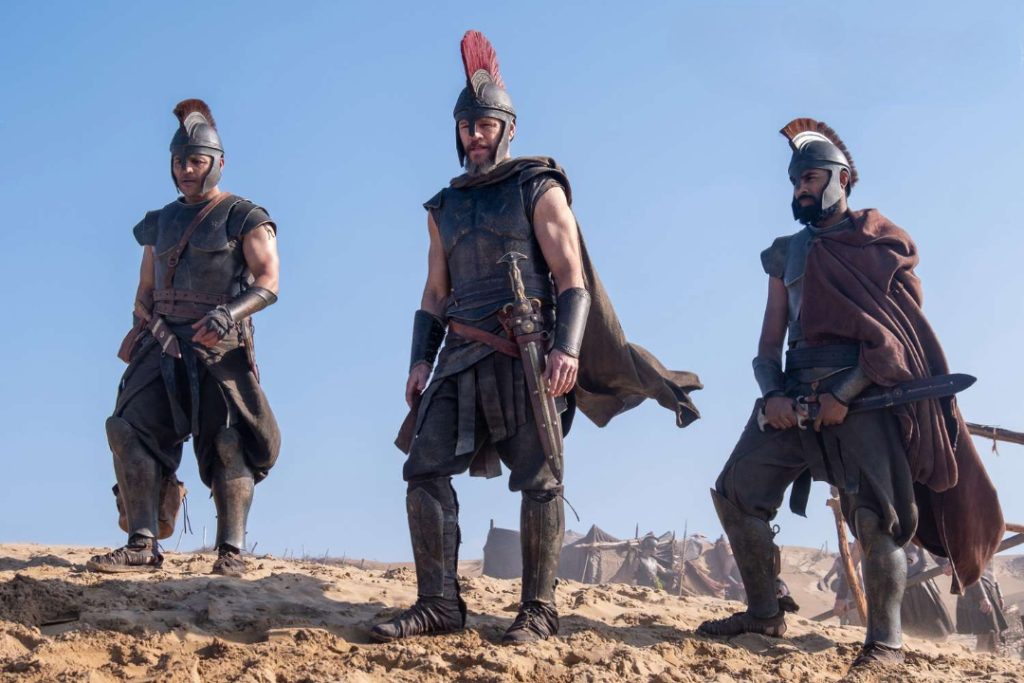 A still from The Odyssey | Credits: Universal Pictures
The Trojan Horse aside, Homer’s epic isn’t a puzzle box. There are no mysteries for the audience in Homer’s epic tale. Along with The Iliad, it is often regarded as one of the foundational myths of Western civilization. It is not the anticipation of something that makes this tale so loved, but rather the beauty of the process.
Most of Nolan’s movies, though, are built on the reveal. There is the temporal sleight of hand, and the moment the film folds it into itself in the final fifteen minutes, it asks you to reconsider everything that came before. His movies are not as twisty as, say, M. Night Shyamalan’s The Sixth Sense (which features one of the 1990s movies’ best plot twists). But there are tiny reveals that suffuse them. Even Oppenheimer, based on the life and career of a real figure, ends with a revelation that’s widely known (that the world will now forever live in danger of nuclear armageddon) but nevertheless hits hard.
There is no equivalent gesture available to Nolan in The Odyssey. The ending is three thousand years old and not his to rewrite. Any deviation will be met with outrage. What’s left is a director known for narrative architecture forced to work in narrative accumulation instead. And that is a different craft entirely, and one he’s never had to prove he has.
3 It Forces Him to Make Extensive Use of CGI
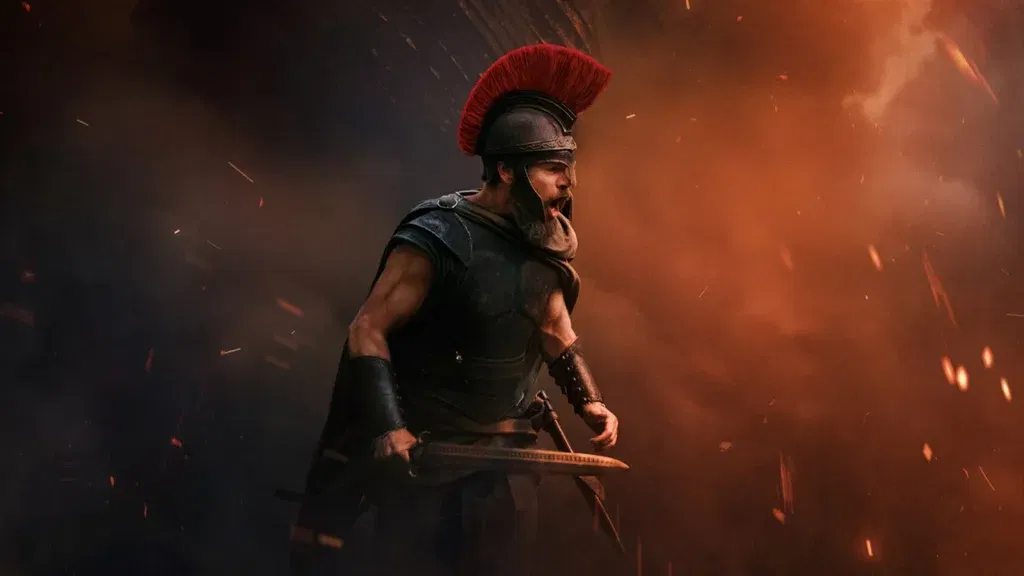 Matt Damon as Odysseus in The Odyssey | Credits: Universal Pictures
Nolan, it is widely known, is almost fundamentalist about the use of practical effects. It is well documented, and at this point, it’s closer to theology than technique. It is not that he hates CGI; he does use it. He just prefers to use actual tangible objects wherever possible, even if it stretches the budget. He blew a real jet in Tenet and built an actual rotating hallway in the aforementioned scene in Inception.
But in The Odyssey, there’s no practical way to summon Poseidon’s wrath, no way to make it look like a creature has only one eye in the middle of its forehead. There cannot be any camera trick to depict Scylla. Of course, we hear he is still trying to buy back as much reality as the budget would allow. But myth? It has a way of outrunning even Nolan’s stubbornness. The tell will be how visible the seams are. It will be whether he can make CGI blend smoothly into the real thing.
4 It Is Christopher Nolan’s First Adaptation of a Literary Epic
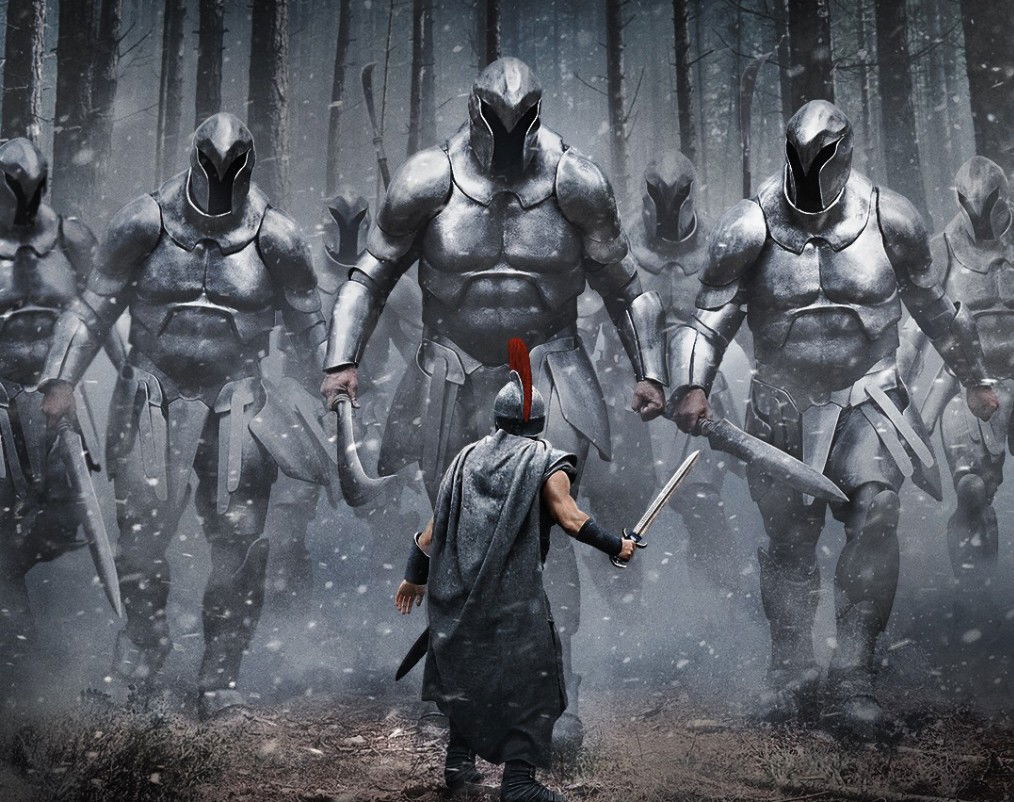 A still from The Odyssey | Credits: Universal Pictures
Nolan writes his own scripts, or writes them alongside his brother, and has for two decades built an authorial mythology around originality even when working within genre (The Dark Knight, perhaps his best movie) or history (Oppenheimer, Dunkirk). The Odyssey, the movie, is attributed to Nolan and Homer, and this is a curious form of a co-writer credit for a man who has not had to work within any other form other than his own for so long.
Nolan agrees on the huge scale and how the movie “truly contains all stories“. He said in November last year (via Empire):
There’s a bit of everything in it. I mean, it truly contains all stories. As a filmmaker, you’re looking for gaps in cinematic culture, things that haven’t been done before. And what I saw is that all of this great mythological cinematic work that I had grown up with – Ray Harryhausen movies and other things – I’d never seen that done with the sort of weight and credibility that an A-budget and a big Hollywood, IMAX production could do.”
Adapting an epic involves accepting the digressive nature of the text, its overall weirdness, and the aspects of it that do not conform to screenplay convention, because, well, it is two and a half millennia older. Like the epic it is based on, named characters in The Odyssey number in the dozens. The question isn’t whether Nolan can adapt; it’s whether he can adapt without sanding the epic poem down until it resembles something he would have written anyway. We do expect non-linear storytelling shenanigans as Nolan is obsessed with time, and he cannot help but tinker with the proper sequence of a story.
5 It Has to Satisfy Millennia of Expectations
-

Credits: Universal Pictures
-

Credits: Universal Pictures
-

Credits: Universal Pictures


Every blockbuster answers to its marketing department and its opening weekend. The Odyssey, however, also has to answer to Alexandrian scholars, to a few thousand years of classroom syllabi, to a civilization that considers this piece of literature to be fundamental. All the controversies surrounding the casting of this movie, all of the problems associated with accents, all of the questions concerning authenticity vs. mythicism, are all symptoms of a work of literature that is considered by half the world to belong to them.
Nolan has made films that people have argued about before (The Dark Knight trilogy, for instance), but he has never made one that people have been arguing about since the ancient world.
Do you think Christopher Nolan’s The Odyssey will live up to the legendary epic? Share your expectations in the comments below.
The Odyssey hits US theaters on July 17, 2026.
















/https%3A%2F%2Fsportsmole-media-prod.s3.gra.io.cloud.ovh.net%2Fuploads%2F2026%2F06%2Fkyle-rodden-cal-sport-media-sipa-usa-ivory-coast-winger-yan-diomande-gestures-on-june-25-2026-6a417eae132a5831825833.jpg)
/https%3A%2F%2Fsportsmole-media-prod.s3.gra.io.cloud.ovh.net%2Fuploads%2F2026%2F06%2Fthor-wegner-defodi-images-norway-striker-erling-haaland-watches-on-on-june-26-2026-6a417f27894d6515047302.jpg)
 Bengali (BD) ·
  English (US) ·