.png)
 14 hours ago
9
14 hours ago
9
M. Night Shyamalan‘s The Sixth Sense (1999) remains a remarkably rewarding watch even when you know what Bruce Willis’ character doesn’t figure out until the end. The ending should, theoretically, make this mystery less exciting. And yet, that isn’t the case. The M. Night Shyamalan movie has one of the biggest twists in all of cinema, and still the rest of the supernatural thriller remains entertaining even if you know about the twist. As of September 8, 2026, the movie ranks seventh on the worldwide Netflix movie chart (via FlixPatrol).
The movie features Willis as child psychologist Malcolm Crowe and Haley Joel Osment as Cole Sear. Cole is a sensitive boy who has the ability to see dead people. Shyamalan and his cinematographer Tak Fujimoto shoot the movie in a way that makes ordinary rooms feel crowded with lost souls. But it is the tenderness of the movie that stays with you after the scares. This is why it is surprising that the movie did not win a single Oscar. The biggest snub ever? There’s fierce competition, but I’d certainly put it in the conversation.
M. Night Shyamalan’s Thriller Has One of Cinema’s Best Twists
Malcolm has been dead since the first scene. Shyamalan even shows us the event that kills him. But then, he lets our familiarity with movie storytelling mislead us. When the story moves forward, we simply assume he survived. It is, however, weird in hindsight that we do not see him being hospitalized. His wife’s lack of reaction toward him looks like resentment. His isolation seems like the consequence of neglecting his marriage.
The restaurant sequence is especially masterful and the reason why it is one of the best Shyamalan movies. Malcolm apologizes as Anna does not hear him, and we, the audience, imagine a whole fight between the couple and Anna’s silent treatment without actually seeing any conversation taking place. Shyamalan understands the language of cinema so well that he knows we will easily connect two characters in the same shot even if one is not aware of the other.
Willis’ restrained performance makes the final twist hurt. The familiar action hero spends much of the film listening, speaking gently, and looking helpless. Once Malcolm understands his death, his final task is to help his wife live without him. The surprise leads somewhere emotionally worthwhile. And that is why the film survives repeat viewings. In fact, the experience is only richer the second time around.
Why The Sixth Sense’s Oscar Shutout Still Stings
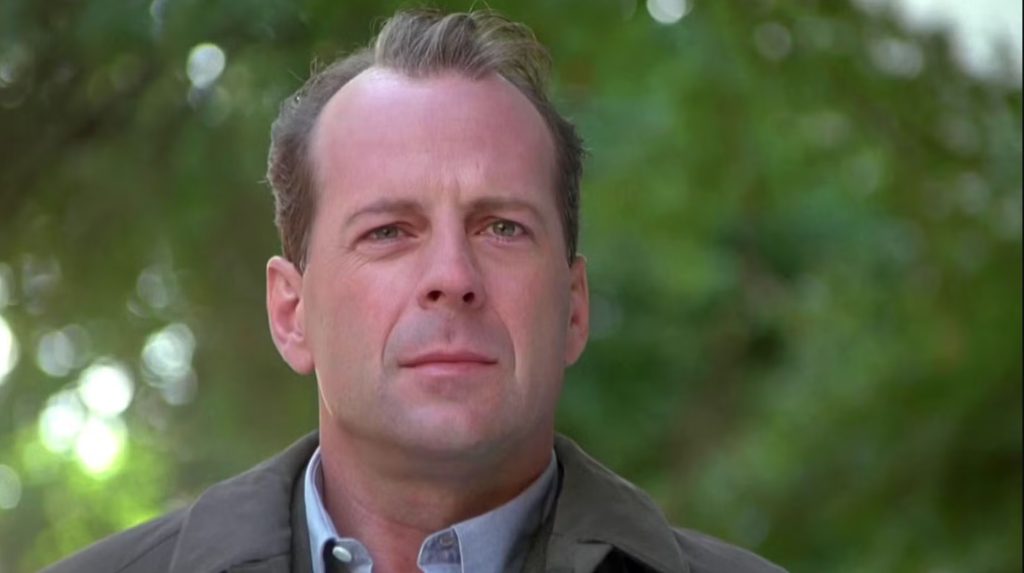 Bruce Willis in a still from The Sixth Sense | Credits: Spyglass Entertainment
At the 2000 Oscars, The Sixth Sense received six nominations: Best Picture, Director, Original Screenplay, Supporting Actor, Supporting Actress, and Film Editing. It lost every category. American Beauty took Picture, Director, and Original Screenplay, while Michael Caine and Angelina Jolie won the supporting acting awards (via The Academy).
I believe that the most powerful case against this shutout comes with the scene between Cole and his mother, Lynn, in the car. Finally, Cole breaks down and shares his secret, passing on a message from his deceased grandmother. Toni Collette shows her character’s shock turning into realization, sorrow, and relief all at once. She is trying to grasp something unbelievable but hoping for it to be real.
Osment is equally extraordinary. Cole’s hesitation makes sense as a frightened child’s fear of rejection. Believing in ghosts becomes easier than telling his mother about them.
Which Oscar should The Sixth Sense have won? Let us know in the comments.






















 Bengali (BD) ·
  English (US) ·