.png)
 9 hours ago
14
9 hours ago
14
Disease is 100% fatal for animals, but preventable
Published Oct 04, 2026 • 2 minute read
Advertisement 2

THIS CONTENT IS RESERVED FOR SUBSCRIBERS ONLY
Subscribe now to read the latest news in your city and across Canada.
- Unlimited online access to articles from across Canada with one account.
- Get exclusive access to the Toronto Sun ePaper, an electronic replica of the print edition that you can share, download and comment on.
- Enjoy insights and behind-the-scenes analysis from our award-winning journalists.
- Support local journalists and the next generation of journalists.
- Daily puzzles including the New York Times Crossword.
SUBSCRIBE TO UNLOCK MORE ARTICLES
Subscribe now to read the latest news in your city and across Canada.
- Unlimited online access to articles from across Canada with one account.
- Get exclusive access to the Toronto Sun ePaper, an electronic replica of the print edition that you can share, download and comment on.
- Enjoy insights and behind-the-scenes analysis from our award-winning journalists.
- Support local journalists and the next generation of journalists.
- Daily puzzles including the New York Times Crossword.
REGISTER / SIGN IN TO UNLOCK MORE ARTICLES
Create an account or sign in to continue with your reading experience.
- Access articles from across Canada with one account.
- Share your thoughts and join the conversation in the comments.
- Enjoy additional articles per month.
- Get email updates from your favourite authors.
THIS ARTICLE IS FREE TO READ REGISTER TO UNLOCK.
Create an account or sign in to continue with your reading experience.
- Access articles from across Canada with one account
- Share your thoughts and join the conversation in the comments
- Enjoy additional articles per month
- Get email updates from your favourite authors
Article content
Since its launch in 2007, World Rabies Day has been spreading the word about preventing the devastating disease that can harm animals and humans alike. The disease, which is 100% fatal for animals, has no cure and no treatment — but it is preventable.
Article content
Article content
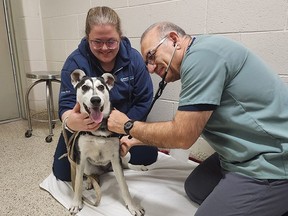
Shannon Stephenson, the operations manager of the Ontario SPCA and Humane Society Durham Region Veterinary Clinic, and her team hosted the clinic’s first World Rabies Day vaccination clinic on Sept. 28 at the Whitby location.
“We would like to see a world where rabies doesn’t exist,” she said, “and that would be done through vaccination.”
The vaccine has been in use since 1885, is safe for pets and effective at preventing transmission. While rare in Canada, there have been 291 documented cases so far in 2026, according to the latest numbers from the federal government.
“There is definitely rabies in Ontario,” Stephenson said, “mostly in bats.”

Swift action required
Other animals found with rabies in 2026 include skunks and raccoons. Ensuring your pets stay away from any injured or dead wildlife while outdoors can help keep them safe as rabies can be transmitted if an “infected animal that’s dead or alive comes in contact with an open wound, cut, sore, ears, nose or mouth.”
By signing up you consent to receive the above newsletter from Postmedia Network Inc.
Article content
Advertisement 3
Article content
If you suspect a pet has come in contact with an infected animal, watching for signs such as:
— Generally unwell behaviour;
— Disorientation;
— Confusion.
“Just any signs that your pet’s not feeling well, then I would say immediately contact a veterinarian to get their advice,” Stephenson said.
If someone comes across an animal that may be infected with rabies, it’s important to report the animal to the local municipal animal services. Stephenson advised not touching the animal and ensuring pets are kept away from it.
RECOMMENDED VIDEO

We apologize, but this video has failed to load.
Vaccines required by law
Rabies vaccines are required by law in Ontario for all dogs, cats, and ferrets three months of age or older, but barriers can sometimes make it difficult for pet parents to have their animals vaccinated.
“We know that access to veterinary care is different for everybody and there are some people who struggle to access that preventative care,” Stephenson said, adding that Boehringer Ingelheim donated 500 doses across the province to help with the World Rabies Day initiative. “We do know that compliance can be an issue because not everybody has the same access to veterinary care, so that’s why a clinic like today is so important, so that we can make sure we remove those barriers.”
Advertisement 4
Article content
A proof of vaccination certificate and tag, which can be put on a collar, are given for each pet to indicate current vaccination status.
There are also low-cost clinics available year-round at OSPCA locations, which offer other services such as spaying and neutering. The locations also offer food pantries for those in need of food or other supplies, such as kitty litter, in an effort to help keep pets with their families.
For more information, visit ontariospca.ca.
Read More
-

Toronto Wildlife Centre rebuilding after storm wreaks havoc
-

Abandoning pet turtles is a turtle-y terrible idea


Article content





























/https%3A%2F%2Fsportsmole-media-prod.s3.gra.io.cloud.ovh.net%2Fuploads%2F2026%2F09%2Fmikel-arteta-21-6ab9a6087b35f019707296.jpg)
 Bengali (BD) ·
  English (US) ·