.png)
 2 hours ago
11
2 hours ago
11
Article content
OTTAWA — It wasn’t a political speech or a visionary manifesto that galvanized Canadian nationalism near the start of this century, just a few years after a close-call separation referendum in Quebec and during a period of endless debate about national identity.

THIS CONTENT IS RESERVED FOR SUBSCRIBERS
Enjoy the latest local, national and international news.
- Exclusive articles by Conrad Black, Barbara Kay and others. Plus, special edition NP Platformed and First Reading newsletters and virtual events.
- Unlimited online access to National Post.
- National Post ePaper, an electronic replica of the print edition to view on any device, share and comment on.
- Daily puzzles including the New York Times Crossword.
- Support local journalism.
SUBSCRIBE FOR MORE ARTICLES
Enjoy the latest local, national and international news.
- Exclusive articles by Conrad Black, Barbara Kay and others. Plus, special edition NP Platformed and First Reading newsletters and virtual events.
- Unlimited online access to National Post.
- National Post ePaper, an electronic replica of the print edition to view on any device, share and comment on.
- Daily puzzles including the New York Times Crossword.
- Support local journalism.
REGISTER / SIGN IN TO UNLOCK MORE ARTICLES
Create an account or sign in to continue with your reading experience.
- Access articles from across Canada with one account.
- Share your thoughts and join the conversation in the comments.
- Enjoy additional articles per month.
- Get email updates from your favourite authors.
THIS ARTICLE IS FREE TO READ REGISTER TO UNLOCK.
Create an account or sign in to continue with your reading experience.
- Access articles from across Canada with one account
- Share your thoughts and join the conversation in the comments
- Enjoy additional articles per month
- Get email updates from your favourite authors
Sign In or Create an Account
or
Article content
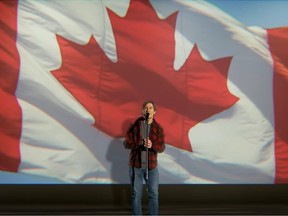
It was a 60-second television beer commercial that captured the Canadian soul, or at least the English-speaking part of it. The Molson Canadian ad, officially called “The Rant,” offered a new, updated and self-effacing version of how Canadians view themselves.
Article content
Article content
Featuring actor Jeff Douglas playing the role of Joe, the average, flannel-wearing Canadian guy, the commercial tipped a hat — or perhaps a tuque — to bilingualism, diversity, peacekeeping, the beaver, hockey and other Canuck touch points, before closing with the triumphant tag line “I am Canadian!” that twinned patriotism with Molson’s signature lager.
Article content
The spot, widely known as the “Joe Canadian” ad, was widely seen then as a fresh take on who we are. But it also used scalpel-like precision to expose the complexity and nuance of Canadians’ relationship with the country’s immensely powerful and sole neighbour to offer a clear take on who we aren’t. “A tuque is a hat, a chesterfield is a couch, and it is pronounced zed — not zee — zed!”
Article content
It was wildly popular and sold tons of beer.
Article content
“That beer ad spoke to a lot of myths, grounded in some truths,” said Asa McKercher, a Canada-U.S. relations specialist at St. Francis Xavier University in Antigonish, N.S.
Article content
Article content

We apologize, but this video has failed to load.
Article content
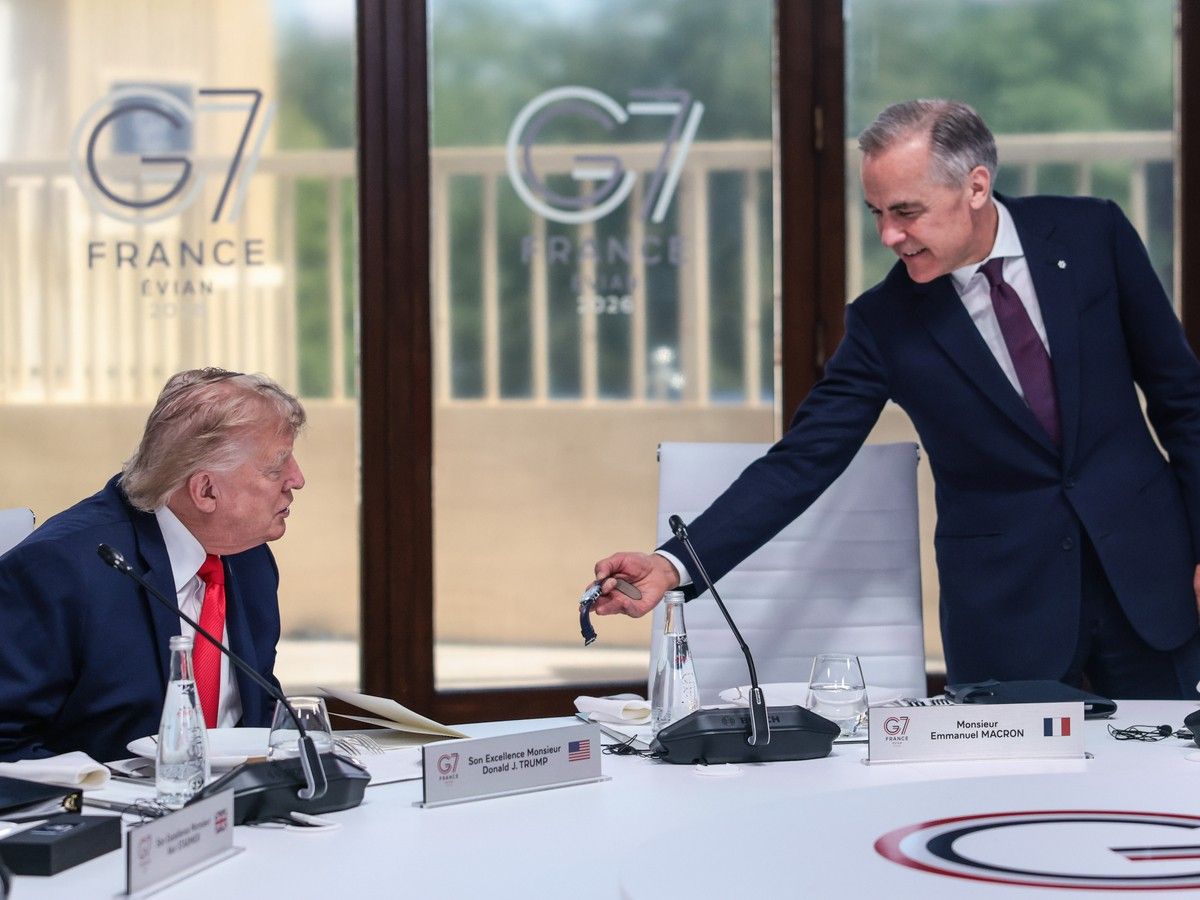
Fast forward a generation or so to today, with U.S. President Donald Trump recently returning to one of his go-to moves of threatening Canadian sovereignty, blocking the opening of a new cross-border bridge paid for by Canada, and his administration refusing to renew a free-trade deal the president originally signed just eight years ago.
Article content
Article content
Perhaps not coincidentally, a recent Leger-Postmedia poll finds Liberal support nationally continues to hover around the 50 per cent mark. That is rarefied air, especially with the economy sluggish and inflation up.
Article content
In fact, the last time a political party had the support of at least half of the country? More than 20 years ago, in 2003, after then prime minister Jean Chrétien famously turned down an American request to join the U.S.-led invasion of Iraq, a war now widely seen as both misguided and based on faulty intelligence.
Article content
Former prime minister Justin Trudeau was criticized for defining Canada in opposition to the States. “One of the ways we define ourself most easily is, well, we’re not American,” he said last year. It’s true, at least, that we don’t see ourselves as very similar: A new Postmedia-Leger poll finds 51 per cent of Canadians say we’re either not very or not at all similar. Sixty-four per cent of us think Canadians are nicer than Americans. And 54 per cent think we’re more cultured.
Article content
Article content
Sixty-six per cent of Canadians, meanwhile, say they think it’s the Americans who are more “arrogant.”
Article content
Article content
Like the beer commercial, analysts say the data points are windows that expose part of the national psyche, particularly how we attitudinize relative our world-dominating neighbour.
Article content
Is there a permanent element of anti-Americanism in the Canadian psyche, or at least in the national political culture — or is it just the Trump factor and normal expressions of patriotism?
Article content
Or maybe Canadians, no matter what they say, have a secret dislike or grudge against Americans.
Article content
If so, that runs counter to the common narrative about the world’s longest undefended border, the many common cross-border traits, and how the two countries are such close friends that we’re like family.
Article content
Maybe frenemies is more like it.
Article content
Are Canadians anti-American — just a little?
Article content
Madelaine Drohan, a Canadian author whose recent book He Did Not Conquer documents Benjamin Franklin’s many failures to annex Canada, said the narrative of bosom buddies isn’t an accurate reflection of the reality.
Article content
“What gets in the way is this idea that we’re friends,” she said.





















/https%3A%2F%2Fsportsmole-media-prod.s3.gra.io.cloud.ovh.net%2Fuploads%2F2026%2F06%2Fkyle-rodden-cal-sport-media-sipa-usa-ivory-coast-winger-yan-diomande-gestures-on-june-25-2026-6a417eae132a5831825833.jpg)
/https%3A%2F%2Fsportsmole-media-prod.s3.gra.io.cloud.ovh.net%2Fuploads%2F2026%2F06%2Fthor-wegner-defodi-images-norway-striker-erling-haaland-watches-on-on-june-26-2026-6a417f27894d6515047302.jpg)
 Bengali (BD) ·
  English (US) ·