.png)
 1 week ago
12
1 week ago
12
It was a dramatic weekend for the California gubernatorial race. Rep. Eric Swalwell, the Democratic frontrunner, dropped out in scandal, and state Republicans declined to back President Donald Trump’s chosen candidate, scrambling months of campaigning already marked by a crowded field and party infighting.
Swalwell ended his campaign on Sunday, following several reported allegations of sexual misconduct. He said that he was “deeply sorry for mistakes in judgment” that he had made in the past, but continued to deny the allegations against him, calling them “false.” On Monday evening, he announced that he planned to resign his seat in Congress.
Before the allegations against him became publicized, several polls showed Swalwell as the leading Democratic candidate in the crowded race. His exit leaves nine prominent candidates vying for Gov. Gavin Newsom’s role—seven Democrats and two Republicans. Newsom, who is flirting with a 2028 presidential run, can’t run for his office again because of term limits.
Experts tell TIME that they’re not certain which candidate could take the lead, but they point to two possibilities: Tom Steyer, a billionaire philanthropist who launched an unsuccessful presidential campaign in the 2020 election; and Katie Porter, a former California Congresswoman. Steyer and Porter have polled relatively closely with one another.
“It appeared that, up until last week, right behind Swalwell were Tom Steyer and Katie Porter,” says Eric Schickler, a professor of political science at the University of California, Berkeley. “I think that a lot of Democrats will be looking at both of them and trying to decide: is one of them the preferred candidate?”
The two both have name recognition, says Christian Grose, a professor of political science at the University of Southern California. Of all the candidates in the race, Steyer has spent the most funds on campaign ads—he has dished out about $89 million on more than 1 million ad airings, as of Thursday, according to the San Francisco Chronicle.
“If you live in California, you have probably seen his ads,” Grose says.
“It’s so fluid,” Grose says of the state of the race. “It’s hard to say” which of the two could become the Democratic favorite, he continues, but, “If I had to guess, perhaps Steyer, just because he does have so much money.” He adds, though, that voters tend to “distrust” candidates “who spend a lot of their own money on campaigns,” which could work against Steyer.
“There’s some level of discomfort among some Democrats about a billionaire who has not held office becoming the party standard bearer,” Schickler says. “At the same time, I also do think there's a growing desperation to settle on one candidate, and that probably does help Steyer right now.”
Although California is a Democratic stronghold, its unusual primary system raises the pressure on the field packed with Democratic candidates.
The primary election will take place on June 2. California has top-two primaries, meaning that the two candidates who receive the highest number of votes—regardless of their party—will advance to the general election in November. Democrats have expressed concerns that the crowded field could split the vote within their own party, potentially leading to a situation where the two Republican candidates—Steve Hilton and Chad Bianco—move on to the November election.
Both Schickler and Grose say that, while a possibility, they don’t think it’s likely that Democrats will be locked out of the general election.
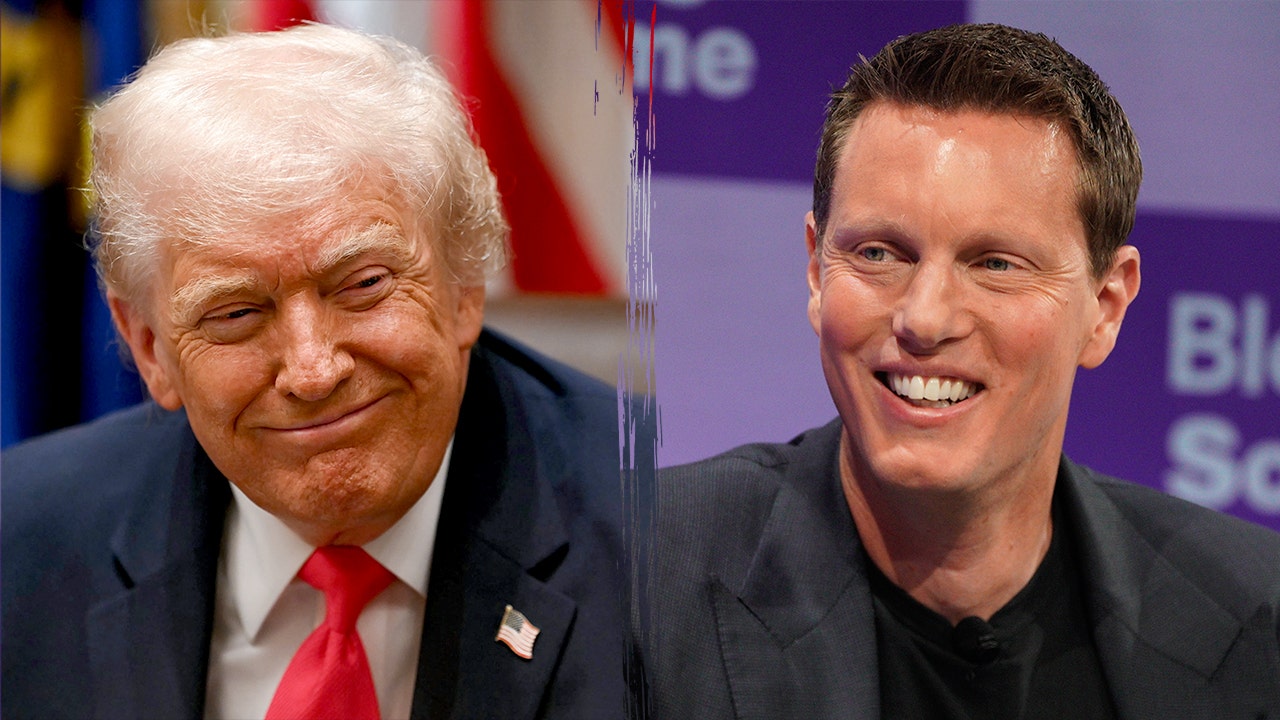
Last week, Trump endorsed Hilton in the race to replace Newsom. Polls conducted before Trump’s endorsement showed that Hilton, who previously worked as a Fox News host and a political strategist for former British Prime Minister David Cameron, is leading the race.
But experts say that Trump’s endorsement of Hilton could actually work in Democrats’ favor: If Hilton wins a substantial number of votes among the state’s Republican voters, it minimizes the chances that both he and Bianco will advance to the general election.
“I would say that Trump’s endorsement makes it less likely that Democrats have to end up facing what would be a disaster for the party,” Schickler says. “But I don’t think it eliminates it.”
On Sunday, California Republicans didn’t endorse a candidate from their party in the race. Neither Hilton nor Bianco cleared the 60% threshold needed to earn an endorsement from party delegates. Instead, the delegates broke with the President, backing Bianco by 49% to Hilton’s 44%.
That result could send a “message to Republican voters that these are both credible candidates—both credible Republicans,” Schickler says.
“I think it’s not likely that you end up with two Republicans making it,” he continues. “It’s just hard in such a Democratic state. But it is a possibility, which just suggests how disorganized the Democratic race is right now.”

























 Bengali (BD) ·
  English (US) ·