.png)
 1 hour ago
10
1 hour ago
10
Some U.S. imports, such as products governed by Canada-U.S.-Mexico Agreement and oil and gas, are exempt from the new levies
Author of the article:

Washington Post
David J. Lynch, The Washington Post
Published Jul 23, 2026 • 3 minute read
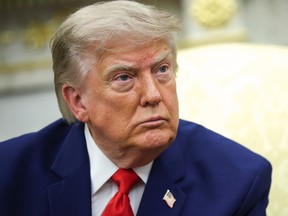
The Trump administration on Thursday imposed new tariffs that it bills as combating forced labour but that critics say are part of the president’s broader campaign to reduce Americans’ reliance on imports.
Advertisement 2

THIS CONTENT IS RESERVED FOR SUBSCRIBERS ONLY
Subscribe now to read the latest news in your city and across Canada.
- Unlimited online access to articles from across Canada with one account.
- Get exclusive access to the Toronto Sun ePaper, an electronic replica of the print edition that you can share, download and comment on.
- Enjoy insights and behind-the-scenes analysis from our award-winning journalists.
- Support local journalists and the next generation of journalists.
- Daily puzzles including the New York Times Crossword.
SUBSCRIBE TO UNLOCK MORE ARTICLES
Subscribe now to read the latest news in your city and across Canada.
- Unlimited online access to articles from across Canada with one account.
- Get exclusive access to the Toronto Sun ePaper, an electronic replica of the print edition that you can share, download and comment on.
- Enjoy insights and behind-the-scenes analysis from our award-winning journalists.
- Support local journalists and the next generation of journalists.
- Daily puzzles including the New York Times Crossword.
REGISTER / SIGN IN TO UNLOCK MORE ARTICLES
Create an account or sign in to continue with your reading experience.
- Access articles from across Canada with one account.
- Share your thoughts and join the conversation in the comments.
- Enjoy additional articles per month.
- Get email updates from your favourite authors.
THIS ARTICLE IS FREE TO READ REGISTER TO UNLOCK.
Create an account or sign in to continue with your reading experience.
- Access articles from across Canada with one account
- Share your thoughts and join the conversation in the comments
- Enjoy additional articles per month
- Get email updates from your favourite authors
Article content
The announcement, which was anticipated, affects U.S. purchases from 60 nations that the administration says are importing goods produced with forced labour rather than buying products made by higher-paid American workers.
Article content
Article content
Nations that do not have laws barring such goods — such as China, the United Kingdom and Japan — will face tariffs of 12.5%. Those that have such laws, including the European Union, will be hit with 10% levies if they fail to enforce them.
Some U.S. imports, such as products governed by the Canada-U.S.-Mexico Agreement and oil and gas, are exempt from the new levies.
President Donald Trump’s latest tariffs take effect at 12:01 a.m. Friday, just as a temporary 10% import tax expires. That measure was put in place following a February Supreme Court decision that invalidated the president’s so-called “Liberation Day” tariffs introduced in April 2025.
Administration officials who briefed reporters on the condition that they not be identified said today’s action grew out of Trump’s long-standing opposition to involuntary labour. The new tariffs are the result of a months-long investigation by the office of the U.S. Trade Representative, a required step under the legal authority employed, Section 301 of the Trade Act of 1974.
By signing up you consent to receive the above newsletter from Postmedia Network Inc.
Article content
Advertisement 3
Article content
The import taxes imposed Thursday match the figures contained in the 10 “reciprocal trade agreements” that the administration negotiated over the past year with nations including Malaysia and Taiwan.
The forced labour penalties will leave many U.S. trading partners facing lower trade barriers than they did last year, after Trump involved emergency powers to raise tariffs to their highest level since the 1930s.
Within weeks, the administration is expected to introduce another set of tariffs that will apply to goods from nations that subsidize excess manufacturing capacity. Those government policies result in a flood of low-cost products on global markets that U.S. companies can’t match, officials say.
RECOMMENDED VIDEO

We apologize, but this video has failed to load.
The second set will raise tariffs closer to the emergency rates Trump imposed last year, trade specialists said.
“The forced labour tariffs are not the end of the story,” said Patrick Childress, a partner at Holland & Knight.
Advertisement 4
Article content
This month, the president, who has made promoting domestic manufacturing a priority, has issued a number of sweeping trade actions.
He threatened to impose 50% tariffs on goods from Canada, citing what he called its discriminatory treatment of American-made cars, alcohol and dairy products. And he vowed to hit imported generic drugs with a 100% tariff, effective two years from now.
The flurry of activity comes as Trump appears eager to pull every lever of trade power he can identify to rebuild the tariff wall the Supreme Court knocked down in February, using laws considered less vulnerable to legal challenge than the rushed approach he employed last year.
Thursday’s announcement largely tracks last month’s forced labour proposal from Jamieson Greer, the president’s chief trade negotiator. Some nations, such as India and Trinidad and Tobago, which were originally set for 12.5% tariffs, were moved to the lower tariff group after consultations with U.S. officials.
Many trade analysts described the administration’s action as designed to replicate the tariff system the court toppled this year. The senior administration officials said the president’s concern over forced labour was genuine. They noted that the U.S. prohibition on goods produced with involuntary labour is more than a century old.
“Whatever people think of the Trump administration’s recent tariff actions, there is no doubt that forced labour is a human rights crisis and a serious problem in global supply chains,” said Timothy Brightbill, a trade lawyer at Wiley Rein in Washington.
Article content





















/https%3A%2F%2Fsportsmole-media-prod.s3.gra.io.cloud.ovh.net%2Fuploads%2F2026%2F03%2Ficonsport-361551-0102-1-69b560866f7b6508942731.jpg)
 Bengali (BD) ·
  English (US) ·