.png)
 3 days ago
9
3 days ago
9
Article content
When covering previous events, I often tried to second-guess their judges, presenting my rankings before theirs were announced. On Monday, sitting with more than 100 people who packed Raphaël Peruvian Cuisine and ate all the food the judges ate, I could have filled in a scorecard similar to those the judges used, but for the addition of the names of each chef. Instead, I’ll just tell that I was wowed dish after dish and could have made qualitative arguments for most of them to take home gold.
Article content
Take, for example, Becerra’s seafood-based dish, which was served first. It consisted of three elements — a warm tart that starred citrus-marinated Canadian Manila clams, leek and apple, aged B.C. sablefish sashimi and a Manila clam gelato.
Article content

Article content
This entry that had “I’m here to win a chefs’ competition” written all over it, striving for full marks for technique while combining complex hot, chilled and cold elements on the same plate. It reminded me of the three-element, seafood-based dishes that Vancouver chefs have served to winner at the national level in recent years, except that it was more interesting.
Article content
Article content
In a night of culinary technical marvels, Becerra’s clam tart was a standout achievement. Having eaten at Michelin-starred restaurants and international fine-dining destinations in Vienna, Hong Kong and Lima in recent years, that sophisticated and novel tart struck me as the competition’s most “Michelin-restaurant-worthy” item.
Article content
While Raphaël Peruvian Cuisine serves more direct, but upscale dishes, Becerra’s dish is a reminder that he cooked at some of Peru’s most celebrated and elevated restaurants and his homeland is a global culinary hotspot with good reason. It also won the night’s people’s choice award.
Article content

Article content
Sawision’s second-place, lobster-based dish was more like a hyper-fancy course that you might eat at his restaurant. That’s to say that it allowed Sawision to load his plate with all kinds of rarefied indulgences and hits of flavour. The star of his plate was a disc of lobster and langoustine wrapped in crunchy kataifi, the finely shredded phyllo dough that notably figures in some Middle Eastern desserts.
Article content
As a counterpoint, Sawision added a folder agnolotti made with lobster coral and stuffed with mascarpone and lobster reduction. Sawision put more ingredients, flavours and even fragrances on his plate than anyone else, including smoked beef tongue and corn salad to a passion fruit-vermouth sauce and vadouvan curry mayo. If I had a quibble, one would be that the pasta was just thick. Also, as tasty as this dish was, my palate couldn’t pick everything that was Sawision had included on the plate.
Article content
Article content

Article content
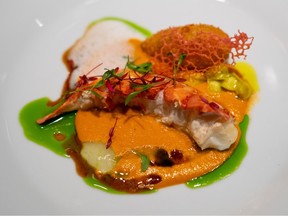
Like Sawision, Thottungual served a dish that I could have seen at his St. Laurent Boulevard restaurant, Coconut Lagoon. “It’s me on a plate,” Thottungal told the crowd in the restaurant. His dish was also a tribute to Canada, he said, pointing in particular to the Bay of Fundy, the source of the lobster that starred in his creation.
Article content
Thottungal paired his just-cooked seafood with a vibrant sauce of roasted tomato and bone marrow that couldn’t help but remind people of butter chicken, while a gastrique of Malabar tamarind and maple syrup symbolize Thottungal’s journey from India to Canada, where he has flourished. This dish was irreproachably delicious. It’s practically a shame that food this good and enjoyable went unawarded Monday night, passed over in favour of some less direct, more involved dishes.
Article content
Article content
In contrast to the night’s more epic dish descriptions, the summary of La Salle’s dish was succinct: veal sweetbreads with celeriac, apples and horseradish. “We need to be proud of what Canada has to offer,” La Salle said, justifying his dish, which included a maple leaf tuile.



























 Bengali (BD) ·
  English (US) ·