.png)
 5 hours ago
6
5 hours ago
6
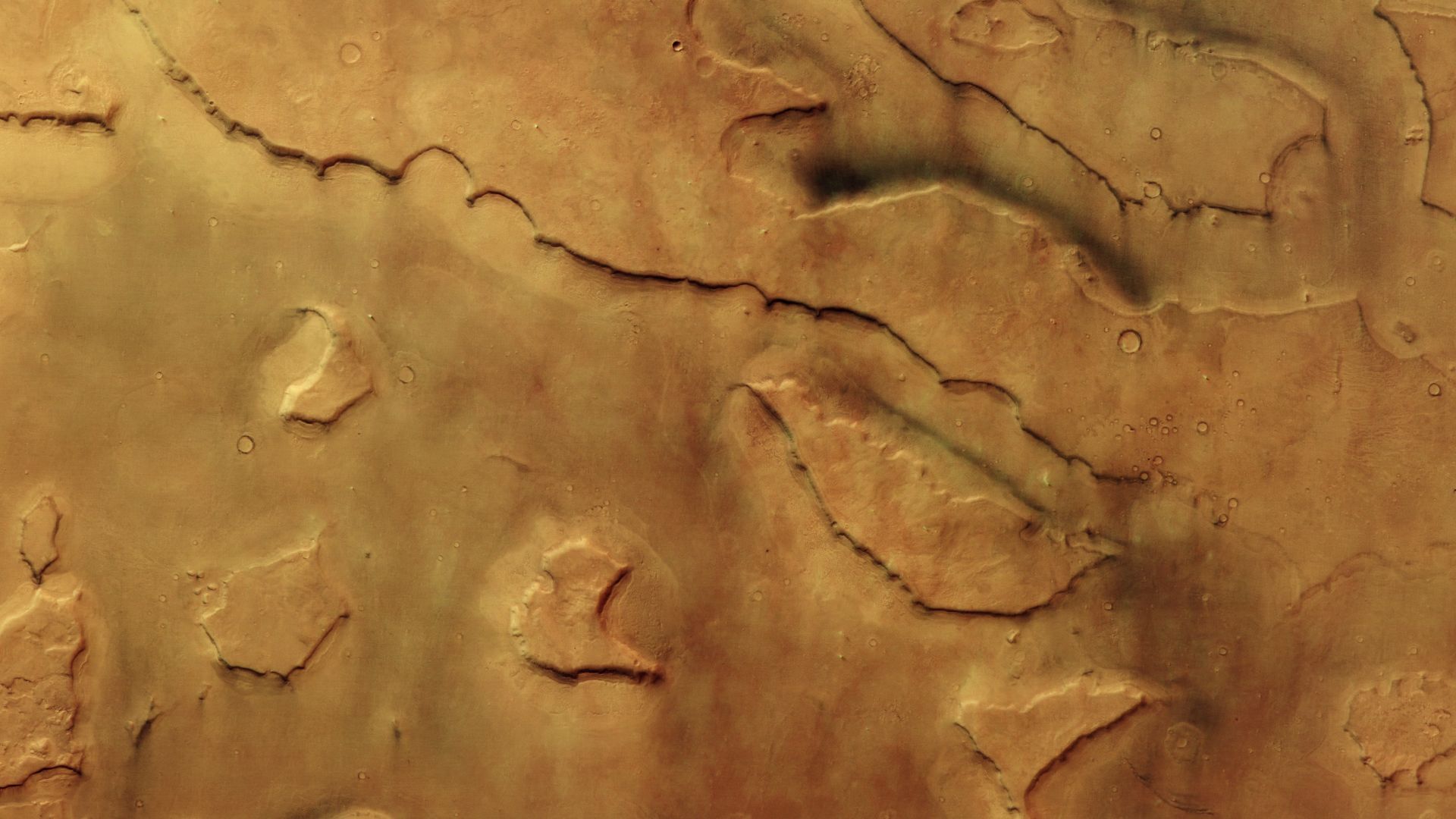
It's always a treat to be reminded that we have spacecraft orbiting Mars right now, and a new image from one of these Red Planet probes does just that.
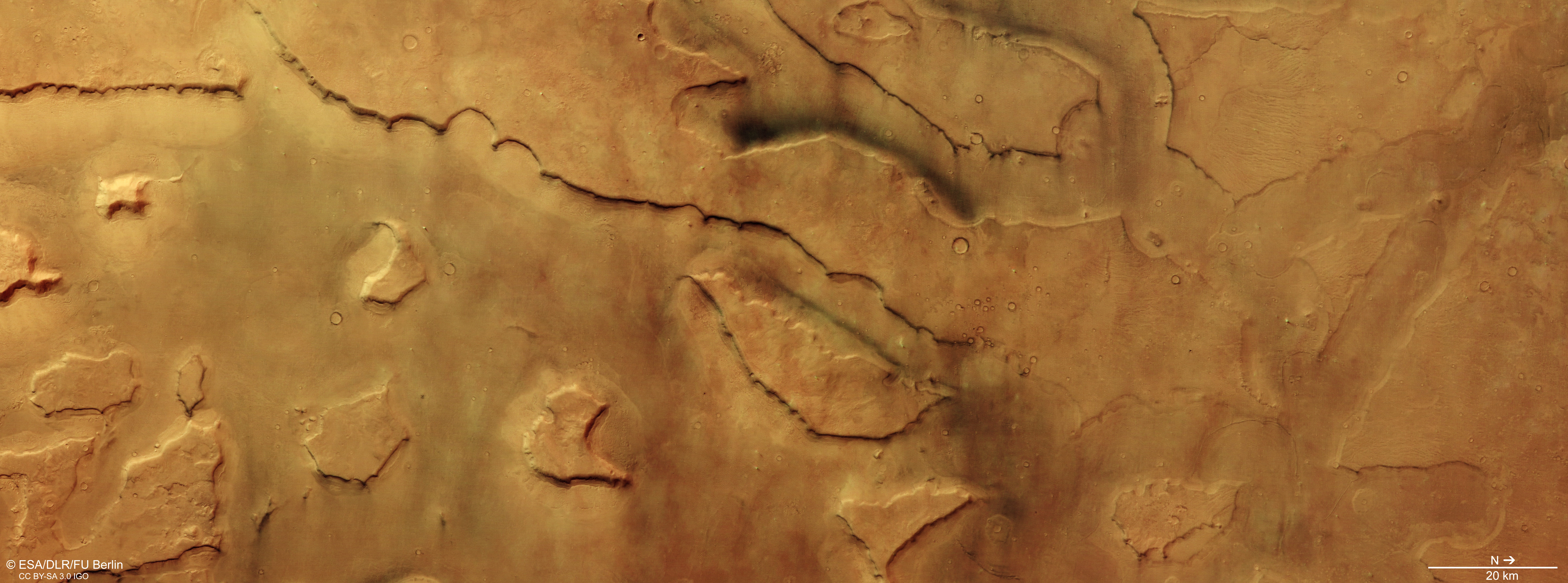
The European Space Agency's (ESA) Mars Express has beamed to Earth a beautiful view of a region on Mars known as Mamers Valles. This is a sweeping valley system that stretches across nearly 600 miles (1,000 kilometers) of land. And if your day is feeling a little dry, there's a little game you can play while looking at the image.
I spy 30 dust devils hidden in the crevices of these Martian valleys.
What are we looking at?
Dust devils are basically small tornadoes that pick up dust as they whirl around. They're common on Earth and on Mars: Rovers and orbiters have imaged these phenomena many times on the Red Planet. One time, for instance, a mission team tracked about 1,000 of them speeding across the Red Planet. Another time, NASA's Perseverance rover watched two of these devils merge into one large devil. We've even heard them "crackle" before, thanks to another Perseverance video.
Mars' dust devils are far larger than those of Earth, reaching heights of almost 5 miles (8 km) and sometimes racing at speeds of about 148 feet (45 meters) per second.
In the image below, you can see the full picture of the valleys; the devils, ESA says, are small yellow dots with pinkish trailing shadows. You can try to spot the devils on your own, but if you need some help, ESA has outlined precisely where each one is just here.
Why is it noteworthy?
Scientists are so interested in Martian dust devils because they help map the planet's otherwise invisible wind. That can aid in future Mars mission planning as well as helping researchers decode the general Red Planet environment— information that could lead to discoveries about Mars' watery past or its evolution through time.
But besides dust devils, the region depicted in the image, Mamers Valles, is worth admiring, too.
Thanks to its vastness, Mamers Valles actually connects Mars' ancient southern highlands with its northern lowlands, according to an ESA statement. Plus, all around the valleys of this 3.8-billion-year-old area lie many other land features — including what used to be full-on glaciers. Now covered in debris, these glaciers should hold water ice underneath, which would be a great target for a future Mars mission to explore.
As for when that future mission could take off, only time (and probably the success of NASA's Artemis program) will tell.


























/https%3A%2F%2Fsportsmole-media-prod.s3.gra.io.cloud.ovh.net%2Fuploads%2F2026%2F06%2Frio-ngumoha-email-sportmole-6a27b73e9a471352625861.png)
 Bengali (BD) ·
  English (US) ·