.png)
 1 hour ago
9
1 hour ago
9
Article content
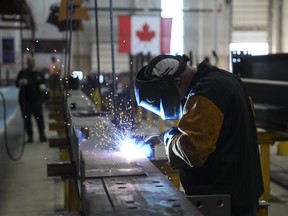
WASHINGTON, D.C. — Pay 50 per cent on raw metal shipments — while other industries pay 25 per cent tariffs on the full price of finished goods containing those metals — or move production.

THIS CONTENT IS RESERVED FOR SUBSCRIBERS
Enjoy the latest local, national and international news.
- Exclusive articles by Conrad Black, Barbara Kay and others. Plus, special edition NP Platformed and First Reading newsletters and virtual events.
- Unlimited online access to National Post.
- National Post ePaper, an electronic replica of the print edition to view on any device, share and comment on.
- Daily puzzles including the New York Times Crossword.
- Support local journalism.
SUBSCRIBE FOR MORE ARTICLES
Enjoy the latest local, national and international news.
- Exclusive articles by Conrad Black, Barbara Kay and others. Plus, special edition NP Platformed and First Reading newsletters and virtual events.
- Unlimited online access to National Post.
- National Post ePaper, an electronic replica of the print edition to view on any device, share and comment on.
- Daily puzzles including the New York Times Crossword.
- Support local journalism.
REGISTER / SIGN IN TO UNLOCK MORE ARTICLES
Create an account or sign in to continue with your reading experience.
- Access articles from across Canada with one account.
- Share your thoughts and join the conversation in the comments.
- Enjoy additional articles per month.
- Get email updates from your favourite authors.
THIS ARTICLE IS FREE TO READ REGISTER TO UNLOCK.
Create an account or sign in to continue with your reading experience.
- Access articles from across Canada with one account
- Share your thoughts and join the conversation in the comments
- Enjoy additional articles per month
- Get email updates from your favourite authors
Sign In or Create an Account
or
Article content
That’s the message this month from the United States to Canadian steel and aluminum producers and their downstream supply chains.
Article content
Article content
Since last year, Canadian steel exporters to the United States have faced 50 per cent Section 232 tariffs, a significant increase from the initial levels introduced by U.S. President Donald Trump in 2018. Early this month, Trump restructured those duties to apply to the full customs value of finished goods rather than just the raw metal content, effectively spreading the burden to vehicle makers and other manufacturers.
Article content
Article content
Then, late last week, the White House offered a carrot: It declared that Canadian steel and aluminum makers could enjoy tariff relief if they did one thing: move to America.
Article content
Article content
“The U.S. is saying, ‘OK, here’s short-term relief,’ but if you’re an employee at a steel mill in Canada, this is not any sort of positive news,” said Clark Packard, a research fellow at the Cato Institute’s Herbert A. Stiefel Center for Trade Policy Studies in Washington, DC.
Article content
“It’s almost like a Pyrrhic victory,” he said, noting how it reflects “Trump’s zero-sum mindset about trade relations: The U.S. can’t win unless somebody else loses.”
Article content
And Canadian steel has indeed been losing, signalled by lost revenue and layoffs.
Article content
Algoma Steel, based in Sault Ste. Marie, Ontario, saw revenue drop 16 per cent last year, compared to 2024, and it reported a $365 million net loss in the final quarter of 2025. In December, citing tariffs and its transition from electric arc furnace production, the firm announced layoffs of about 1,000 employees.
Article content
A year earlier, shortly after Trump’s tariffs were introduced, Canada Metal Processing Group laid off 140 workers in Ontario and Quebec, and ArcelorMittal made staff cuts that same month.
Article content
Article content
Canadian steel production fell four per cent in the first 11 months of 2025 compared to the year before, according to World Steel Association data, and the full year saw an overall contraction of two per cent.
Article content
So are any Canadian firms likely to jump at Trump’s tariff-relief offer and move to the U.S.? Not unless they enjoy making risky bets, say trade watchers.
Article content
First of all, U.S. steel production is up, which, according to Jason Miller, a supply chain management professor at Michigan State University, means adding Canadian capacity risks saturating the market and impacting prices.
Article content
According to the American Iron and Steel Institute (AISI), adjusted year-to-date production as of this week was 29,549,000 net tons, at a capability utilization rate of 77.8 per cent, up 6 per cent from the year before. Trump has set a target of 80 per cent — a rate he deems critical for national security — so the U.S. market is already close to that mark.
Article content
Employment in the U.S. steel industry, however, has dropped significantly in recent decades, owing to technological advances. The figures have hovered between 80,000 and 86,000 employees for the last few years, but that’s 100,000 jobs fewer than the industry had in 1990. So added capacity and production does not necessarily mean more jobs.
























/https%3A%2F%2Fsportsmole-media-prod.s3.gra.io.cloud.ovh.net%2Fuploads%2F2026%2F02%2Fimago1072832028-1-1-6996d086195c8904803070.jpg)
 Bengali (BD) ·
  English (US) ·