.png)
 2 hours ago
10
2 hours ago
10
Article content
In an expert opinion submitted as part of the complaint to the CCAC, Erin Zamzow, a veterinarian of record for the Washington-based Chimpanzee Sanctuary North, called the apparent “social, mental, physical and nutritional deprivation” of the macaques “inhumane” and said it likely “impairs accurate and reliable scientific results.”
Article content
In response to questions and an interview request from the IJB, York University spokesperson Yanni Dagonas said “research that involves animals is monitored continuously by veterinarians and highly trained animal care staff,” and that “any health concerns that are detected are addressed promptly by qualified veterinarians.”
Article content
“The university remains confident in the integrity of research conducted on our campuses, the welfare of the animals in care, and the full compliance of our research programs with regulatory standards,” Dagonas said in a statement.
Article content
The value of macaque research in neuroscience has been recognized by experts for its applicability to humans.
Article content
Article content
“Genetic, functional, and anatomical properties of the macaque brain resemble those of the human more closely than other animal models, which can be used in biomedical research,” according to a 2024 study published by MIT Press.
Article content
York University’s statement said that its research “informs vital clinical interventions into many neurological conditions,” including autism spectrum disorder, inner ear disorders, stroke, dementia, depression and disorders of posture and movement.
Article content
“We recognize that some research topics and methods are debated. However, the institution takes seriously our commitments both to academic freedom and to ensuring research carried out at York complies with all applicable laws and regulations,” Dagonas wrote.
Article content
York University is certified by the CCAC, meaning it must comply with the council’s guidelines for animal treatment in order to obtain federal funding. While the CCAC sets the national standards for animal care in research, it cannot enforce compliance or shut down facilities.
Article content
Among the CCAC guidelines for nonhuman primates are requirements to ensure the primates are healthy, not experiencing pain, that stress is minimized in the use of restraints, and the animals are provided appropriate socializing.
Article content
Article content
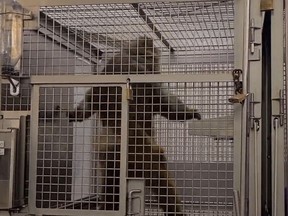
In its February complaint to the CCA, LCA alleged York University had failed to provide the macaques with sufficient space, failed to restrain macaques in a safe way and failed to ensure the animals are not experiencing pain.
Article content
Article content
Lori Sheeran, a primatologist at the Central Washington University, provided an expert opinion as part of the LCA complaint.
Article content
“The materials that I reviewed for this report indicate the rhesus macaques are suffering pain, anxiety and depression related to the surgical and experimental procedures they are forced to undergo,” Sheeran’s opinion reads.
Article content
In the video footage from the whistleblower, one macaque appeared to be drinking its own urine, suggesting “acute water dehydration,” according to Sheeran’s written opinion.
Article content
“CCAC guidelines for animal welfare are not being applied in this situation, to the detriment of the lives of these nine rhesus macaques,” Sheeran writes.
Article content
CCAC executive director Pierre Verreault told the IJB “we recognize that Canadians would be concerned about the welfare of the research macaques referenced in the IJB’s inquiry.

























/https%3A%2F%2Fsportsmole-media-prod.s3.gra.io.cloud.ovh.net%2Fuploads%2F2026%2F02%2Fimago1072832028-1-1-6996d086195c8904803070.jpg)
 Bengali (BD) ·
  English (US) ·