.png)
 1 hour ago
6
1 hour ago
6
Issues such as nuclear enrichment, missile programs, and terrorism remain unresolved or insufficiently explained
Published Jun 18, 2026 • Last updated 17 minutes ago • 3 minute read

See more Toronto Sun on Google — save as a Preferred Source
Advertisement 2

THIS CONTENT IS RESERVED FOR SUBSCRIBERS ONLY
Subscribe now to read the latest news in your city and across Canada.
- Unlimited online access to articles from across Canada with one account.
- Get exclusive access to the Toronto Sun ePaper, an electronic replica of the print edition that you can share, download and comment on.
- Enjoy insights and behind-the-scenes analysis from our award-winning journalists.
- Support local journalists and the next generation of journalists.
- Daily puzzles including the New York Times Crossword.
SUBSCRIBE TO UNLOCK MORE ARTICLES
Subscribe now to read the latest news in your city and across Canada.
- Unlimited online access to articles from across Canada with one account.
- Get exclusive access to the Toronto Sun ePaper, an electronic replica of the print edition that you can share, download and comment on.
- Enjoy insights and behind-the-scenes analysis from our award-winning journalists.
- Support local journalists and the next generation of journalists.
- Daily puzzles including the New York Times Crossword.
REGISTER / SIGN IN TO UNLOCK MORE ARTICLES
Create an account or sign in to continue with your reading experience.
- Access articles from across Canada with one account.
- Share your thoughts and join the conversation in the comments.
- Enjoy additional articles per month.
- Get email updates from your favourite authors.
THIS ARTICLE IS FREE TO READ REGISTER TO UNLOCK.
Create an account or sign in to continue with your reading experience.
- Access articles from across Canada with one account
- Share your thoughts and join the conversation in the comments
- Enjoy additional articles per month
- Get email updates from your favourite authors
Article content
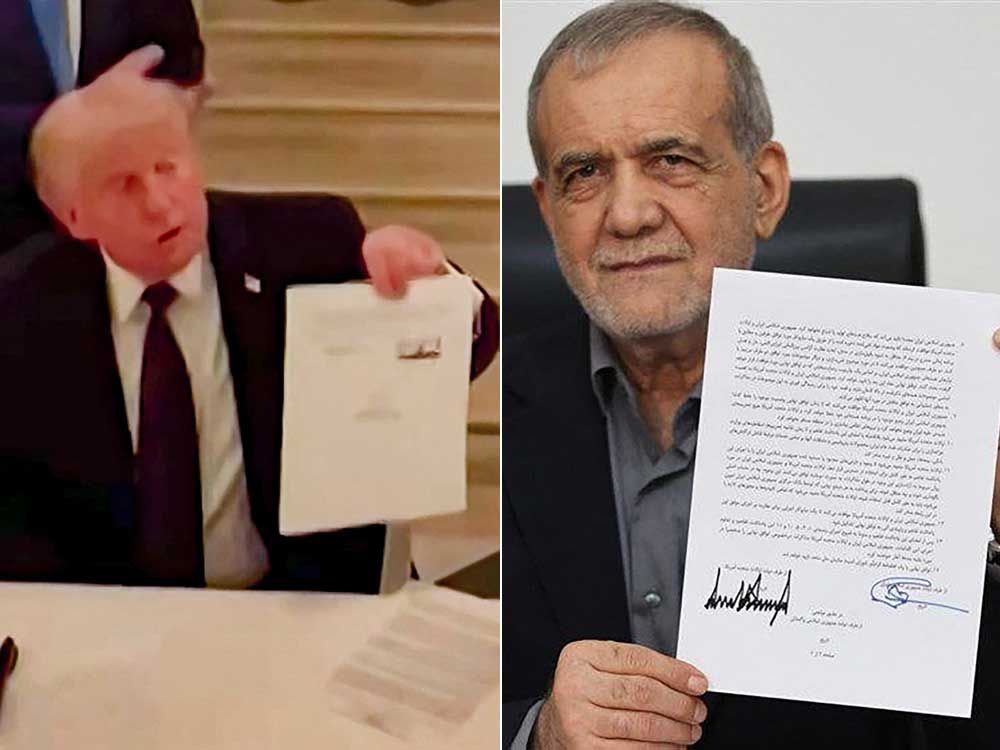
The administration of U.S. President Donald Trump is promoting a new agreement with Iran as a diplomatic breakthrough. White House talking points emphasize Iranian commitments to forgo nuclear weapons, international verification, regional stability and economic incentives tied to compliance.
Article content
Recommended Videos
Article content
Yet many of the details that have emerged so far raise more questions than answers.
Administration officials point to Iran’s reported commitment, in writing, not to pursue nuclear weapons. But Iran has already made that commitment before. The country has been a signatory to the Nuclear Non-Proliferation Treaty since 1970. The challenge has never been the language on paper; it has been enforcement.
History offers ample reason for skepticism. Supporters of the Joint Comprehensive Plan of Action (JCPOA) similarly argued that inspections and monitoring would prevent Iran from advancing its nuclear ambitions. Critics warned that Tehran would exploit loopholes and conceal activities. Whatever one’s view of the JCPOA, the lesson remains that agreements are only as effective as their enforcement. That is why recent comments from Trump and Vice-President JD Vance deserve scrutiny.
By signing up you consent to receive the above newsletter from Postmedia Network Inc.
Article content
Advertisement 3
Article content
Changing position on Iran’s nuclear program
Trump initially framed the administration’s position as one of “no enrichment.” Yet recent statements suggest a more flexible approach. The president has indicated negotiations are continuing over a possible suspension of enrichment and has suggested Iran could retain the ability to enrich uranium at low levels under permanent restrictions.
That is a considerably different position from a complete prohibition on enrichment.
Vance has emphasized that technical discussions regarding Iran’s stockpile of enriched material are ongoing. The administration insists the United States will help verify its destruction or removal. But there is a substantial difference between permanently removing enriched material from Iran and allowing Tehran to dilute or reclassify existing stockpiles while retaining much of its nuclear infrastructure.
Issues left out in negotiations
Equally notable is what appears to be missing from the discussion.
Advertisement 4
Article content
Thus far, there has been little public indication that ballistic missile development is a central component of the agreement. Iran’s missile program has long been a major concern for American allies, yet it appears to occupy a secondary role in the negotiations.
The same concern applies to terrorism.
White House talking points describe a framework intended to reduce conflict and promote regional dialogue. Yet Hezbollah continues to engage in hostilities with Israel, raising questions about whether Iranian support for proxy groups is being meaningfully addressed. If that support remains untouched, critics argue, the agreement addresses symptoms while leaving the underlying problem intact.
The administration has also suggested the deal could lay the groundwork for broader regional reconciliation. That vision faces a credibility challenge. Iran continues to support proxy organizations across the Middle East, maintain hostility toward key American allies, and suppress dissent at home. Expectations that Tehran will quickly become a constructive regional partner strike many observers as highly optimistic.
Advertisement 5
Article content
Concerns over the reconstruction fund
Economic provisions raise another set of concerns.
Administration officials argue that any funds made available to Iran would largely consist of previously frozen assets rather than new American expenditures. Yet whether money originates from taxpayers or from frozen accounts, releasing substantial financial resources to the Iranian regime increases its access to capital. Critics note that previous sanctions relief provided Tehran with significant financial benefits, some of which were used to strengthen proxy groups and expand regional influence.
The reported reconstruction framework has generated particular concern. Opponents argue that providing massive economic resources without ironclad restrictions on terrorism sponsorship, missile development and military expansion risks repeating mistakes made under previous agreements.
Supporters of the administration counter that this deal differs fundamentally from the JCPOA because future economic benefits would be tied to Iranian compliance. That claim may ultimately prove true. But at this stage, many of the crucial details remain unknown.
Advertisement 6
Article content
The central problem is that the public is being asked to evaluate a framework that has not yet been fully disclosed. Questions about enrichment, missile programs, terrorism, sanctions relief, inspections and enforcement remain unresolved or insufficiently explained.
Until the memorandum of understanding is released and its provisions can be examined in full, definitive judgments are premature. The details will determine whether this agreement represents a genuine strategic breakthrough or simply another diplomatic document whose promises prove difficult to enforce.
Ben Shapiro is host of The Ben Shapiro Show and co-founder of Daily Wire+
Read More
-

IRAN WAR: Trump, Pezeshkian sign deal to end war
-

KINSELLA: U.S.-Iran 'deal' is an unmitigated fiasco


Article content



























/https%3A%2F%2Fsportsmole-media-prod.s3.gra.io.cloud.ovh.net%2Fuploads%2F2026%2F06%2Frio-ngumoha-email-sportmole-6a27b73e9a471352625861.png)
 Bengali (BD) ·
  English (US) ·