.png)
 15 hours ago
7
15 hours ago
7
Article content
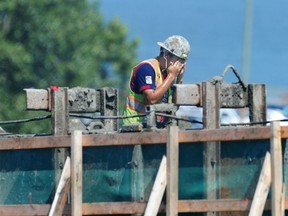
Environment Canada predicts that 2026 will be among the hottest years on record. With El Niño projected to bring hotter and drier conditions, workers are feeling the heat.

THIS CONTENT IS RESERVED FOR SUBSCRIBERS ONLY
Subscribe now to read the latest news in your city and across Canada.
- Unlimited online access to articles from across Canada with one account.
- Get exclusive access to the Vancouver Sun ePaper, an electronic replica of the print edition that you can share, download and comment on.
- Enjoy insights and behind-the-scenes analysis from our award-winning journalists.
- Support local journalists and the next generation of journalists.
- Daily puzzles including the New York Times Crossword.
SUBSCRIBE TO UNLOCK MORE ARTICLES
Subscribe now to read the latest news in your city and across Canada.
- Unlimited online access to articles from across Canada with one account.
- Get exclusive access to the Vancouver Sun ePaper, an electronic replica of the print edition that you can share, download and comment on.
- Enjoy insights and behind-the-scenes analysis from our award-winning journalists.
- Support local journalists and the next generation of journalists.
- Daily puzzles including the New York Times Crossword.
REGISTER / SIGN IN TO UNLOCK MORE ARTICLES
Create an account or sign in to continue with your reading experience.
- Access articles from across Canada with one account.
- Share your thoughts and join the conversation in the comments.
- Enjoy additional articles per month.
- Get email updates from your favourite authors.
THIS ARTICLE IS FREE TO READ REGISTER TO UNLOCK.
Create an account or sign in to continue with your reading experience.
- Access articles from across Canada with one account
- Share your thoughts and join the conversation in the comments
- Enjoy additional articles per month
- Get email updates from your favourite authors
Sign In or Create an Account
or
Article content
In early May, B.C. greenhouse workers were already reporting 40 C temperatures.
Article content
Article content
When the mercury rises, our thinking and response time become more sluggish. Hotter temperatures drastically slow worker productivity, increase the risk of accidents, and put pressure on our hearts and kidneys.
Article content
Article content
June 25 marked the fifth anniversary of the Pacific Northwest heat dome, which killed 619 people in BC. So why hasn’t WorkSafeBC updated its extreme heat protections since 2005?
Article content
Article content
In our research, we found that B.C.’s current heat regulations are outdated, aren’t widely known by workers and are poorly enforced. Agricultural workers are especially vulnerable to heat stress because they often have a precarious immigration status, are rarely unionized and usually do taxing physical labour outdoors without shade.
Article content
But B.C.’s heat regulations apply to all workplaces, including other high-risk sectors like construction and indoor food service. Our research shows that under current B.C. rules, it’s unclear to employers when they’re required to start adopting cooling measures.
Article content
The good news is that WorkSafeBC is planning to revise its heat protections in 2026. What can B.C. learn from other jurisdictions that have already modernized their heat protections for workers?
Article content
To answer that question, we interviewed 50 people from labour organizations and occupational health and non-profits groups in Canada and the U.S. Several U.S. states, including Washington, Oregon and California, have heat protections for workers that are far stronger than ours.
Article content
Article content
While the protections in Colorado, Oregon and Maryland are new, other jurisdictions like California and Washington have shown leadership by updating regulations to reflect the latest research and worker organizing, and to correspond with the reality of a warmer planet. When California updated its outdoor heat standard in 2015 and ratcheted up its enforcement, heat-related deaths were reduced by 51 per cent.
Article content
Article content
Importantly, all U.S. states with enforceable heat protections have adopted a clear, easy-to-measure “trigger temperature,” at which point an employer must begin implementing measures like providing workers with cold drinking water and shade. According to the Americans we interviewed, a trigger temperature was essential to ensure clarity for workers and employers, and to support stronger compliance and enforcement.
Article content
As one policy expert put it: “If you don’t have trigger temperatures, what you’re really saying to employers and workers alike is, ‘All of you need to be amateur epidemiologists.’ Without trigger temperatures, you’re setting people up to still get hurt.”

























/https%3A%2F%2Fsportsmole-media-prod.s3.gra.io.cloud.ovh.net%2Fuploads%2F2026%2F05%2Fscheffler-6a034d9fca412032057779.jpg)
/https%3A%2F%2Fsportsmole-media-prod.s3.gra.io.cloud.ovh.net%2Fuploads%2F2026%2F06%2Ficonsport-111147-0089-1-6a27d006a81d1227497324.jpg)
/https%3A%2F%2Fsportsmole-media-prod.s3.gra.io.cloud.ovh.net%2Fuploads%2F2026%2F06%2Fimago-xinhua-nestory-irankunda-celebrates-scoring-for-australia-in-the-world-cup-on-june-14-2026-6a2f348854d1b663111439.jpg)
 Bengali (BD) ·
  English (US) ·