.png)
 2 hours ago
7
2 hours ago
7
Article content
As the U.S.-Iran conflict pulls eyes to the Middle East, Canadians need to maintain a steady gaze north. When it comes to protecting sea lanes, not all the action is in the Straits of Hormuz. At the recent NATO summit in Turkey, Canada and its allies pledged to strengthen maritime security in the Arctic and North Atlantic oceans. But dealing with Vladimir Putin’s authoritarian Arctic ambitions will require Canada to act at home and abroad.

THIS CONTENT IS RESERVED FOR SUBSCRIBERS
Enjoy the latest local, national and international news.
- Exclusive articles by Conrad Black, Barbara Kay and others. Plus, special edition NP Platformed and First Reading newsletters and virtual events.
- Unlimited online access to National Post.
- National Post ePaper, an electronic replica of the print edition to view on any device, share and comment on.
- Daily puzzles including the New York Times Crossword.
- Support local journalism.
SUBSCRIBE FOR MORE ARTICLES
Enjoy the latest local, national and international news.
- Exclusive articles by Conrad Black, Barbara Kay and others. Plus, special edition NP Platformed and First Reading newsletters and virtual events.
- Unlimited online access to National Post.
- National Post ePaper, an electronic replica of the print edition to view on any device, share and comment on.
- Daily puzzles including the New York Times Crossword.
- Support local journalism.
REGISTER / SIGN IN TO UNLOCK MORE ARTICLES
Create an account or sign in to continue with your reading experience.
- Access articles from across Canada with one account.
- Share your thoughts and join the conversation in the comments.
- Enjoy additional articles per month.
- Get email updates from your favourite authors.
THIS ARTICLE IS FREE TO READ REGISTER TO UNLOCK.
Create an account or sign in to continue with your reading experience.
- Access articles from across Canada with one account
- Share your thoughts and join the conversation in the comments
- Enjoy additional articles per month
- Get email updates from your favourite authors
Sign In or Create an Account
or
Article content
Article content
Russia is determined to control access, setting the terms for exploiting regional shipping and resources. It wants to extend command over stretches of Arctic water, with little justification under international law. If Canada wants stronger maritime security — as the Canadian Coast Guard’s transfer to the Department of National Defence last September suggests — it must grasp Russia’s Arctic plans and the long-term persistent threat they pose.
Article content
Article content
By signing up, you consent to receive the above newsletter from Postmedia Network Inc.
Article content
The Arctic is central to Russia’s deepening partnership with China and its broader authoritarian agenda. Moscow is courting Chinese investment while giving Beijing access denied by Arctic democracies. China is using Arctic waters to diversify its export routes while gaining experience operating in the region. The Canadian Security Intelligence Service says that both countries are increasing their espionage activities.
Article content
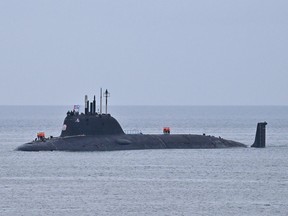
Russia’s strategy is layered presence and power. The most lethal layer is its navy’s formidable nuclear submarines — and yet another one of these is under construction. Another is positioning the paramilitary Russian Coast Guard to exert control over access to the Northern Sea Route, which runs north of Russia and borders on the United States in the east and Norway in the west.
Article content
Article content
Civilian fleets are in on the act, including Russia’s eight nuclear icebreakers, with three more under construction. They are core to Russia’s commercial pitch to promote Arctic shipping year-round — and its assertion of power in the region.
Article content
Fishing fleets and cargo ships add to the picture. Russia just launched its second homebuilt ice-class liquefied natural gas carrier; these vessels are suspected of smuggling and of having security service oversight. Russian fishing companies have been sanctioned by Norwegian and European Union authorities for possible espionage and infrastructure sabotage.
Article content
Russia is forging an economic model around these sea lanes. Its proposed “Transarctic Transport Corridor” would connect southern industrial centres and Siberian resource projects to foreign markets through the Northern Sea Route. The seabed is also on the agenda — offshore drilling and underwater mining are supposed to alleviate dwindling resources on land.
Article content
Propaganda wraps all these layers. Putin’s regime pretends it has a plan for the economy’s future, all running through the north. It portrays Arctic sea lanes as a frontier for national greatness, where trailblazing women captain nuclear icebreakers and where Russians develop innovative technologies like electric vehicles. At the same time, state media deride any Canadian, U.S. or Danish development in the North American Arctic as inherently hostile, a “bridgehead” to threaten Russia — despite almost three decades of its own Arctic military buildup.























/https%3A%2F%2Fsportsmole-media-prod.s3.gra.io.cloud.ovh.net%2Fuploads%2F2026%2F03%2Ficonsport-361551-0102-1-69b560866f7b6508942731.jpg)

 Bengali (BD) ·
  English (US) ·