.png)
 2 hours ago
6
2 hours ago
6
Article content
By Geoff Russ and Warren Mirko

THIS CONTENT IS RESERVED FOR SUBSCRIBERS
Enjoy the latest local, national and international news.
- Exclusive articles by Conrad Black, Barbara Kay and others. Plus, special edition NP Platformed and First Reading newsletters and virtual events.
- Unlimited online access to National Post.
- National Post ePaper, an electronic replica of the print edition to view on any device, share and comment on.
- Daily puzzles including the New York Times Crossword.
- Support local journalism.
SUBSCRIBE FOR MORE ARTICLES
Enjoy the latest local, national and international news.
- Exclusive articles by Conrad Black, Barbara Kay and others. Plus, special edition NP Platformed and First Reading newsletters and virtual events.
- Unlimited online access to National Post.
- National Post ePaper, an electronic replica of the print edition to view on any device, share and comment on.
- Daily puzzles including the New York Times Crossword.
- Support local journalism.
REGISTER / SIGN IN TO UNLOCK MORE ARTICLES
Create an account or sign in to continue with your reading experience.
- Access articles from across Canada with one account.
- Share your thoughts and join the conversation in the comments.
- Enjoy additional articles per month.
- Get email updates from your favourite authors.
THIS ARTICLE IS FREE TO READ REGISTER TO UNLOCK.
Create an account or sign in to continue with your reading experience.
- Access articles from across Canada with one account
- Share your thoughts and join the conversation in the comments
- Enjoy additional articles per month
- Get email updates from your favourite authors
Sign In or Create an Account
or
Article content
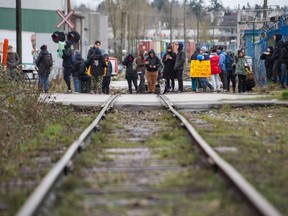
In British Columbia’s northwest, the constitutional trappings of Canadian governance are being replaced and the public is not having a say.
Article content
Article content
Across the province, more and more First Nations governments are making claims to vast swatches of land. Some of the most consequential claims are those of the Tahltan Nation, which has identified 95,933 square kilometres of land as its own territory. That’s about 11 per cent of the entire province. The consequences will be much greater than mere land transfers.
Article content
Article content
B.C. is negotiating what it calls a “comprehensive reconciliation agreement” or “foundation agreement” with the Tahltan and other groups, which is structured around recognition of Aboriginal title. The deal is slated to give enhanced control over boundaries and the local economy to the Tahltan, while still providing government cheques to the group.
Article content
By signing up, you consent to receive the above newsletter from Postmedia Network Inc.
Article content
The province has already begun delegating authority to the Tahltan through new agreements under Section 7 of the Declaration on the Rights of Indigenous Peoples Act (DRIPA). These agreements give the Tahltan new authority over the proposed Eskay Creek Mine Revitalization project and the existing mine, which has been in operation since the 1970s. Under the new scheme, these projects cannot go ahead without Tahltan consent. In effect, the provincial government, accountable to all British Columbians, has become a desk clerk that issues paperwork, for which it does not possess the final sign-off.
Article content
Many will find it difficult to come up with a label for this sort of agreement, but luckily one already exists: sovereignty-association.
Article content
Article content
During Quebec’s 1980 referendum on independence, Quebec’s sovereigntists desired an arrangement of exclusive authority for lawmaking, setting tax rates and conducting foreign relations while preserving economic links and a common currency with Canada; in other words, they wanted sovereignty-association. After that referendum failed, the sovereigntists envisioned a vaguely similar arrangement with Canada in the event of a victory in the 1995 referendum, which also failed.
Article content
At the time, Canada’s federal government was opposed to sovereignty-association, and was prepared to reject any proposals by Quebec that backed it. Luckily for Ottawa, the sovereignties fell short in the second referendum, meaning no arrangement was ever contemplated. That is not the case in B.C., where Indigenous sovereignty-association is being actively endorsed and facilitated by the province.
Article content
B.C. is not in the business of creating independent countries with First Nations, but the operational logic runs parallel to the plan for sovereignty association with Quebec. The Tahltan will exercise territorial authority with their government while Canada holds the bag that makes financial, economic and service integration possible. In effect, the Tahltan and presumably many more First Nations will have functional sovereignty, and administrative association with Canada.




















/https%3A%2F%2Fsportsmole-media-prod.s3.gra.io.cloud.ovh.net%2Fuploads%2F2026%2F01%2Fdanny-welbeck-5-6956bfa3ea945973722124.jpg)
 Bengali (BD) ·
  English (US) ·