.png)
 1 hour ago
5
1 hour ago
5
Researchers believe the dinosaur roamed between 100 and 120 million years ago and is the largest ever found in Southeast Asia
Published May 15, 2026 • Last updated 18 minutes ago • 2 minute read
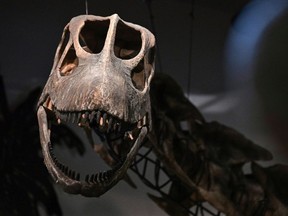
Scientists have identified a new giant dinosaur from remains discovered after a dig in Thailand.
Advertisement 2

THIS CONTENT IS RESERVED FOR SUBSCRIBERS ONLY
Subscribe now to read the latest news in your city and across Canada.
- Unlimited online access to articles from across Canada with one account.
- Get exclusive access to the Toronto Sun ePaper, an electronic replica of the print edition that you can share, download and comment on.
- Enjoy insights and behind-the-scenes analysis from our award-winning journalists.
- Support local journalists and the next generation of journalists.
- Daily puzzles including the New York Times Crossword.
SUBSCRIBE TO UNLOCK MORE ARTICLES
Subscribe now to read the latest news in your city and across Canada.
- Unlimited online access to articles from across Canada with one account.
- Get exclusive access to the Toronto Sun ePaper, an electronic replica of the print edition that you can share, download and comment on.
- Enjoy insights and behind-the-scenes analysis from our award-winning journalists.
- Support local journalists and the next generation of journalists.
- Daily puzzles including the New York Times Crossword.
REGISTER / SIGN IN TO UNLOCK MORE ARTICLES
Create an account or sign in to continue with your reading experience.
- Access articles from across Canada with one account.
- Share your thoughts and join the conversation in the comments.
- Enjoy additional articles per month.
- Get email updates from your favourite authors.
THIS ARTICLE IS FREE TO READ REGISTER TO UNLOCK.
Create an account or sign in to continue with your reading experience.
- Access articles from across Canada with one account
- Share your thoughts and join the conversation in the comments
- Enjoy additional articles per month
- Get email updates from your favourite authors
Article content
The long-necked herbivore stretches 27 metres and weighs about 27 tonnes — the weight of about nine adult elephants, according to a study published in Scientific Reports.
Article content
Article content
Researchers believe the dinosaur roamed the area that’s now known as Thailand between 100 and 120 million years ago and is the largest ever found in Southeast Asia.
‘Big by most people’s standards’
Researchers from Thailand and the U.K. identified the species from fossils found beside a pond in northeastern Thailand 10 years ago. They said the finding sheds light on how ancient climatic condition changes allowed these giant dinosaurs to develop.
The full name of the newly-discovered dino is Nagatitan chaiyaphumensis, with “naga” in reference to a serpent in Southeast Asian folklore, “titan” referring to gods in Greek mythology and chaiyaphumensis deriving “from Chaiyaphum,” the Thai province where the fossils were found, BBC News reported.
“Our dinosaur is big by most people’s standards — it likely weighed at least 10 tonnes more than Dippy the Diplodocus,” lead researcher Thitiwoot Sethapanichsakul said, referring to the enormous composite cast that was previously on display at London’s Natural History Museum, per AFP.
Advertisement 3
Article content
Sethapanichsakul, a Thai PhD student, called the newly found sauropod “the last titan” as it was uncovered in one of the youngest rock formations where dinosaurs are found in Thailand, the University College London noted.
The area later evolved to become a shallow sea, “so this may be the last or most recent large sauropod we will find in Southeast Asia,” Sethapanichsakul said.

Excavation completed in 2024
Nagatitans belonged to a subgroup of sauropods that began about 140 million years ago. About 90 million years ago, they became the only sauropods left in the world, thriving until the dinosaur age ended 66 million years ago, thanks to an asteroid strike, Al Jazeera reported.
The first remains of the giant dinosaur were unearthed by locals a decade ago, but the excavation wasn’t completed until 2024, the study noted. The fossils partially looked like those of previously discovered sauropods, however it had enough unique features to be considered a new species.
A life-size reconstruction is on display at Bangkok’s Thainosaur Museum.
Article content



























/https%3A%2F%2Fsportsmole-media-prod.s3.gra.io.cloud.ovh.net%2Fuploads%2F2026%2F05%2Fchamp-69fa166311171530187348.jpg)
 Bengali (BD) ·
  English (US) ·