.png)
 1 hour ago
8
1 hour ago
8
Montreal will have one less representative in Quebec’s National Assembly following October’s election after the Supreme Court on Wednesday rejected an attempt by the provincial government to delay a planned redrawing of electoral boundaries.
The decision was delivery orally by Chief Justice Richard Wagner, who said only that a majority of the justices on Canada’s highest court had voted to reject the Quebec government’s appeal, with two judges dissenting.
Wagner offered no reasons for the decision but said that a full written decision will come later.
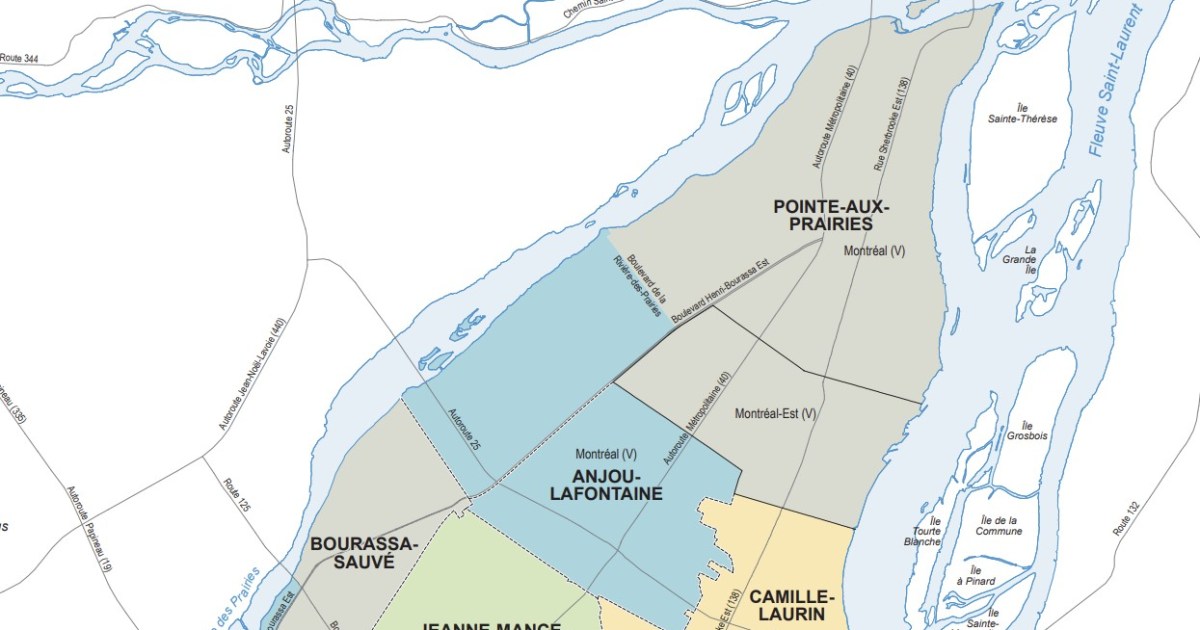
Quebec had sought to delay the introduction of a new electoral map that will remove one riding in eastern Montreal and one on the Gaspé Peninsula while adding ridings in the Centre-du-Québec and the Laurentians regions to account for population changes.

Quebec’s Commission de la représentation électorale usually redraws the electoral map after every second general election, but in May 2024 the National Assembly passed a bill to postpone the redrawing process until after the next election, scheduled to take place in October 2026.
The bill came after all four parties then represented in the legislature objected to the removal of the Gaspé riding, arguing it would leave only two MNAs for the entire region, reducing its political power.
A Superior Court court judge ruled in favour of the government, but last December Quebec’s Court of Appeal ruled that the delay was unconstitutional because it “significantly diluted” the votes of people in the Centre-du-Québec and Laurentides regions and was an “effort to circumvent the independent process provided for in the Election Act.”
Under the new boundaries, the Gaspé riding, whose population has fallen to more than 40 per cent below the provincial average, would be merged with the Bonaventure riding along Chaleur Bay. In Montreal, the Anjou and Lafontaine ridings would be merged.
Montreal Mayor Soraya Martinez Ferrada, who met with Premier Christine Fréchette on Wednesday, said she was disappointed by the ruling, but she agrees with the premier that Montreal must work with the province’s regions.
“Montreal is, of course, very, very disappointed by the Supreme Court’s ruling. Losing a riding also, unfortunately, means losing political weight. That said, this means we must work more collaboratively with the Quebec government to ensure we strengthen the metropolis,” she said. “Currently, the economic conflict lies outside the province of Quebec, and we must close ranks so that all of us — the city and the regions — can work together on the important issues of housing, homelessness, infrastructure and public transit.”
Opposition leader Ericka Alneus of Projet Montréal also lamented the lost seat.
“A sad day for the city. When Montreal loses political clout — especially in the east — it loses a voice to defend very real issues: housing, economic development, infrastructure and the quality of life in our neighbourhoods. East Montreal deserves better,” she said in a statement.
Jesse Feith of The Gazette contributed to this report.
Editor’s Picks

The post Montreal, Gaspésie to lose provincial ridings after Supreme Court ruling appeared first on Montreal Gazette.


















/https%3A%2F%2Fsportsmole-media-prod.s3.gra.io.cloud.ovh.net%2Fuploads%2F2026%2F04%2Ficonsport-362425-0006-1-69cd324521f82764565288.jpg)

 Bengali (BD) ·
  English (US) ·