.png)
 2 hours ago
10
2 hours ago
10
Article content
Most buyers still active in the market, she says, aren’t speculators chasing a paper gain. At Claystone, prospects tend to be downsizers from Oakville and surrounding communities who like the area and want to stay but haven’t bought a new home in decades.
Article content
For those buyers, the incentive is as much about certainty as savings. “A downsizer may be comfortable comparing neighbourhoods and layouts but less familiar with pre-construction paperwork, development charges and occupancy fees. Removing some of that uncertainty can help them get comfortable with the purchase,” Lloyd says.
Article content
Incentives have become more substantial as the market has softened, she adds. “When the market was hot, we weren’t offering any incentives whatsoever.”
Article content
The units proving hardest to move, Van Rhijn says, are small, investor-oriented suites: studios, one-bedrooms and especially micro-units under 500 square feet. “These were designed for investors’ spreadsheet, not for people. It’s shrinkflation, just applied to a condo instead of a bag of chips.”
Article content
And that, among other factors, has opened the door to bulk buying.
Article content
Article content
One of the most striking examples involves Jesta Group. The Montreal-based real-estate company plans to spend up to $500 million acquiring more than 1,000 unsold condo units in downtown Toronto and converting them to rentals. Its first deal was a roughly $30-million purchase of nearly all remaining unsold units in a recently completed downtown building near Toronto Metropolitan University.
Article content
Likewise, a $1.3-billion initiative spearheaded by the Building Ontario Fund in partnership with High Art Capital is designed to acquire blocks of newly completed condo units across the GTA and convert them to rentals. The plan includes an affordability component aimed at workers who earn too much for traditional subsidized housing but too little to comfortably afford market rents.
Article content
“There is a rare opportunity right now to convert newly completed but unsold housing into long-term rental supply at scale,” says High Art Capital managing partner Ryan Roebuck. “This initiative is designed to create real housing availability in the near term, preserve a meaningful affordable component and help stabilize a critical segment of the GTA housing market.”
Article content
Article content
Article content
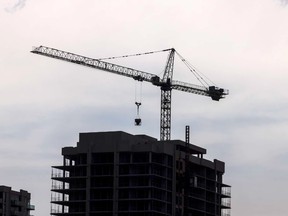
The strategy is straightforward. Rather than sell one unit at a time into a weak owner-occupier market, a developer can sell a block of units to a well-capitalized buyer. The buyer can then lease them out, generate income and wait for the market to recover before selling.
Article content
“The bulk buyers are the part worth watching,” Van Rhijn says. “Jesta alone plans to take on the equivalent of nearly half of the 2,300-odd active resale listings in the entire downtown market.”
Article content
For developers, that kind of transaction can be a lifeline. It clears inventory quickly, reduces exposure to a soft market and releases capital that can be used to pay down debt or move on to other projects. For deep-pocketed buyers, it’s a chance to acquire newly built housing in prime locations at prices that may look attractive over a longer horizon.
Article content
For renters, the effect is more complicated. On the one hand, units that might otherwise sit empty can enter the rental market. That creates immediate housing supply in a region where vacancy remains tight and rents remain high by national standards. On the other hand, it accelerates a broader shift in which homes originally designed for individual ownership end up controlled by larger landlords.



























/https%3A%2F%2Fsportsmole-media-prod.s3.gra.io.cloud.ovh.net%2Fuploads%2F2026%2F07%2Fbradley-barcola-3-6a668f16048c5425723883.jpg)
/https%3A%2F%2Fsportsmole-media-prod.s3.gra.io.cloud.ovh.net%2Fuploads%2F2026%2F01%2Fdanny-welbeck-5-6956bfa3ea945973722124.jpg)
 Bengali (BD) ·
  English (US) ·