.png)
 3 days ago
16
3 days ago
16
For the second year in a row, francophone sovereignists and anglophone federalists are planning to break bread together at the offices of one of Quebec’s most prominent nationalist organizations.
The unlikely dinner — bringing together leaders of the Mouvement national des Québécoises et Québécois and TALQ, a group representing Quebec’s English-speaking community — is part of a rare attempt at dialogue between two solitudes that have long talked past each other.
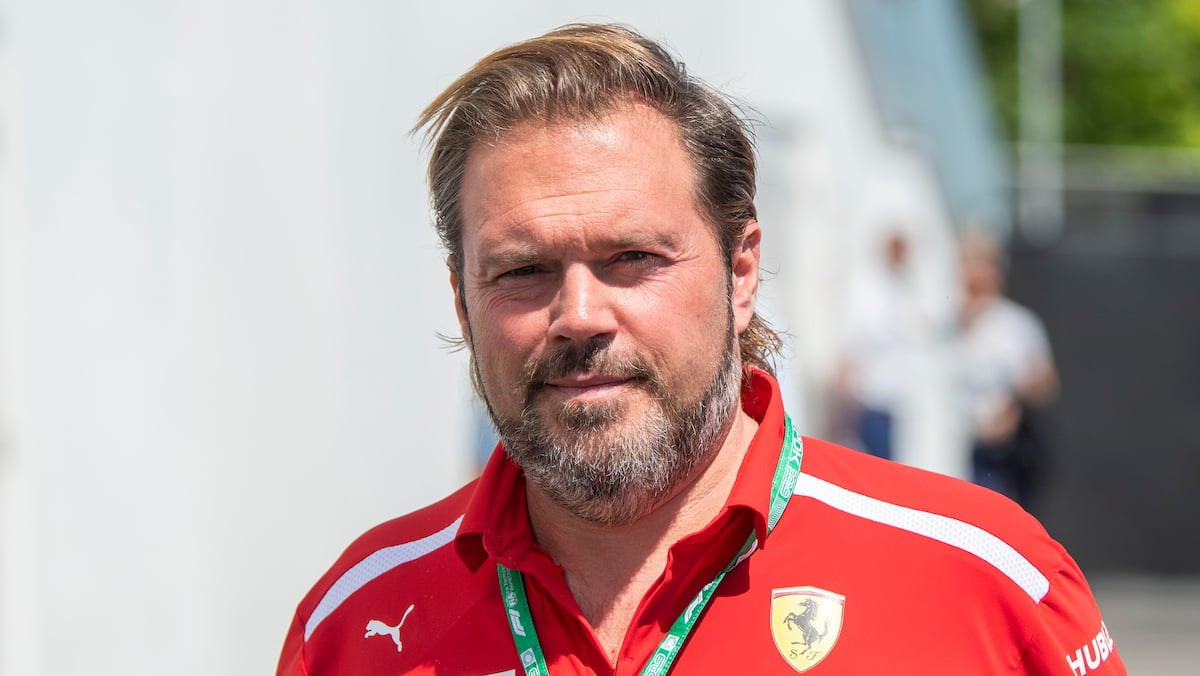
Inspired by a column he read in The Gazette in 2023, MNQ president Frédéric Lapointe — a two-time Parti Québécois candidate — has become an unusual figure in Quebec’s linguistic debates: a nationalist trying to better understand anglophone anxieties even while defending Quebec nationalism.
Last year’s dinner — Lapointe cooked a leg of lamb — fell on the Journée nationale des Patriotes, a day that captures the two solitudes in a single holiday.
Francophones mark Patriotes Day to commemorate the 19th-century rebellion against British rule. Anglophones largely still call it Victoria Day, after the British monarch.
This year, however, another Quebec institution has complicated the scheduling.
“Our shared religion, the Montreal Canadiens, is throwing our schedules into a bit of chaos,” Lapointe said.
The dinners are the most visible sign of a tentative rapprochement between Quebec nationalists and anglophone community leaders — one driven largely by Lapointe himself.
Uncharted territory
In recent months, the MNQ president has become a regular presence at anglo events, from a Concordia symposium on research into Quebec anglophones to a TALQ roundtable at McGill on how francophones and anglophones often interpret the same facts very differently.
It’s uncharted territory for the head of a pro-sovereignty organization that, by Lapointe’s own estimate, backed about 90 per cent of the Coalition Avenir Québec government’s policies — the same agenda that has put anglophones on the defensive.
What has surprised him most during the process, he says, is not anglophones’ arguments but the vulnerability behind them.
“To observe that sincerely, it’s not just rhetoric, but that sincerely people feel like a minority — that for me is a surprise that deserves to be shared,” Lapointe said in an interview.
It’s a revelation that cuts against a reflex he says is common among francophones: dismissing anglophone complaints by pointing to English dominance across North America.
The closer contact has also produced some unlikely praise — the kind anglophones rarely hear from a nationalist.
“I know that there’s probably not a single institution in Quebec that cares more about teaching French than an English school board,” Lapointe told the McGill audience.
He noted that English boards depend on strong French instruction for their survival, and parents worried about losing their children to the rest of Canada demand it.
A search for common ground
That goodwill has limits.
On key issues — sovereignty, language legislation, the notwithstanding clause and the CAQ’s approach to secularism — the two sides remain far apart.
Yet still, the meetings continue — a modest foundation, but a foundation nonetheless.
That spirit of engagement is reflected in TALQ itself.
Previously known as the Quebec Community Groups Network, the organization changed its name last year to one pronounced, pointedly, like “talk,” adopting the tagline Talking. Advocating. Living in Quebec.
For TALQ president Eva Ludvig, Lapointe’s willingness to show up and listen is itself a breath of fresh air.
“We are impressed by his openness, considering the organization that he represents, and his genuine interest in overcoming a lot of the divisive rhetoric,” she said.
“Our ultimate objective is not the same politically — we are not on the same page. But we do think it’s important to recognize each other’s culture and history and contributions.”
In an era of deepening polarization, Ludvig calls TALQ’s meetings with the MNQ “more than friendly — open and respectful.”
Ludvig described the exchanges as the first stages of an effort to find common ground with francophone Quebecers.
A new generation
Affable and fluently bilingual, Lapointe, 53, is from a new generation of nationalists that includes Premier Christine Fréchette, with whom the MNQ leader worked in student politics during the 1990s.
The dialogue with anglophones has not moderated his core convictions.
Lapointe frames Quebec’s survival in Canada in stark terms — a minority that will “bare (its) teeth and bite” as long as it feels threatened, and whose only permanent solution is independence.
What does he tell anglophones who, under the CAQ, say they feel like they’re treated as enemies, or at least as threats, in their own province?
“It’s a real concern, and for an indépendantiste like me, it’s genuinely an equation that needs to be solved,” Lapointe said.
“And it’s a difficult one to solve, for the following reason: What remains of our siege mentality persists because structurally, as long as we are in Canada, where we are a minority, we remain objectively threatened.
“And being threatened like a cornered animal, we’re going to bare our teeth and bite. It’s inseparable from our condition as a minority.”
He added: “The solution to that is independence. But how do you convince people who are being bitten — so to speak — that the solution is to get in the same boat as the animal that bit you?
“You first have to resolve the trust issue. The animal has to stop biting — or the two people getting into that rowboat have to stop seeing each other as a threat, or stop feeling threatened. Everything else follows from that.”
How it started
The MNQ-TALQ relationship began after Lapointe read a Gazette column by Marlene Jennings.
A former president of the anglophone rights group, Jennings wrote that the Journée nationale des Patriotes should be embraced as a shared celebration because the 1837-38 Patriotes movement — and its democratic ideals — was led and supported by both francophones and anglophones.
The article piqued Lapointe’s interest since the MNQ, an umbrella organization that includes groups such as the Société St-Jean-Baptiste de Montréal, organizes Patriotes Day celebrations, as well as St-Jean-Baptiste festivities.
He met with officials from the TALQ and last year co-wrote an op-ed with Ludvig, published in Le Devoir and The Gazette.
In the piece, the two agree “that the English-speaking community of today is not the enemy many Québécois still believe it to be.”
“Along with that, we reiterate what we have been saying for many years: The English-speaking community of Quebec is not in itself an existential threat to French in Quebec,” they wrote.
At the same time, “anglophones among us need to recognize more fully that their fellow Québécois whose mother tongue is French don’t lie awake at night trying to figure out ways to suppress them, their institutions and their constitutional rights.”
Fire from his own side
Lapointe’s reconciliation efforts have not sat well with everyone in the nationalist camp.
After the MNQ-TALQ op-ed, L’aut’journal, a left-wing pro-sovereignty publication, pilloried him under the headline “Honte à vous, Monsieur Frédéric Lapointe.”
Writer Pierre Dubuc, a prominent sovereignist, argued Lapointe should resign for having “betrayed the trust of Quebecers” — noting TALQ was simultaneously fighting Bill 96 and Bill 21 in court.
Lapointe, president of the MNQ since 2022, takes the criticism in stride.
He said he received far more congratulations than criticism, and placed critics in a specific context: They are part of a generation that forged its worldview in the 1960s and 1970s, an early chapter of the sovereignist movement. “They belong to their era,” Lapointe said.
It is not the first time he has absorbed fire from his own side.
In 2023, secularism hardliners demanded he drop singer Émile Bilodeau as host of Quebec City’s Fête nationale concert on the Plains of Abraham because Bilodeau had publicly opposed Bill 21. The PQ boycotted the event. Lapointe kept him anyway.
An ‘exotic’ trip to N.D.G.
Born in Abitibi-Témiscamingue, Lapointe cut his teeth in Montreal municipal politics working alongside anglophones — first with Vision Montréal under Louise Harel in 2009, then as a founder of the Civic Action League, an anti-corruption group.
That political apprenticeship sparked a curiosity that has since taken him to unexpected places.
That includes what he jokingly calls an “almost exotic” visit to the Canadian Legion in heavily anglophone Notre-Dame-de-Grâce. He was there to watch What We Choose to Remember, a documentary by Guy Rex Rodgers about Quebec anglophones and non-francophone immigrants.
Rodgers’s research has drawn Lapointe into some of the more sensitive corners of Quebec’s linguistic history.
That includes the issue of Catholic immigrants turned away from Quebec’s French schools from the 1940s to the 1960s, ending up in the English system.
It’s a controversial topic for some, with skeptical francophones still quoting a 1997 article in which Quebec historian Robert Gagnon found no documentary evidence that French Catholic schools refused immigrant students.
In March, Lapointe shared a Gazette article on social media highlighting Rodgers’s work cataloguing testimonials from people turned away by French Catholic schools — directly rebutting the notion that immigrants were the ones who rejected the francophone system.
Talking about what happened in that era “is very important because it seems to carry the weight of a founding myth for the English-speaking community,” Lapointe wrote at the time.
“This is an important conversation to have.”
Later, Lapointe said he accepts the testimonies of immigrant children — many of them Italian-Canadian Catholics — who say they were turned away by French schools.
He said he can explain why: Schools were overcrowded because many rural Quebecers were moving to cities at the time, francization was simply not part of their institutional capacity, and yes, some xenophobia existed too, as it did everywhere in that era.
A ‘dialogue of the deaf’
What he pushes back on is the weight the memory carries today.
The majority francophone Quebec has now spent decades doing the opposite — not just welcoming immigrants into French schools, but legally requiring it, he noted.
There is a kind of “dialogue of the deaf,” Lapointe said, where one side says “we’ve always wanted you” and the other says “you refused us.”
The refusal, he argues, has taken on the character of a “founding myth” for the anglophone community: rooted in something real, but carrying a disproportionate importance, and used — not always consciously — to delegitimize francophone Quebec’s right to enforce its language laws today.
“It’s a way of saying to the majority: You are not entitled to impose your choices on us,” he said.
That’s the kind of conversation he wants to have — difficult, well intentioned, and conducted without defensiveness on either side.
Editor’s Picks


The post Meet the sovereignist who keeps inviting federalist anglophones to dinner appeared first on Montreal Gazette.




























 Bengali (BD) ·
  English (US) ·