.png)
 7 hours ago
16
7 hours ago
16
Article content
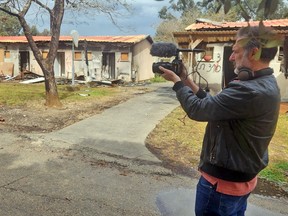
When Hamas attacked Kibbutz Kfar Aza on Oct. 7, 2023, a WhatsApp chat connected women living through the assault in real time. In the months and years since, the chat group has remained a communication link for survivors who lost relatives, homes and the ordinary lives they once shared.

THIS CONTENT IS RESERVED FOR SUBSCRIBERS
Enjoy the latest local, national and international news.
- Exclusive articles by Conrad Black, Barbara Kay and others. Plus, special edition NP Platformed and First Reading newsletters and virtual events.
- Unlimited online access to National Post.
- National Post ePaper, an electronic replica of the print edition to view on any device, share and comment on.
- Daily puzzles including the New York Times Crossword.
- Support local journalism.
SUBSCRIBE FOR MORE ARTICLES
Enjoy the latest local, national and international news.
- Exclusive articles by Conrad Black, Barbara Kay and others. Plus, special edition NP Platformed and First Reading newsletters and virtual events.
- Unlimited online access to National Post.
- National Post ePaper, an electronic replica of the print edition to view on any device, share and comment on.
- Daily puzzles including the New York Times Crossword.
- Support local journalism.
REGISTER / SIGN IN TO UNLOCK MORE ARTICLES
Create an account or sign in to continue with your reading experience.
- Access articles from across Canada with one account.
- Share your thoughts and join the conversation in the comments.
- Enjoy additional articles per month.
- Get email updates from your favourite authors.
THIS ARTICLE IS FREE TO READ REGISTER TO UNLOCK.
Create an account or sign in to continue with your reading experience.
- Access articles from across Canada with one account
- Share your thoughts and join the conversation in the comments
- Enjoy additional articles per month
- Get email updates from your favourite authors
Sign In or Create an Account
or
Article content
That group is at the centre of Where Do We Belong?, a new documentary produced and edited by Canadian-Israeli filmmaker Igal Hecht and directed by Israeli filmmaker Dotan Nave. Rather than retelling Oct. 7 through the attack itself, the film follows its longer trajectory of two and a half years: grief, displacement, medical recovery, parenthood, group meetings and the difficult prospect of beginning again.
Article content
Article content
Advertisement 1
Article content
The film premieres on Israel’s Channel 8 on Oct. 5. It will then screen Oct. 7 at Toronto’s Zionist Centre and Oct. 8 at Vancouver’s Norman Rothstein Theatre, as part of the Vancouver Jewish Film Festival.
Article content
By signing up you consent to receive the above newsletter from Postmedia Network Inc.
Article content
Hecht, born in Israel and raised in Toronto, will attend both Canadian screenings for post-film Q&As.
Article content
Over a career spanning nearly three decades, Hecht has produced more than 70 documentary films and 25 television series.
Article content
Dave Gordon interviewed Hecht for the National Post.
Article content
What did following these women for more than two years allow you to show that an immediate account of Oct. 7 could not?
Article content
You see the mourning process unfold and, especially with Jessica, the realization that there is no alternative but to move forward. These women endured the tragedy together in real time through their WhatsApp group. They lost loved ones and are deeply interconnected, as happens in a close-knit kibbutz. Their friendship became a support system: they mourned together, moved together, and have chosen to remain neighbours through three relocations. The film shows how essential that kind of support is — not only after October 7, but in life generally.
Article content
Advertisement 2
Article content
You and Dotan began filming three weeks after Oct. 7. Why make the women’s group the narrative spine?
Article content
Article content
Dotan deserves the credit. He was volunteering at Kibbutz Kfar Aza and met Amit; after a few weeks of getting to know the women, the project began. We understood that their WhatsApp group was an extraordinary way to tell the story: it connected them as they experienced the attack in real time.
Article content
Originally, we expected to film for six months. But rather than stopping at the attack and immediate aftermath, we decided to follow what came next: the daily work of surviving — raising children, going back to work, managing social obligations, and finding a way forward after losing a husband or a home. We gradually stripped away some of the Oct. 7 material to focus on a story that had not been told before.
Article content
That longer timeline made stories possible that we could not have anticipated. Ellie, who was severely burned along with her husband and two-year-old daughter, rebuilt her life, completed her studies, became a doctor and later gave birth to another child. That is a story of recovery and renewal, and it would have been impossible to tell had we stopped after six months or a year.




















/https%3A%2F%2Fsportsmole-media-prod.s3.gra.io.cloud.ovh.net%2Fuploads%2F2026%2F09%2Fmikel-arteta-21-6ab9a6087b35f019707296.jpg)
 Bengali (BD) ·
  English (US) ·