.png)
 1 hour ago
12
1 hour ago
12
Article content
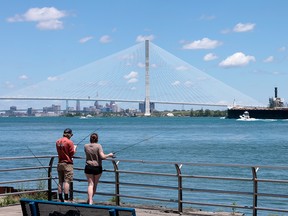
Prime Minister Mark Carney continued to face questions on Thursday about the financial details of a deal his government made with the United States to open the Gordie Howe International Bridge on July 27.

THIS CONTENT IS RESERVED FOR SUBSCRIBERS
Enjoy the latest local, national and international news.
- Exclusive articles by Conrad Black, Barbara Kay and others. Plus, special edition NP Platformed and First Reading newsletters and virtual events.
- Unlimited online access to National Post.
- National Post ePaper, an electronic replica of the print edition to view on any device, share and comment on.
- Daily puzzles including the New York Times Crossword.
- Support local journalism.
SUBSCRIBE FOR MORE ARTICLES
Enjoy the latest local, national and international news.
- Exclusive articles by Conrad Black, Barbara Kay and others. Plus, special edition NP Platformed and First Reading newsletters and virtual events.
- Unlimited online access to National Post.
- National Post ePaper, an electronic replica of the print edition to view on any device, share and comment on.
- Daily puzzles including the New York Times Crossword.
- Support local journalism.
REGISTER / SIGN IN TO UNLOCK MORE ARTICLES
Create an account or sign in to continue with your reading experience.
- Access articles from across Canada with one account.
- Share your thoughts and join the conversation in the comments.
- Enjoy additional articles per month.
- Get email updates from your favourite authors.
THIS ARTICLE IS FREE TO READ REGISTER TO UNLOCK.
Create an account or sign in to continue with your reading experience.
- Access articles from across Canada with one account
- Share your thoughts and join the conversation in the comments
- Enjoy additional articles per month
- Get email updates from your favourite authors
Sign In or Create an Account
or
Article content
In particular, Carney was pressed on what share of the tolls will go to each party, given that originally Canada was to receive all the tolls until it was fully repaid for fully financing the bridge, after which the two countries would split the revenues. The terms of the new deal, agreed to last week, have not been disclosed by either the Canadian or U.S. government. Carney has said the new arrangement will see the U.S. immediately getting some share of revenues, but has been pressed to clarify exactly how much.
Article content
Article content
Article content
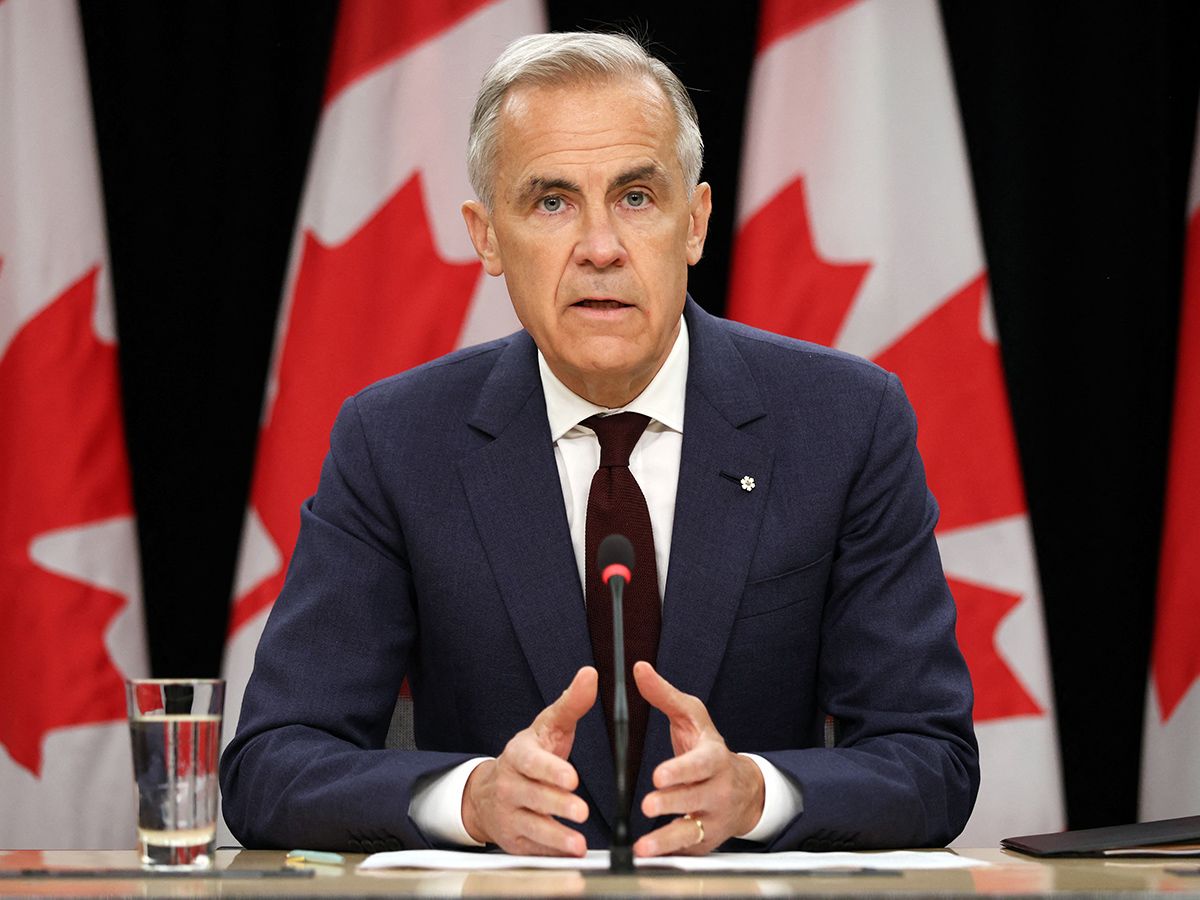
“We will split net revenues over the course of the first 15 years, and those net revenues are after operational costs,” said Carney, during a press conference in London, Ont. on Thursday. “It’s manning the toll booths, it’s maintenance, it’s snow removal, a series of other operational costs.”
Article content
Article content
Carney had originally told CTV News on Sunday that the split in net revenue with the U.S. will come after accounting for debt-servicing costs on Canada’s financing for the bridge.
Article content
But Bloomberg News reported this week that a U.S. official contradicted that and that interest costs will not be included in the calculation. The prime minister made no reference to debt-servicing costs in his comments on Thursday.
Article content
Carney said no split of the toll revenue will happen until after the debt is repaid and he expects net revenues for the first couple of years to be “modest.”
Article content
The connector from Windsor, Ont. to Detroit, began construction in 2018 to address the congestion on the privately owned Ambassador Bridge, which handles just over a quarter of all Canada-U.S. trade.
Article content
The construction was financed by Canada at a cost of $6.4 billion and an agreement was struck with Michigan to allow Canada to receive all the revenue until it could recover those costs. Michigan and Canada are joint owners of the bridge.
Article content
Article content
In February, U.S. President Donald Trump said he did not agree with those terms of the deal and eventually blocked an opening ceremony that was scheduled to take place in June after construction had completed, reportedly on the urging of U.S. Treasury Secretary Howard Lutnick.
Article content
Article content
On Friday, Ottawa announced that an agreement had been reached to open the bridge on July 27. On Saturday, U.S. President Donald Trump indicated in a post on Truth Social that the new deal was more lucrative for the American side.
Article content
“I was able to cut a MUCH BETTER DEAL for America,” he wrote. “The original deal made was unacceptable to me!”
Article content
On Thursday, Ontario Premier Doug Ford was asked if he knew any details on the new agreement.
Article content
“That’s a question for the prime minister to answer,” said Ford, during a press conference in Windsor, Ont. “I’m sure it was between the president and the prime minister that struck the deal.”
Article content
“But if I knew, I’d mention it,” the premier added.
Article content
There is speculation that the reason for Trump and Lutnick’s opposition to the bridge opening has to do with lobbying efforts by the Moroun family, which owns the Ambassador Bridge, a crossing that stands to lose revenue to a competing trade route. Lutnick had met with the owner prior to Trump cancelling the June opening.


















/https%3A%2F%2Fsportsmole-media-prod.s3.gra.io.cloud.ovh.net%2Fuploads%2F2026%2F07%2Fdaniel-mcgregor-huyer-zuma-press-wire-luciano-gonzalez-anadolu-abacapress-com-estadio-azteca-harry-kane-jude-bellingham-composite-6a49eb8857b70695441164.png)
 Bengali (BD) ·
  English (US) ·