.png)
 1 hour ago
10
1 hour ago
10
Article content
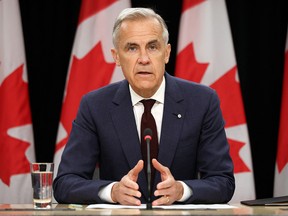
An 86-year-old Sault Ste. Marie woman lost close to a million dollars to a deepfake of Prime Minister Mark Carney she saw on Facebook.

THIS CONTENT IS RESERVED FOR SUBSCRIBERS
Enjoy the latest local, national and international news.
- Exclusive articles by Conrad Black, Barbara Kay and others. Plus, special edition NP Platformed and First Reading newsletters and virtual events.
- Unlimited online access to National Post.
- National Post ePaper, an electronic replica of the print edition to view on any device, share and comment on.
- Daily puzzles including the New York Times Crossword.
- Support local journalism.
SUBSCRIBE FOR MORE ARTICLES
Enjoy the latest local, national and international news.
- Exclusive articles by Conrad Black, Barbara Kay and others. Plus, special edition NP Platformed and First Reading newsletters and virtual events.
- Unlimited online access to National Post.
- National Post ePaper, an electronic replica of the print edition to view on any device, share and comment on.
- Daily puzzles including the New York Times Crossword.
- Support local journalism.
REGISTER / SIGN IN TO UNLOCK MORE ARTICLES
Create an account or sign in to continue with your reading experience.
- Access articles from across Canada with one account.
- Share your thoughts and join the conversation in the comments.
- Enjoy additional articles per month.
- Get email updates from your favourite authors.
THIS ARTICLE IS FREE TO READ REGISTER TO UNLOCK.
Create an account or sign in to continue with your reading experience.
- Access articles from across Canada with one account
- Share your thoughts and join the conversation in the comments
- Enjoy additional articles per month
- Get email updates from your favourite authors
Sign In or Create an Account
or
Article content
She is one of a growing number of Canadians being defrauded by artificial intelligence. Scammers are using AI to fake the faces of people the public trusts, and selling investments that do not exist.
Article content
Article content
Judy Skene, a retired pharmacist, saw a Facebook ad in July 2025 in which a deepfake of Carney told viewers to put $350 into a cryptocurrency platform, SooToday reported. The video claimed the money would be backed by the Bank of Canada, Skene told CTV News. Carney never made it.
Article content
Article content
A deepfake is video or audio generated by AI to make a real person appear to say or do something they never did. They are being used to impersonate politicians, celebrities, financial experts and government officials, said Jeff Horncastle, client and communications outreach officer at the Canadian Anti-Fraud Centre.
Article content
By signing up you consent to receive the above newsletter from Postmedia Network Inc.
Article content
“The advertisement is usually only the first step,” Horncastle said.
Article content
Once someone clicks or hands over their contact information, a fraudster may call posing as an investment advisor, Horncastle said. The victim may then be directed to a professional-looking trading platform, encouraged to buy cryptocurrency or asked to hand over remote access to their computer. The platform may display fabricated profits, he said.
Article content
Skene’s case followed that pattern. She signed up and paid, and a caller told her the money had already tripled, CTV News reported. The scammers sent her a link that gave them access to her computer, where they found her investments, her longtime friend Pat Probert told SooToday.
Article content
Over several months she cashed in a $650,000 registered retirement income fund, mortgaged her Bay Street condo for $300,000 and took a $35,000 cash advance on her credit card, according to SooToday. The scammers promised her $40,000 a month in dividends if she kept investing, SooToday reported.
Article content
Article content
The deepfake supplies the credibility, but the fraud itself still runs on social engineering, Horncastle said. Fraudsters use the image and voice of someone Canadians recognize to lower their guard.
Article content
Article content
A local CIBC branch told Skene she was being scammed, Probert told SooToday, and she stayed convinced. The scammers had told her not to tell anyone, because her friends would be angry that she was making so much money.
Article content
“It’s not necessarily a new fraud that we’re seeing, it’s the existing types of fraud, but the tactics tend to change,” Horncastle said. The technology, he said, is easily available to almost anyone.
Article content
Skene’s case is not unusual. A Toronto man lost $12,000 to a deepfake of former prime minister Justin Trudeau pushing a cryptocurrency platform. He started with $250, kept investing and believed it had grown past $40,000 before he tried to withdraw.
Article content
Scams like Skene’s are classified as cryptocurrency investment fraud, part of a broader category that has cost Canadians more than $1.2 billion since 2022, SooToday reported. Most of those losses involve cryptocurrency, digital money that moves online without a bank.


























/https%3A%2F%2Fsportsmole-media-prod.s3.gra.io.cloud.ovh.net%2Fuploads%2F2026%2F07%2Fdaniel-mcgregor-huyer-zuma-press-wire-luciano-gonzalez-anadolu-abacapress-com-estadio-azteca-harry-kane-jude-bellingham-composite-6a49eb8857b70695441164.png)
 Bengali (BD) ·
  English (US) ·