.png)
 2 days ago
16
As trade negotiations advance, the federal government faces a problem of its own making: convincing Canadians that an agreement isn't surrender.
Published Nov 23, 2026 • Last updated 3 hours ago • 3 minute read

See more Toronto Sun on Google — save as a Preferred Source
Advertisement 2

THIS CONTENT IS RESERVED FOR SUBSCRIBERS ONLY
Subscribe now to read the latest news in your city and across Canada.
- Unlimited online access to articles from across Canada with one account.
- Get exclusive access to the Toronto Sun ePaper, an electronic replica of the print edition that you can share, download and comment on.
- Enjoy insights and behind-the-scenes analysis from our award-winning journalists.
- Support local journalists and the next generation of journalists.
- Daily puzzles including the New York Times Crossword.
SUBSCRIBE TO UNLOCK MORE ARTICLES
Subscribe now to read the latest news in your city and across Canada.
- Unlimited online access to articles from across Canada with one account.
- Get exclusive access to the Toronto Sun ePaper, an electronic replica of the print edition that you can share, download and comment on.
- Enjoy insights and behind-the-scenes analysis from our award-winning journalists.
- Support local journalists and the next generation of journalists.
- Daily puzzles including the New York Times Crossword.
REGISTER / SIGN IN TO UNLOCK MORE ARTICLES
Create an account or sign in to continue with your reading experience.
- Access articles from across Canada with one account.
- Share your thoughts and join the conversation in the comments.
- Enjoy additional articles per month.
- Get email updates from your favourite authors.
THIS ARTICLE IS FREE TO READ REGISTER TO UNLOCK.
Create an account or sign in to continue with your reading experience.
- Access articles from across Canada with one account
- Share your thoughts and join the conversation in the comments
- Enjoy additional articles per month
- Get email updates from your favourite authors
Article content
Canada’s chief trade negotiator had a simple question for the business leaders in the room last week.
Article content
Article content
At a meeting of the Advisory Committee on Canada-U.S. Economic Relations, Janice Charette wanted to know whether the government could count on members to sell any deal Ottawa arrives at with Washington.
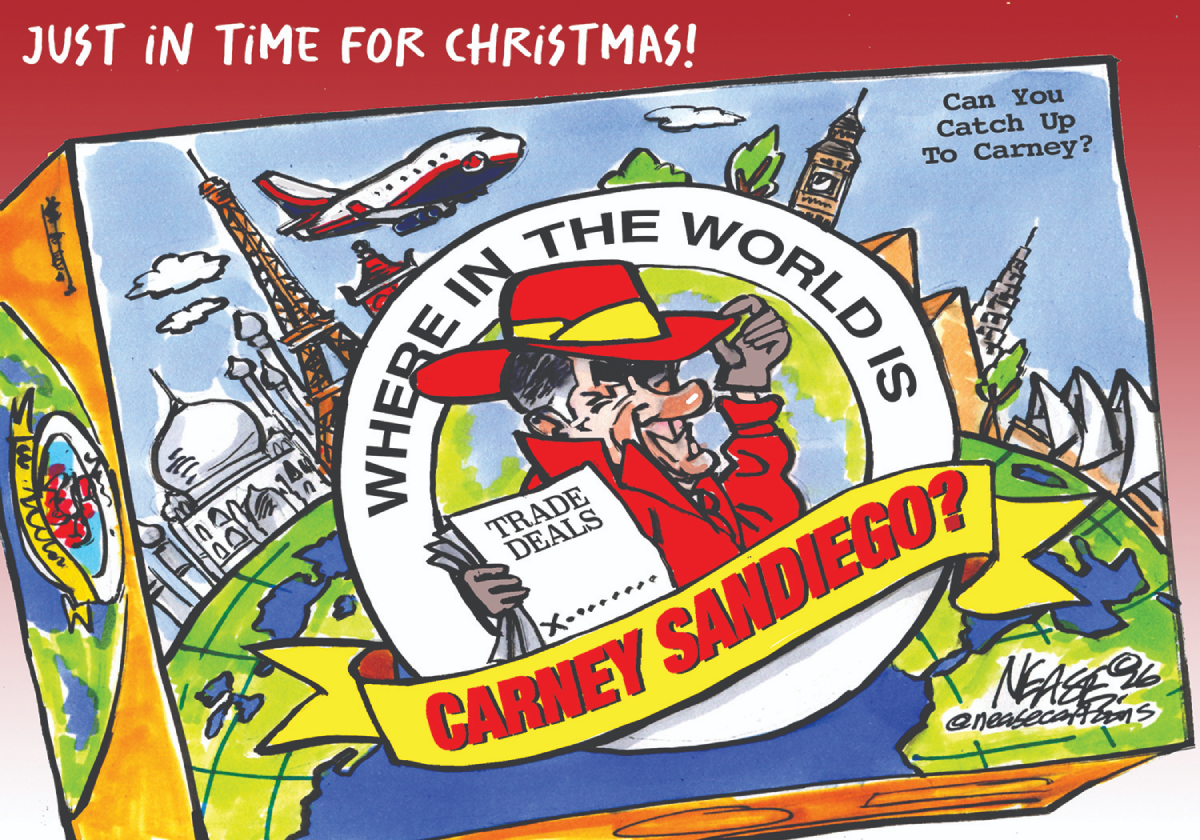
Just asking the question suggests the Carney government has realized it may have put the public into a mood where the only acceptable deal is no deal at all.
Canadian and American officials have spent weeks feeling each other out, wary of a repeat of last August’s breakdown in talks.
Can Ottawa sell a deal?
With talk of a potential trade deal heating up, the Carney government is trying to figure out how to sell a deal after almost two years of warning against dealing with the Americans.
The simple fact of the matter is that Canada-U.S. trade relations are much better than many would think. That’s a point U.S. Trade Representative Jamieson Greer made during an appearance on Fox News on Sunday.
By signing up you consent to receive the above newsletter from Postmedia Network Inc.
Article content
Advertisement 3
Article content
Asked about trade trouble with Canada, he said something politicians relying on an Elbows Up mentality don’t want to admit.
“It’s a more positive story, I think, than people realize,” Greer said.
He’s right about that. While trade has taken a hit, the relationship remains far stronger than the politics would suggest.
In 2025, two-way trade between Canada and the United States was worth $1.03 trillion Cdn, compared to $1.08 trillion Cdn in 2024. Much of the difference was due to lower oil prices, which have since rebounded.
Greer wasn’t all sunshine and roses as he talked about the trade talks, pointing specifically to China and Canada’s view on globalization.
“They are actually having a little bit of a rapprochement on trade with China, importing Chinese vehicles. They just announced that they were going to be giving waivers to Chinese steel and aluminum. Our view is this: this goes a little bit backwards. We’re trying to manage North American trade in auto steel and aluminum,” Greer said, noting these moves give the American side pause for concern.
Advertisement 4
Article content
Read More
-

U.S. tariffs could drive Canada to Chinese automakers: PM
-

Carney says he had 'good conversation' with Trump regarding trade


The real sticking points
Greer said the Americans want a deal that protects North American markets, but that there is a divide in outlook between the two countries.
“The Canadian leadership has always been more inclined to free trade and open trade. We’re more inclined to fixing the challenges of globalization. They’re more interested in doubling down on globalization. I think it’s a philosophical difference, and we’re trying to square the circle between their economy and ours,” Greer said.
Those are real differences, but Alberta Premier Danielle Smith believes they can be bridged.
Speaking in Toronto on Monday, Smith said she believes a deal is possible and that it could come before the end of the year.
“Just knowing the type of personality that we have in the White House, I don’t think he wants to be perceived to having been pushed into a deal by the Democrats who are going to be sworn in,” Smith said at an event organized by the Toronto and Region Board of Trade.
Advertisement 5
Article content
“It seems to me that this is the window for him to say that whatever strategy he was employing with Canada, that it worked, and here’s a big beautiful deal that works for America, and so that’s what I’m hoping for.”
The problem Ottawa created
Smith acknowledged Greer’s optimism before expressing frustration at the lack of a deal. She said Canada was being distracted by small issues rather than pushing on the big issues where she believes we have leverage.
“Do they want the Golden Dome or not? Do they want Arctic security or not?” Smith said.
Building the Golden Dome, she noted, would mean laying broadband infrastructure across Canada’s Arctic communities and in the south, then connecting it to data centres capable of intercepting any threats.
Smith added that Canada and the United States also have the chance to work together on energy and AI data-centre dominance, but she feels that opportunity is being lost over smaller issues.
She’s right that Canada has cards to play. But leverage at the table means little if the government can’t sell the result at home.
Charette’s question to the advisory committee is the one Ottawa should have been asking itself months ago. It’s one thing to negotiate a deal with Washington. Selling it to Canadians may prove much harder.
RECOMMENDED VIDEO

We apologize, but this video has failed to load.
Article content



























 Bengali (BD) ·
 English (US) ·