.png)
 1 day ago
30
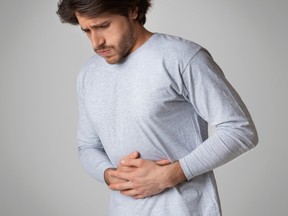
Irritable bowel syndrome, or IBS, is about two times more common in women than in men.
Author of the article:

Washington Post
Trisha Pasricha, MD, The Washington Post
Published Nov 25, 2026 • Last updated 5 minutes ago • 4 minute read
See more Toronto Sun on Google — save as a Preferred Source
Advertisement 2

THIS CONTENT IS RESERVED FOR SUBSCRIBERS ONLY
Subscribe now to read the latest news in your city and across Canada.
- Unlimited online access to articles from across Canada with one account.
- Get exclusive access to the Toronto Sun ePaper, an electronic replica of the print edition that you can share, download and comment on.
- Enjoy insights and behind-the-scenes analysis from our award-winning journalists.
- Support local journalists and the next generation of journalists.
- Daily puzzles including the New York Times Crossword.
SUBSCRIBE TO UNLOCK MORE ARTICLES
Subscribe now to read the latest news in your city and across Canada.
- Unlimited online access to articles from across Canada with one account.
- Get exclusive access to the Toronto Sun ePaper, an electronic replica of the print edition that you can share, download and comment on.
- Enjoy insights and behind-the-scenes analysis from our award-winning journalists.
- Support local journalists and the next generation of journalists.
- Daily puzzles including the New York Times Crossword.
REGISTER / SIGN IN TO UNLOCK MORE ARTICLES
Create an account or sign in to continue with your reading experience.
- Access articles from across Canada with one account.
- Share your thoughts and join the conversation in the comments.
- Enjoy additional articles per month.
- Get email updates from your favourite authors.
THIS ARTICLE IS FREE TO READ REGISTER TO UNLOCK.
Create an account or sign in to continue with your reading experience.
- Access articles from across Canada with one account
- Share your thoughts and join the conversation in the comments
- Enjoy additional articles per month
- Get email updates from your favourite authors
Article content
It seems like many of my girlfriends have IBS. Why does it seem to impact more women than men?
Article content
Recommended Videos
Article content
Irritable bowel syndrome, or IBS, is about two times more common in women than in men. It’s also one of the most common diagnoses I treat as a gastroenterologist: Around 15 percent of people in the United States may have it.
IBS is characterized by recurring pain linked to having a bowel movement – constipation, diarrhea or a mix – that lasts for months. People often have bloating, urgency and could have other chronic pain conditions like migraines or fibromyalgia. There’s no single cause, but research has uncovered abnormalities inside the gut itself – including changes in the microbiome and subtle inflammation triggering the colon’s nerves – that help explain the symptoms people experience.
But a big mystery has lingered: Why does this happen more often to women?
As it turns out, women had reported one important clue for decades. Women with IBS can have measurably more sensitive guts during their periods – a pattern not seen in women without IBS. Many also notice changes during pregnancy. The gap in IBS incidence between men and women starts to open around puberty, and later in life, rates of IBS fall closer to those of men. These data suggested hormones – including a rapid decline in them – may play a role.
By signing up you consent to receive the above newsletter from Postmedia Network Inc.
Article content
Advertisement 3
Article content
Could the missing puzzle piece be estrogen? Last December, researchers at the University of California at San Francisco published a major study in Science that got us closer to an answer: In the gut, estrogen may dial up the volume on pain.
The researchers found that the nerves in the guts of female mice were more sensitive than males – firing more readily in response to the same stimulus. This part fit with what physicians had observed for many years in humans.
However, when the researchers removed the ovaries – and with them, most of the estrogen – that sensitivity dropped. Then they gave estrogen back to the mice that had their ovaries removed. And when they did, the pain returned.
But here’s the twist: The researchers found that when they gave estrogen to male mice, their guts became more sensitive, too.
It turns out estrogen makes certain cells in the colon more responsive to acetate, a by-product of our gut bacteria breaking down food. This prompts a signaling cascade to release serotonin, which fires up the nerves carrying pain signals. While this pathway exists for both males and females, estrogen dials up the volume.
Advertisement 4
Article content
Interestingly, the researchers also found that the pain response could be blocked by a drug called alosetron, which is used to treat severe IBS with diarrhea in women. The study also found that estrogen may make cells trigger a pain response more readily in response to short-chain fatty acids – molecules produced by gut bacteria when they ferment food. The authors believe that pathway may help explain why a low FODMAP diet, which reduces the intake of fermentable carbohydrates such as beans, onion, garlic and apples, often eases symptoms in IBS.
The scientists also found that when they removed estrogen receptors from the gut lining, food moved through more quickly – which also fits with what we see in the clinic, where constipation-predominant IBS affects more women than men.
These findings will need to be confirmed in humans, and hormones are likely only one piece of a larger puzzle.
For instance, women are more likely to develop IBS after a bout of food poisoning or a stomach bug – one of the most well-established risk factors for IBS. And psychological stress has real impact on how the gut moves – something researchers measured as far back as the 1940s.
Advertisement 5
Article content
Many people with anxiety or depression have IBS. But I tell my patients that – just like with any chronic medical condition – it is the IBS that can cause the anxiety and depression, not simply the other way around. Studies have found that it’s often a vicious cycle, where the symptoms fuel each other.
IBS is a treatable condition – and you should not rely on what you’ve heard on TikTok because IBS misinformation on social media runs rampant.
Besides considering working with a registered dietitian to explore a low FODMAP diet, the over-the-counter soluble fiber supplement psyllium husk is considered a first-line therapy. There are also several FDA-approved medications that have great success rates and are worth discussing with your physician if you haven’t found relief.
There’s a pervasive myth on social media and even many doctor’s offices that IBS is “all in your head.” But that just isn’t true.
In medicine, we’ve traditionally thought that inflammation triggers pain. Now we’re beginning to learn that the link to many painful conditions disproportionately impacting women, such as IBS and autoimmune conditions, may be because it is pain that is causing inflammation – a concept known as neurogenic inflammation.
Advertisement 6
Article content
In the case of endometriosis, one common mimic of IBS, recent groundbreaking studies have shown the relationship can absolutely go both ways.
Endometriosis is underdiagnosed and sometimes misdiagnosed as IBS. Women with endometriosis often go years without getting the right diagnosis. If your pain is severe around your period, painful during sex or simply not improving with IBS treatment, it’s important to talk to a specialist in gynecology earlier rather than later.
For more health news and content around diseases, conditions, wellness, healthy living, drugs, treatments and more, head to Healthing.ca – a member of the Postmedia Network.
Article content






























 Bengali (BD) ·
 English (US) ·