.png)
 1 week ago
14
1 week ago
14
The prime minister points to Sir John A. Macdonald's response to American tariffs, but recent history shows why China and the EU are no substitute for the U.S. market.
Published Sep 08, 2026 • Last updated 5 hours ago • 4 minute read

See more Toronto Sun on Google — save as a Preferred Source
Mark Carney invoked Canadian history Tuesday as he warned the tariff war with the United States will cause pain. Sadly, while he looked to legitimate examples from the 1890s related to trade with the United States, he didn’t look to recent history, which would show why China and the EU are not great alternatives.
Article content
Article content
In the latest “Forward Guidance” video, Carney looked to the example of Sir John A. Macdonald and his National Policy and the threat of tariffs from American politician William McKinley. It’s interesting to see a Liberal prime minister invoke the name and the policies of Sir John A. after so many years of that party tearing him down.
In 1890, William McKinley, then just a Republican member of Congress, helped pass a bill that would increase tariffs on Canadian goods, and those from other countries, to as much as 50%. As Carney tells it, McKinley’s goal was to use tariffs to annex Canada.
“Does that sound familiar?” Carney quipped.
Advertisement 2

THIS CONTENT IS RESERVED FOR SUBSCRIBERS ONLY
Subscribe now to read the latest news in your city and across Canada.
- Unlimited online access to articles from across Canada with one account.
- Get exclusive access to the Toronto Sun ePaper, an electronic replica of the print edition that you can share, download and comment on.
- Enjoy insights and behind-the-scenes analysis from our award-winning journalists.
- Support local journalists and the next generation of journalists.
- Daily puzzles including the New York Times Crossword.
SUBSCRIBE TO UNLOCK MORE ARTICLES
Subscribe now to read the latest news in your city and across Canada.
- Unlimited online access to articles from across Canada with one account.
- Get exclusive access to the Toronto Sun ePaper, an electronic replica of the print edition that you can share, download and comment on.
- Enjoy insights and behind-the-scenes analysis from our award-winning journalists.
- Support local journalists and the next generation of journalists.
- Daily puzzles including the New York Times Crossword.
REGISTER / SIGN IN TO UNLOCK MORE ARTICLES
Create an account or sign in to continue with your reading experience.
- Access articles from across Canada with one account.
- Share your thoughts and join the conversation in the comments.
- Enjoy additional articles per month.
- Get email updates from your favourite authors.
THIS ARTICLE IS FREE TO READ REGISTER TO UNLOCK.
Create an account or sign in to continue with your reading experience.
- Access articles from across Canada with one account
- Share your thoughts and join the conversation in the comments
- Enjoy additional articles per month
- Get email updates from your favourite authors
Article content
“McKinley’s 50% Tariff was meant to pressure us into dependence and eventually annexation by the United States,” Carney said. “In reality, it did the opposite. Rather than getting weaker, Canada grew stronger.”
Sir John A. Macdonald fought the 1891 election under the slogan, “The old flag. The old leader. The old policy.” Macdonald was able to hold off a charge from Sir Wilfrid Laurier and the Liberals, who campaigned on reciprocity, essentially free trade, with the Americans.
“He created the National Policy, which allowed Canadian businesses and industries to succeed by building Canada from within,” Carney said.
Macdonald first proposed the National Policy in the 1870s as a way to protect Canadian manufacturers and build a sustainable Canadian economy. He imposed tariffs on goods made in the United States, and other countries, that could be made here as a way to bolster Canadian manufacturing.
Tariffs and protectionism were once popular in Canada and, in addition to helping Sir John A. win in 1891, the issue helped Robert Borden and the Conservatives defeat Laurier’s Liberals in 1911 over free trade with the Americans.
By signing up you consent to receive the above newsletter from Postmedia Network Inc.
Article content
Advertisement 3
Article content
Read More
-

LILLEY: Carney says China more reliable than U.S. as he touts EV deal
-

EDITORIAL: Carney’s dilemma: EVs versus canola


China is no safe bet
While Carney’s nod to the past was interesting, the bigger problem is that his own trade strategy ignores lessons from the last two decades.
In outlining his plan to expand Canada’s trading relationships, Carney specifically mentioned China and Canadian farmers. He pointed to Antler Valley Farm, a fifth-generation family farm near Red Deer that he says will benefit from his plan.
“Because our trade diversification opens opportunities with China, the family can now sell their canola at higher prices,” Carney said.
“This puts more money in Canadian producers’ pockets and more certainty for the future.”
Certainty is the last thing that canola producers can count on from China, something the McAllister family that owns the farm would know all about.
In 2009, China attacked Canada’s canola producers, claiming blackleg fungus was an issue. Exports to China were cut in half over the next two years, costing the industry billions.
Advertisement 4
Article content
In 2016, Beijing revived the same blackleg claims without evidence, once again hurting Canadian exports. Three years later, China suspended Canadian canola imports from the country’s largest firms following the arrest of Huawei CFO Meng Wanzhou on an American warrant.
And, of course, China imposed tariffs on canola following Canada’s imposition of tariffs on Chinese electric vehicles in 2024.
China is an unreliable trading partner, not the answer to our problems.
Europe isn’t the answer either
Carney, though, sees the answer to all problems with the Americans in seeking better relations with China or Europe. Just last week, Chinese media reported that the Carney government has resumed military co-ordination with China after an eight-year pause, a move unlikely to please the Trump administration.
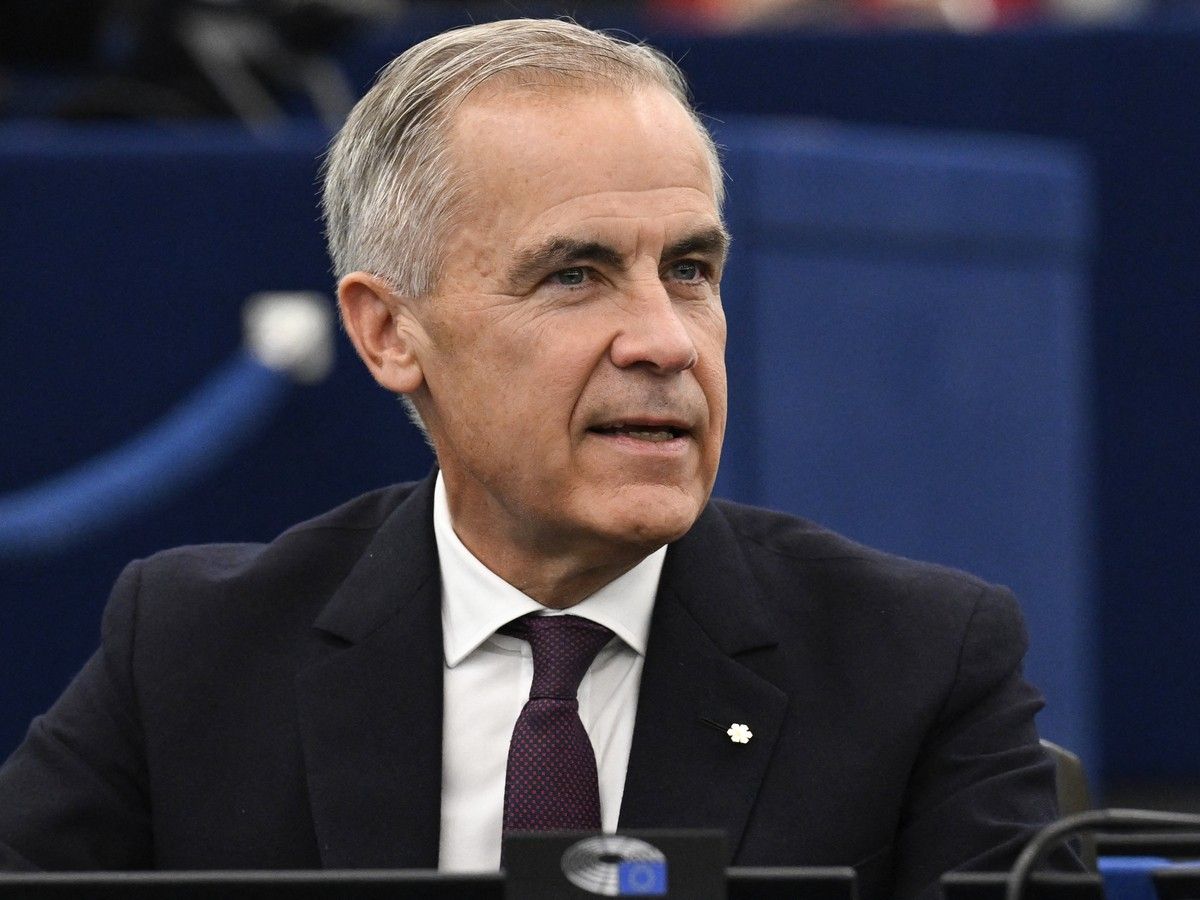
Next week, after his international investment summit in Toronto, Carney will fly to Strasbourg, France, to formalize a deal with the European Union on trade, defence, supply chains and raw materials. In essence, Carney will attempt to sign the kind of deal with Europe that he rejected from the Americans.
Advertisement 5
Article content
We already have a free trade deal with Europe, yet 10 of 27 EU countries still haven’t ratified it, largely due to concerns over agriculture and dairy.
Sound familiar?
The EU doesn’t want our oil. Carney won’t do what’s necessary to get our LNG to Europe. Europeans aren’t lining up to buy the large SUVs and pickup trucks we build, and they remain resistant to opening dairy markets.
So how exactly do these deals reduce our dependence on the United States?
The lesson isn’t that Canada shouldn’t diversify. It’s that there is no substitute for the American market.
The numbers don’t add up
Statistics Canada numbers show that while exports to the United States fell 6.6% in July, exports to other countries rose 7.4%. A casual observer might think that’s an improvement, but exports to the United States fell by roughly $4 billion while exports to other countries increased by just $1.7 billion.
It wasn’t a win.
Diversifying our trading relationships is the right move. Pretending it can happen overnight, or that we can simply walk away from the Americans, is foolish.
Sadly, that’s where many Canadians are right now, at least until economic reality shows up in their monthly bills.
RECOMMENDED VIDEO

We apologize, but this video has failed to load.
Article content






















/https%3A%2F%2Fsportsmole-media-prod.s3.gra.io.cloud.ovh.net%2Fuploads%2F2026%2F09%2Ficonsport-373637-0018-6a9e6d20a27e0398293470.jpg)
 Bengali (BD) ·
  English (US) ·