.png)
 2 weeks ago
41
2 weeks ago
41
Spoiler Alert !!!
This article contains major spoilers for Life, Larry and the Pursuit of Unhappiness Episode 5!
Larry David has always understood that disaster rarely arrives wearing a dramatic hat. Sometimes it walks in complaining about a table, a seat, a drink, a parking spot, or in the case of Life, Larry and the Pursuit of Unhappiness Episode 5, a yellow scarf that somehow becomes the funniest and cruelest object in the whole installment.
The HBO sketch comedy series, created by Larry David and Jeff Schaffer, is a seven-episode limited sketch comedy tied to America’s 250th anniversary, with David and Schaffer writing and executive producing alongside Barack Obama and Michelle Obama’s Higher Ground. Episode 5, titled Lincoln, aired on July 24, 2026, and it may be the episode where the show’s format becomes its nastiest joke yet. Instead of treating Lincoln’s assassination as a sealed historical tragedy, the episode asks what petty chain of irritation may have pushed people into exactly the wrong place at exactly the wrong time. That is uncomfortable territory, but the show commits to it with a strange amount of confidence.
The O.K. Corral Sketch Starts the Episode With Petty Violence
 Credit: HBO
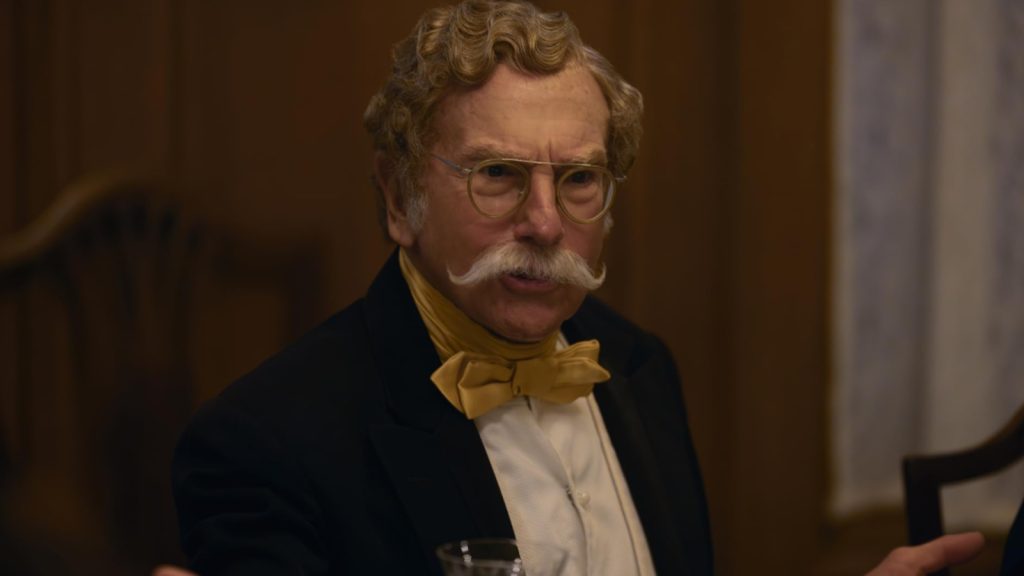
Episode 5 opens with Samuel L. Jackson’s narration taking viewers to October 26, 1881, in Tombstone, Arizona. He explains the famous showdown involving Wyatt Earp, Virgil Earp, Doc Holliday, and the Clanton gang, while also noting that the legendary gunfight did not actually happen inside the O.K. Corral. That little correction matters because the episode begins by poking at the way American history gets polished over time. The show does not want the clean myth. It wants the annoying detail everyone forgets.
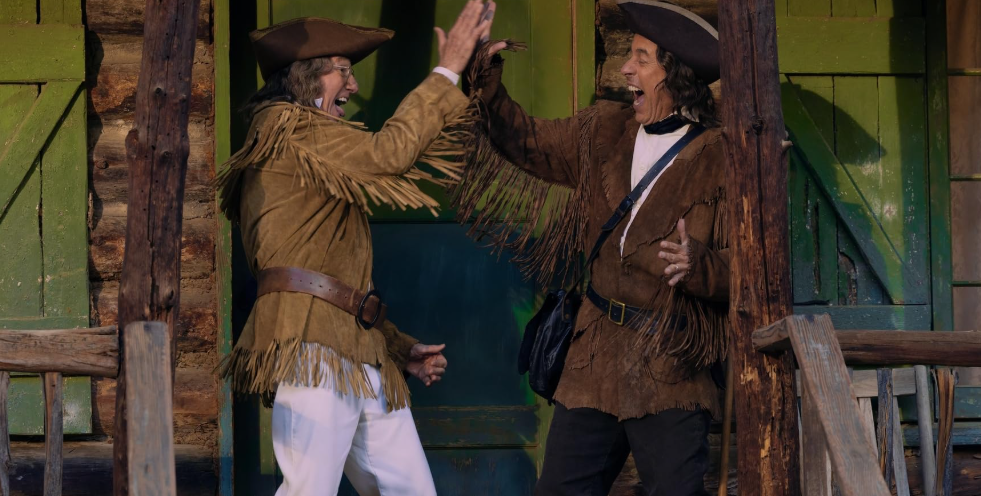
The sketch then imagines that the gunfight may have been triggered by Lawrence, an irritating arrival from back east who parks his horse badly and annoys almost everyone in the Crystal Palace Saloon. What follows feels like Larry David dropped into a Western and immediately found the one thing nobody had put in the rulebook: horse-hitching etiquette.
The Clanton gang enters with all the expected Old West menace, but their first grievance is hilariously ordinary. Lawrence’s horse has taken up the whole post, and suddenly frontier violence begins to resemble a parking argument outside a busy market. The comedy gets even better when the shootout turns into a scheduling negotiation. They settle on 3 p.m., then discuss 2:55 p.m. so everyone can begin properly at 3, and Lawrence keeps asking whether they are meeting inside or outside the corral.
By the end, Lawrence remembers he has a blacksmith appointment, needs to change, has to pack, and would rather move the whole thing later. Then he bolts on his horse, shouting at the animal to get him out of there.
Lincoln’s Fatal Night Begins With Butterfield’s Bad Idea
 Credit: HBO
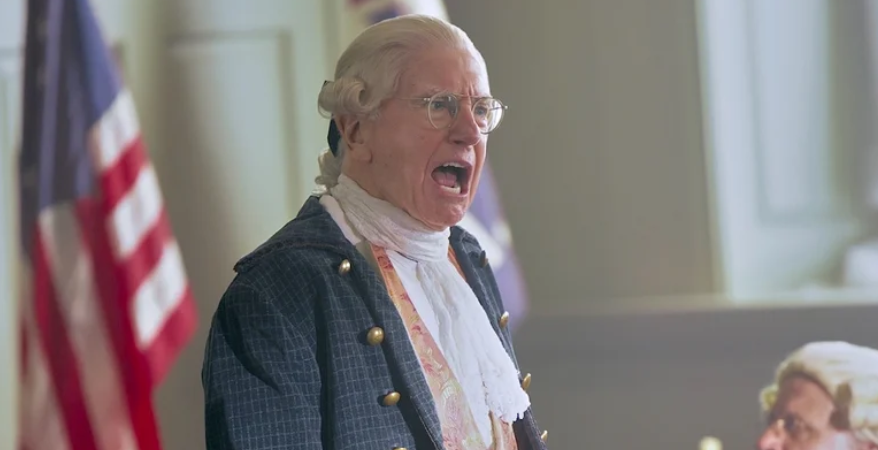
The second major sketch begins with Jackson moving the story to April 1865. The Civil War is ending, Abraham Lincoln is exhausted, and the country appears ready for healing after Robert E. Lee’s surrender at Appomattox. Then the episode arrives at April 14, when Lincoln and Mary Todd Lincoln attend Our American Cousin at Ford’s Theatre, where John Wilkes Booth assassinates the president after shouting “Sic semper tyrannis.”
The episode’s wicked twist is that while Booth remains history’s villain, Lawrence Butterfield bears some blame for persuading Lincoln to attend the play. Before leaving, Butterfield searches for his missing yellow scarf, suspecting Mary Todd Lincoln has it, but neither man wants to ask her. Their conversation becomes less about the scarf than avoiding Mary’s temper.
The comedy is dark because the audience already knows what awaits. While Lincoln worries about an awkward evening, history is closing in. He even asks Butterfield to sit between him and Mary in the theatre box like a buffer during a family argument, but Butterfield knows she will never allow it.
Ford’s Theatre Turns Into the Episode’s Funniest Argument
 Jerry Seinfeld and Larry David in Life, Larry and the Pursuit of Unhappiness: an Almost History of America (2026)
At Ford’s Theatre, Butterfield tries to sit between Lincoln and Mary, but she immediately orders him to move. The missing yellow scarf sparks another argument, with Butterfield accusing Mary of taking it and Lincoln getting caught in the middle.The sketch’s funniest sequence comes when Butterfield wants to leave but refuses to speak to Mary directly. Instead, Lincoln becomes their messenger, relaying excuses and insults between them. Days after the Civil War’s end, the president of the United States is reduced to passing childish messages between his wife and the man who persuaded him to attend the play.
The situation is ridiculous, but the behavior is recognizable. People who refuse to speak directly often create more trouble than people who shout. The gag becomes darker because Butterfield eventually leaves the theatre box, and after he goes, Mary pulls the yellow scarf from her bag because she is cold. That reveal is viciously funny because it proves Butterfield was right all along, but being right does not save anyone. His exit leaves the space open for Booth, and the tragedy follows.
Why Andrew Johnson Sends Butterfield Back to Mary Todd Lincoln
 Larry David and Joe Manganiello in Life, Larry and the Pursuit of Unhappiness: an Almost History of America (2026)
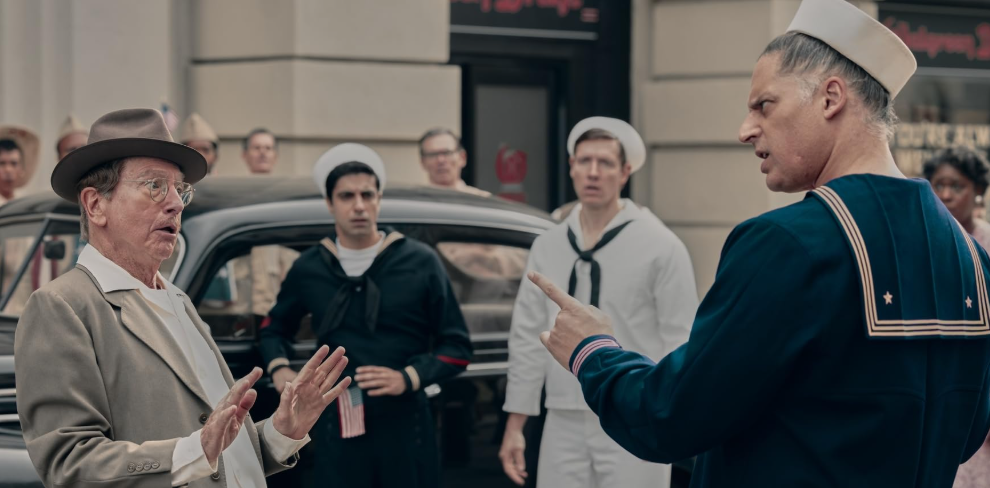
After Lincoln’s assassination, Jackson explains that Mary Todd Lincoln is so devastated that she cannot attend her husband’s funeral and cannot bring herself to leave the White House. Newly sworn-in President Andrew Johnson is forced to work out of the Treasury Building with his dog because Mary remains in the presidential residence. Johnson then summons Lawrence Butterfield and tells him to get Mary out. Butterfield refuses because Mary detests him, although Johnson points out that she detests everyone. Butterfield also brings up the yellow scarf again, because in his mind, even a national crisis does not outrank his stolen accessory.
This exchange is funny because Johnson has inherited the presidency but not the house, while Butterfield has inherited the blame but none of the self-awareness. Johnson knows Butterfield helped create the problem by encouraging Lincoln to go to the theatre. Butterfield tries to soften the situation by suggesting Johnson has technically improved his position, since he used to be vice president and is now president. Johnson immediately hears the awful implication, and Butterfield has to backpedal.
That conversation sets up the final confrontation because Butterfield is once again sent into a room where his social instincts are guaranteed to fail.
Life, Larry and the Pursuit of Unhappiness Episode 5 Ending Explained
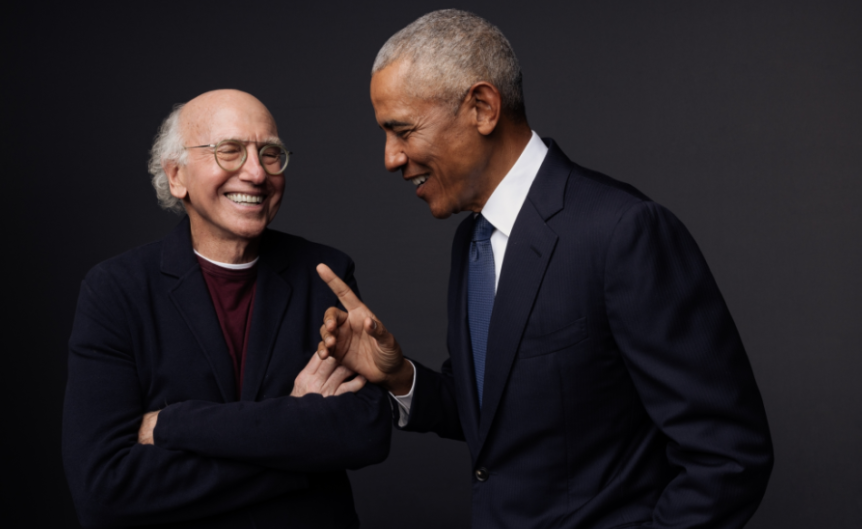 Credit: Art Streiber/HBO
The ending brings Butterfield to Mary Todd Lincoln, who refuses to leave the White House after her husband’s assassination. Seeing it as the last link to her former life, she rejects Butterfield’s request to vacate the residence for Andrew Johnson.
Butterfield handles the situation with little sensitivity. He accuses Mary of exaggerating her grief and clinging to the White House for its grandeur, even suggesting she should have been the actor at Ford’s Theatre because she is performing so well. The remark is cruel, and the episode makes clear that his tactless approach turns an official request into a personal attack.
Mary strikes back physically, and the fight grows uglier. Then Butterfield sees the yellow scarf and takes it, insisting it belongs to him. Mary claims it as hers. The same scarf that began the sketch as a petty complaint now becomes the object that ties the episode together. It was the reason Butterfield argued with Mary, the reason he left the theatre box, and now the reason the final confrontation turns dangerous.
Mary wraps the scarf around Butterfield’s neck and tries to suffocate him. Her final line, “Tell my husband that I said hi,” turns the gag into a pitch-black punchline. She is not only angry about being forced out of the White House. She is punishing the man whose choices helped place Lincoln at Ford’s Theatre and whose selfish obsession with the scarf kept dragging grief back into irritation. That is why Mary Todd Lincoln’s revenge hits stings and hits so hard. The ending takes a silly object and loads it with blame, resentment, and grief. The scarf starts as a missing accessory, becomes proof that Mary lied, and ends as the weapon of her rage. It is a nasty full-circle payoff, and Episode 5 knows exactly how wrong it feels to laugh.
For more ending explainers, follow FandomWire and keep the debate going.
Life, Larry and the Pursuit of Unhappiness airs on HBO Max.
























/https%3A%2F%2Fsportsmole-media-prod.s3.gra.io.cloud.ovh.net%2Fuploads%2F2026%2F01%2Fdanny-welbeck-5-6956bfa3ea945973722124.jpg)
 Bengali (BD) ·
  English (US) ·