.png)
 8 hours ago
10
8 hours ago
10
Article content
When DRIPA was passed in 2019, British Columbians were reassured by the B.C. NDP that this legislation would “give us a path forward, creating clarity and predictability for all people in British Columbia” and would “create opportunities for Indigenous peoples, for B.C. businesses, for communities and for families everywhere.”
Article content
Long before the DRIPA bill made its way across the BC legislature in 2019, Dwight Newman and Ken Coates from Macdonald-Laurier Institute warned that key concepts presented by UNDRIP, such as “free, prior, and informed consent,” would create chaos and increase uncertainty for resource development projects across the province.
Article content
In 2016, even the federal Liberals’ Minister of Justice and Attorney General, Jody Wilson-Raybould, warned against UNDRIP implementation at the Assembly of First Nations. In a recent article, she shared with us the message that she delivered clearly to the Chiefs: “…simplistic approaches, such as adopting the Declaration as being Canadian law, are unworkable and, respectfully, a political distraction to undertaking the hard work to actually implement it.” She went on to point out that B.C. and Canada would have known that passing legislation that incorporated UNDRIP without a clear implementation framework would lead to confusion and frustration — they had been warned by her and other experts at the time.
Article content
Article content
My colleagues at the Macdonald-Laurier Institute also warned that governments were overlooking the legal and practical implications of legislating UNDRIP into B.C. and federal law. In 2016, Ken Coates and Blaine Favel warned that, “implementing UNDRIP in full — that is, enshrining every provision in Canadian law and policy — would not only be impractical, it could undermine recent progress towards greater economic opportunity and self-sufficiency for Canada’s Indigenous peoples.” Later, in 2017, MLI’s Ken Coates and Dwight Newman wrote: “UNDRIP was not drafted as a piece of Canadian law and thus did not take into account the complexities of constitutional, legal, and political relations between Indigenous peoples and the Government of Canada.”
Article content
But those warnings were dismissed as being “anti-Indigenous,” a point that Coates and Newman also addressed: “There is nothing wrong — and much that is important — about an intense Canadian discussion about UNDRIP and its applicability in Canada. Policy reform is urgently required and full Indigenous involvement in policy-making and priority setting is essential. More resources, applied to Indigenous-defined needs, are necessary. It is much less clear that turning this process into primarily a legal exercise… is a good thing for Canada.”
Article content
Article content
The B.C. government is feeling the heat of mounting public pressure to repeal DRIPA. They themselves, the architects of DRIPA in Canada, appear confused as to where the province should go from here.
Article content
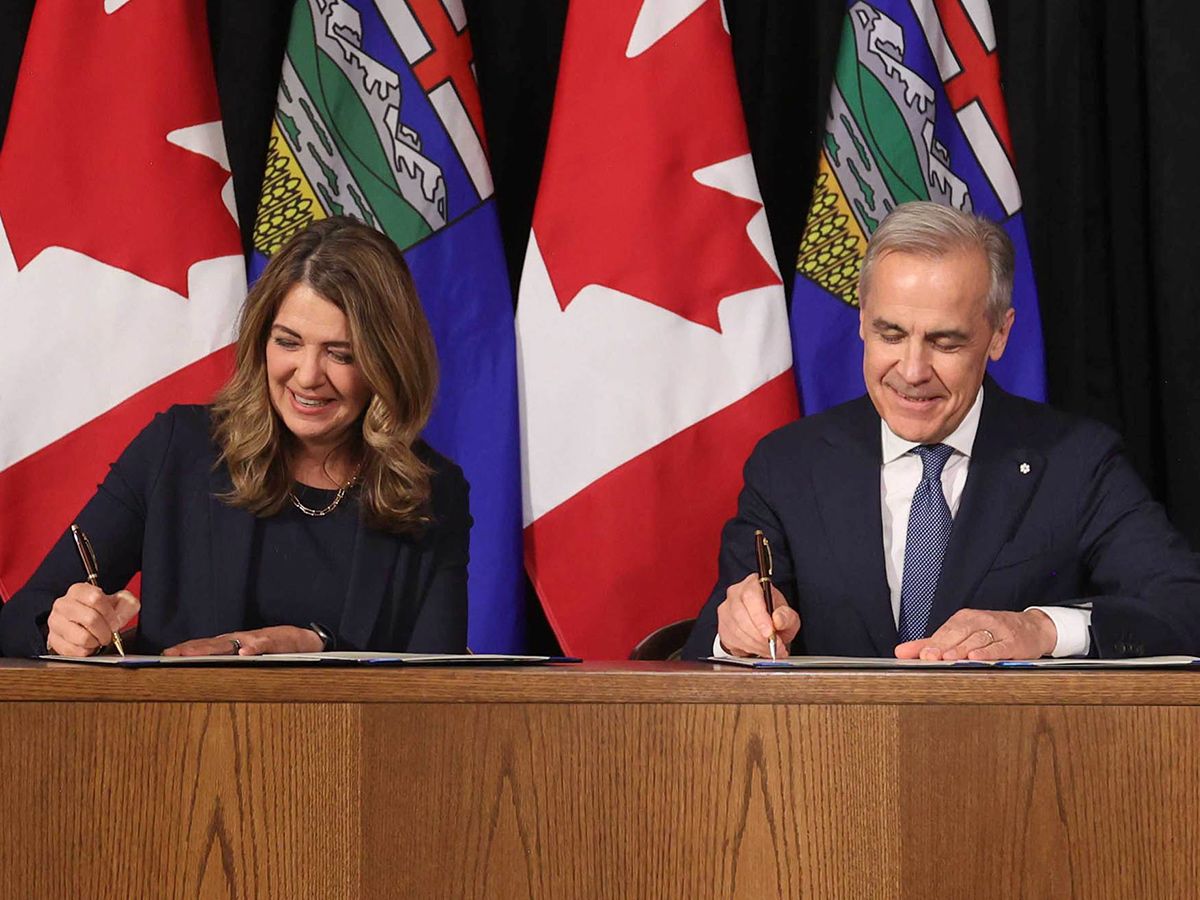
All of this should worry Ottawa. In 2021 Justin Trudeau followed B.C. and made UNDRIP part of Canadian federal law. With Prime Minister Mark Carney’s ambitious agenda on major projects, the UNDRIP policy prescriptions of his predecessor could very well clog the Carney government’s wheel.
Article content
National Post
Article content
Karen Restoule is the director of Indigenous Affairs at the Macdonald-Laurier Institute.
Article content























/https%3A%2F%2Fsportsmole-media-prod.s3.gra.io.cloud.ovh.net%2Fuploads%2F2026%2F05%2Fimago1077546153-2-6a0b8bbf76f8f531157643.jpg)

 Bengali (BD) ·
  English (US) ·