.png)
 1 hour ago
12
1 hour ago
12
Article content
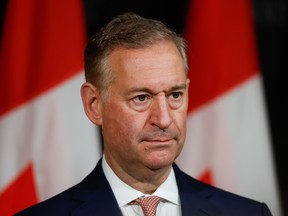
The departure of Doug Guzman as the chief executive officer of the new Defence Investment Agency is taken as a matter of fact in Ottawa.

THIS CONTENT IS RESERVED FOR SUBSCRIBERS
Enjoy the latest local, national and international news.
- Exclusive articles by Conrad Black, Barbara Kay and others. Plus, special edition NP Platformed and First Reading newsletters and virtual events.
- Unlimited online access to National Post.
- National Post ePaper, an electronic replica of the print edition to view on any device, share and comment on.
- Daily puzzles including the New York Times Crossword.
- Support local journalism.
SUBSCRIBE FOR MORE ARTICLES
Enjoy the latest local, national and international news.
- Exclusive articles by Conrad Black, Barbara Kay and others. Plus, special edition NP Platformed and First Reading newsletters and virtual events.
- Unlimited online access to National Post.
- National Post ePaper, an electronic replica of the print edition to view on any device, share and comment on.
- Daily puzzles including the New York Times Crossword.
- Support local journalism.
REGISTER / SIGN IN TO UNLOCK MORE ARTICLES
Create an account or sign in to continue with your reading experience.
- Access articles from across Canada with one account.
- Share your thoughts and join the conversation in the comments.
- Enjoy additional articles per month.
- Get email updates from your favourite authors.
THIS ARTICLE IS FREE TO READ REGISTER TO UNLOCK.
Create an account or sign in to continue with your reading experience.
- Access articles from across Canada with one account
- Share your thoughts and join the conversation in the comments
- Enjoy additional articles per month
- Get email updates from your favourite authors
Sign In or Create an Account
or
Article content
It was first reported in the Globe and Mail that Guzman, a former deputy chair of the Royal Bank of Canada, is expected to leave the agency after growing frustrated with the slow pace of government defence procurement.
Article content
Article content
The story was not denied by the Prime Minister’s Office and is now reported as a fait accompli.
Article content
Article content
Except, defence industry and former military contacts I spoke with have told me Guzman is not going anywhere for the moment.
Article content
By signing up, you consent to receive the above newsletter from Postmedia Network Inc.
Article content
“Apparently, the government convinced him to stay. But who knows what that looks like?” said one senior veteran.
Article content
I reached out to a senior official in the Carney government who said Guzman is not quitting, though his role could “evolve.” It has been suggested that Guzman may want to join the new Defence, Security and Resilience Bank that Canada is backing and hosting.
Article content
“His golden parachute is into that bank. It’s just a question of when and under what circumstances,” said one source, although this was denied by the official I spoke with.
Article content
My sense is that the story of Guzman’s departure is premature, rather than inaccurate.
Article content
What no one is denying is that the bureaucracy is struggling to match the prime minister’s ambition.
Article content
It would be a first in government if a senior executive from the private sector joined the public sector and was not frustrated at a manner of operating that fixates on process, not outcomes.
Article content
The story is important because it goes beyond the career path of one man: it is at the core of the Carney government’s economic plan.
Article content
Article content
Last February, the government released its defence industrial strategy, at the heart of which was the Defence Investment Agency.
Article content
The plan proposed to increase the share of defence acquisitions made in Canada to 70 per cent from 30 per cent; to increase defence industry revenues by 240 per cent; and defence exports by 50 per cent.
Article content
These were ambitious targets, but they were accompanied by a dramatic rise in the planned defence budget: an additional $80 billion over five years, with a targeted expenditure of 3.5 per cent of GDP on core defence activities by 2035. That’s an effective tripling of spending to around $132 billion a year in today’s dollars.
Article content

Article content
That is considered by most observers to be an impractical outlay, given it would be close to what Ottawa spends on transfers to other levels of government, unless the surge in spending results in a significant multiplier effect on the broader economy. For the plan to pay for itself, the C.D. Howe Institute estimated nominal GDP growth would have to be around 6.3 per cent every year, far in excess of the forecasts in the last budget of 3.7 per cent over the next five years.

























 Bengali (BD) ·
  English (US) ·