Israel’s Netanyahu orders attacks in Beirut’s southern suburbs

1 week ago 18

Israeli Prime Minister Benjamin Netanyahu ordered attacks on the Hezbollah-controlled southern suburbs of Beirut on Monday, signalling further escalation of a war that has complicated mediation towards resolving the U.S.-Iran conflict.

Subscribe to read this story ad-free

Get unlimited access to ad-free articles and exclusive content.

Iran’s foreign ministry spokesperson, Esmaeil ​Baghaei, said on Monday that Israeli attacks in Lebanon were among factors causing a delay to the diplomatic process to end the U.S.-Iran war, reiterating that a Lebanon ceasefire was an integral part of any deal.

Netanyahu and Defence Minister Israel Katz ordered the Israeli military to attack “terrorist targets” in the southern suburbs of Beirut, known as Dahiyeh, following Hezbollah’s “repeated violations” of a ceasefire and “attacks against our cities and citizens,” a statement from Netanyahu’s office said.

Having pounded Dahiyeh in the early weeks of the war, Israel has carried out only two strikes on the area since U.S. President Donald Trump announced a Lebanon ceasefire on April 16, even as hostilities have raged in southern Lebanon.
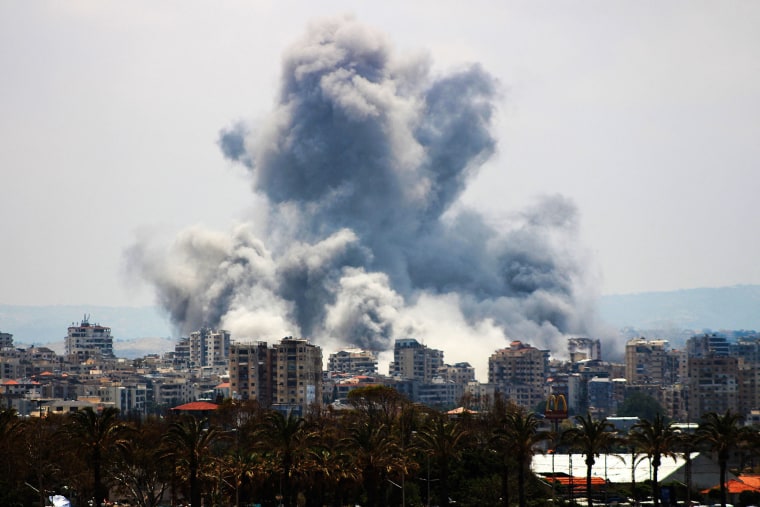
A plume of smoke rises following an Israeli airstrike on the outskirts of Tyre, southern Lebanon, on June 1, 2026. A plume of smoke rises Monday following an Israeli airstrike on the outskirts of Tyre, southern Lebanon.Kawnat Haju / AFP via Getty Images

900-year-old castle captured

The order follows an intensification of hostilities in the south over the weekend, with Israeli troops capturing the 900-year-old Beaufort Castle and Netanyahu ordering the military to expand ground operations.

Lebanese authorities say more than 3,370 people have been killed in the country as a result of Israeli attacks since March 2, when Hezbollah opened fire at Israel in support of Iran as it came under U.S.-Israeli attack.

Israel says 24 of its soldiers ​and four civilians have been killed over the same period.

Israel has carved out a self-declared security zone in southern Lebanon where it has been razing villages, saying it aims to shield northern Israel from Hezbollah militants embedded in civilian areas.
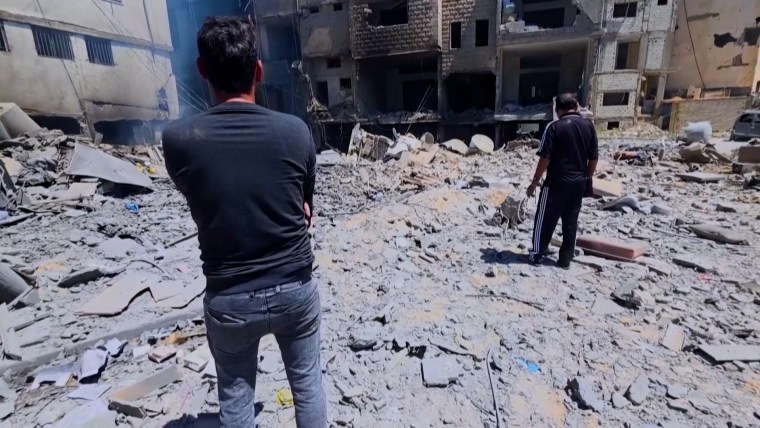
The Lebanon war has been the deadliest spillover of the U.S.-Israeli conflict with Iran, and has forced more than 1 million people to flee their homes, according to Lebanese authorities.

Netanyahu on Sunday ordered the Israeli military to expand “its ground manoeuvre in Lebanon“, aiming to “deepen and expand our grip on the places that were under Hezbollah’s control”.

Accusing Israel of ceasefire violations and declaring the right to resist Israeli occupation, Hezbollah said it carried out 21 operations on Sunday, including firing a rocket salvo at what it described as Israeli military infrastructure in the Israeli city of Nahariya.
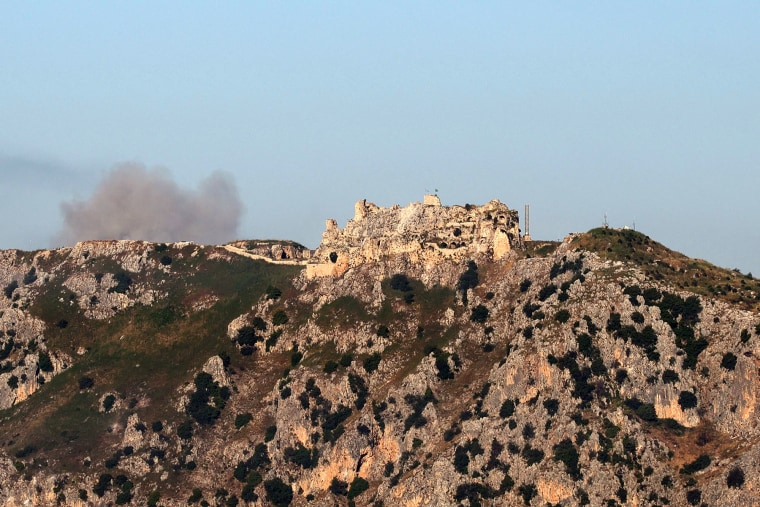
An Israeli flag flies over the medieval Beaufort CastleAn Israeli flag flies over the medieval Beaufort Castle, known locally as Qalaat al-Shaqif or Shaqif Arnoun.AFP via Getty Images

Citing the escalating violence in Lebanon, France called for an emergency meeting of the United Nations Security Council on Monday.

The United States has hosted a series of rare meetings between representatives of the governments of Israel and Lebanon since the hostilities erupted, with Beirut attending despite strong objections from Hezbollah.

A U.S. official said on Sunday that Secretary of State Marco Rubio spoke with both Lebanese President Joseph Aoun and Israeli Prime Minister Benjamin Netanyahu on the diplomatic negotiations between Israel and Lebanon and that he had proposed a plan to allow for “gradual de-escalation.”

The U.S. has proposed that, as a first step, Hezbollah would stop all attacks on Israel and in return Israel would refrain from escalation in Beirut, the official said.

“This would create space for gradual de-escalation and an effective cessation of hostilities,” according to the official.

The official added that Aoun tried to advance the proposal and secure an agreement. However, Lebanese Parliament Speaker Nabih Berri, who claimed to “guarantee” Hezbollah’s commitment to a ceasefire, placed the burden on Israel to stop “shooting first”.

Berri, a close ally of Hezbollah, in a comment reported by Lebanese media on Sunday, said he would guarantee “full and immediate commitment to a ceasefire by the resistance”, referring to Hezbollah.

“But the question is, who will compel Israel to stop its aggression?” he said.

Israeli Prime Minister Benjamin Netanyahu ordered attacks on the Hezbollah-controlled southern suburbs of Beirut on Monday, signalling further escalation of a war that has complicated mediation towards resolving the U.S.-Iran conflict.

Subscribe to read this story ad-free

Get unlimited access to ad-free articles and exclusive content.

Iran’s foreign ministry spokesperson, Esmaeil ​Baghaei, said on Monday that Israeli attacks in Lebanon were among factors causing a delay to the diplomatic process to end the U.S.-Iran war, reiterating that a Lebanon ceasefire was an integral part of any deal.

Netanyahu and Defence Minister Israel Katz ordered the Israeli military to attack “terrorist targets” in the southern suburbs of Beirut, known as Dahiyeh, following Hezbollah’s “repeated violations” of a ceasefire and “attacks against our cities and citizens,” a statement from Netanyahu’s office said.

Having pounded Dahiyeh in the early weeks of the war, Israel has carried out only two strikes on the area since U.S. President Donald Trump announced a Lebanon ceasefire on April 16, even as hostilities have raged in southern Lebanon.

A plume of smoke rises following an Israeli airstrike on the outskirts of Tyre, southern Lebanon, on June 1, 2026. A plume of smoke rises Monday following an Israeli airstrike on the outskirts of Tyre, southern Lebanon.Kawnat Haju / AFP via Getty Images

900-year-old castle captured

The order follows an intensification of hostilities in the south over the weekend, with Israeli troops capturing the 900-year-old Beaufort Castle and Netanyahu ordering the military to expand ground operations.

Lebanese authorities say more than 3,370 people have been killed in the country as a result of Israeli attacks since March 2, when Hezbollah opened fire at Israel in support of Iran as it came under U.S.-Israeli attack.

Israel says 24 of its soldiers ​and four civilians have been killed over the same period.

Israel has carved out a self-declared security zone in southern Lebanon where it has been razing villages, saying it aims to shield northern Israel from Hezbollah militants embedded in civilian areas.

The Lebanon war has been the deadliest spillover of the U.S.-Israeli conflict with Iran, and has forced more than 1 million people to flee their homes, according to Lebanese authorities.

Netanyahu on Sunday ordered the Israeli military to expand “its ground manoeuvre in Lebanon“, aiming to “deepen and expand our grip on the places that were under Hezbollah’s control”.

Accusing Israel of ceasefire violations and declaring the right to resist Israeli occupation, Hezbollah said it carried out 21 operations on Sunday, including firing a rocket salvo at what it described as Israeli military infrastructure in the Israeli city of Nahariya.

An Israeli flag flies over the medieval Beaufort CastleAn Israeli flag flies over the medieval Beaufort Castle, known locally as Qalaat al-Shaqif or Shaqif Arnoun.AFP via Getty Images

Citing the escalating violence in Lebanon, France called for an emergency meeting of the United Nations Security Council on Monday.

The United States has hosted a series of rare meetings between representatives of the governments of Israel and Lebanon since the hostilities erupted, with Beirut attending despite strong objections from Hezbollah.

A U.S. official said on Sunday that Secretary of State Marco Rubio spoke with both Lebanese President Joseph Aoun and Israeli Prime Minister Benjamin Netanyahu on the diplomatic negotiations between Israel and Lebanon and that he had proposed a plan to allow for “gradual de-escalation.”

The U.S. has proposed that, as a first step, Hezbollah would stop all attacks on Israel and in return Israel would refrain from escalation in Beirut, the official said.

“This would create space for gradual de-escalation and an effective cessation of hostilities,” according to the official.

The official added that Aoun tried to advance the proposal and secure an agreement. However, Lebanese Parliament Speaker Nabih Berri, who claimed to “guarantee” Hezbollah’s commitment to a ceasefire, placed the burden on Israel to stop “shooting first”.

Berri, a close ally of Hezbollah, in a comment reported by Lebanese media on Sunday, said he would guarantee “full and immediate commitment to a ceasefire by the resistance”, referring to Hezbollah.

“But the question is, who will compel Israel to stop its aggression?” he said.

*** Disclaimer: This Article is auto-aggregated by a Rss Api Program and has not been created or edited by Bdtype.

(Note: This is an unedited and auto-generated story from Syndicated News Rss Api. News.bdtype.com Staff may not have modified or edited the content body.

Please visit the Source Website that deserves the credit and responsibility for creating this content.)

Watch Live | Source Article