.png)
 2 hours ago
10
2 hours ago
10
Article content
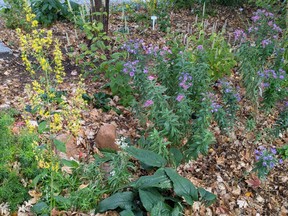
Let’s take our cue from the forest. No one is raking or bagging the leaves there, yet the woodland thrives. And with good reason. Decomposing plant litter provides a much-needed home for overwintering insects (including vital pollinators), returns nutrients to the soil and is a mulch for growing plants. Do I want dead leaves on my home garden? On the plus side, minimal raking or tidying required. But it’s so messy, you may lament.

THIS CONTENT IS RESERVED FOR SUBSCRIBERS ONLY
Subscribe now to read the latest news in your city and across Canada.
- Unlimited digital access to the Ottawa Citizen.
- Analysis on all things Ottawa by Bruce Deachman,David Pugliese, and others, award-winning newsletters and virtual events.
- Opportunity to engage with our commenting community.
- Ottawa Citizen ePaper.
- Ottawa Citizen App.
SUBSCRIBE TO UNLOCK MORE ARTICLES
Subscribe now to read the latest news in your city and across Canada.
- Exclusive articles from David Pugliese, Andrew Duffy, Bruce Deachman and others. Plus, food reviews and event listings in the weekly newsletter, Ottawa, Out of Office.
- Unlimited online access to Ottawa Citizen and 15 news sites with one account.
- Ottawa Citizen ePaper, an electronic replica of the print edition to view on any device, share and comment on.
- Daily puzzles, including the New York Times Crossword.
- Support local journalism.
REGISTER / SIGN IN TO UNLOCK MORE ARTICLES
Create an account or sign in to continue with your reading experience.
- Access articles from across Canada with one account.
- Share your thoughts and join the conversation in the comments.
- Enjoy additional articles per month.
- Get email updates from your favourite authors.
Register to unlock this article — it’s free
Create an account or sign in to continue with your reading experience.
- Access articles from across Canada with one account
- Share your thoughts and join the conversation in the comments
- Enjoy additional articles per month
- Get email updates from your favourite authors
Sign In or Create an Account
or
Article content
Article content
Let’s take a closer look.
Article content
Article content
Fallen leaves are a biodiverse microhabitat. Leaving them provides crucial winter habitat for many native bees, beetles, spiders, butterflies (e.g. mourning cloak) and moths. Some are pollinators. Others are pest-controlling insects such as parasitic wasps.
Article content
Since most butterflies and moths don’t migrate, they need suitable habitat for overwintering, whether as eggs, larvae, pupae or adults. A study by Max Ferlauto and associates (2025) indicated that removing leaves can reduce butterfly and moth species abundance in spring by 45 per cent, beetles by 24 per cent and spiders by up to 67 per cent. Conversely, leaving the leaves increases all these populations, as well as the number of earthworms and decomposers such as springtails.
Article content
Piled on your garden bed to a depth of about 15cm, leaves also help insulate perennials during winter. And as they decompose, they return 50-80 per cent of the nutrients they contain to the soil. This layer of leaves also acts as a mulch that suppresses weeds, reduces surface water runoff by about 30 per cent and soil erosion by up to 85 per cent. All this means a healthy, hydrated garden without the use of chemicals.
Article content
Article content
The old-school practice of transporting bagged leaves to municipal compost facilities pre-empts these benefits while contributing to greenhouse gas emissions.
Article content
Article content
What about my lawn?
Article content
As we all know, a few large trees can mean a thick, heavy blanket of leaves on your lawn that looks untidy and can damage the grass. Turf experts say it may be okay to leave 10-20% of your lawn with a thin covering of leaves, but no more. Excess leaves can be raked onto garden beds, under shrubs or trees. Don’t pile them too high; think about what you might see in a forest. If you have an unused corner in your yard, you might also try leaving a small pile of leaves and dead wood to shelter even more insects.
Article content
Some homeowners shred dry leaves by running a lawnmower over them but this may kill hibernating insects and larvae.
Article content
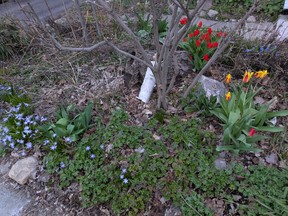
I turned my turf lawn into a garden about a decade ago. More recently, I planted part as a pollinator patch. In both front and back yard gardens, I now leave leaves as well as the dead stems and stalks of my perennial plants. The seed heads feed birds, and many insects nest in hollow stems. They also look pretty poking up through the snow.





























 Bengali (BD) ·
  English (US) ·