.png)
 1 week ago
10
1 week ago
10
Article content
Word travels the way it does in a scattered community — Facebook groups, Telegram chats, a flyer at school.
Article content
Yulia Osetska, who arrived in late 2023, heard about a week-long children’s summer camp at the farm and signed up her six-year-old daughter Kristina, who spent the days feeding animals and swimming.
Article content
“My child was so happy. I’ve never seen anything like it,” Osetska said. “She’s very hyperactive, it’s hard for her to focus. But there, she was completely present.”
Article content

Article content
The family kept coming back, and not for the produce.
Article content
“I lacked home,” she said. “I went there on purpose to talk to girls from Ukraine, to find new friends.”
Article content
Liubov Moroz found the farm through a Facebook post about an Easter market and drove out with a friend. The women selling cherry buns told her about the gatherings. Now she buys her eggs there every week.
Article content
The farm, she said, offers the thing that is hardest to find here.
Article content
“It creates a kind of homey warmth that you really miss in Canada, when you’re constantly in your routine, and your family is far away.”
Article content
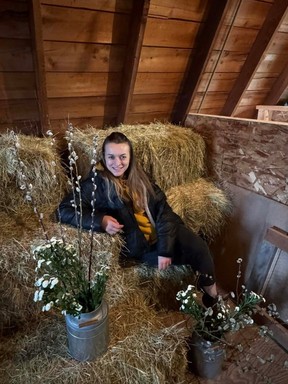
Article content
It isn’t the only farm Ukrainians seek out. Several women mentioned a berry farm in Richmond they also visit. But that one, Rukavchuk said, is for picking fruit.
Article content
Article content
“People don’t come to Blake’s to pick berries. They come to rest,” she said.
Article content
Not everyone who comes is a newcomer to Canada.
Article content
At an Easter festival and pysanka-painting workshop that organizer Iryna Mitnovych brought to the farm, longtime Canadians and older diaspora turned up alongside the recent arrivals, reaching for something half-remembered.
Article content
“They had such a nostalgic burst of emotion,” she said. My grandmother used to paint these, they told her.
Article content
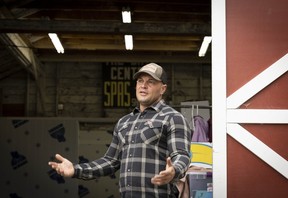
Article content
Celene Hoag knows the feeling. A second-generation Canadian raised in Delta, she lost her Ukrainian heritage early — her grandfather died when she was two, her Ukrainian grandmother when she was six.
Article content
“After that, there wasn’t a lot of Ukrainian culture, because there was nobody to pass it on,” she said.
Article content
At the farm’s Ukrainian Christmases, the food and the music handed some of it back, and gave her something to pass on to her own children.
Article content
Her grandfather’s story is the one she keeps returning to.
Article content
He arrived from Ukraine in 1929, at 17, with no English and no one but an uncle who ran a logging camp in Revelstoke. When the camp closed during the Depression, he rode the rails, sleeping rough and going hungry. Once, starving, he was given a jar of honey by a woman near the tracks — he ate it so fast, so desperately, that he was sick. He never touched honey again.
Article content
Article content
He settled in New Westminster, married another Ukrainian, and started the family Hoag was born into.
Article content
A century later, Hoag keeps bees and makes honey of her own. She won’t say her grandfather is the reason — she’s loved bees all her life — but, she said, “It makes it more meaningful to me.”
Article content
The parallel she draws is between him and the Ukrainians arriving now. He came alone, with nothing, and no one waiting.
Article content
“He didn’t have any community or support. He was just all alone, trying to build this,” Hoag said.
Article content
The families finding their way to the farm in Langley are, in one sense, where he was — displaced, starting over, far from home.
Article content
In another, they are luckier. They have somewhere to go.
Article content
Reporter Oksana Shtohryn is a Postmedia summer intern who was born and raised in Ukraine before moving to Canada in 2023. Some interviews for this story were conducted in Ukrainian and translated by the reporter.
Article content
Article content
























/https%3A%2F%2Fsportsmole-media-prod.s3.gra.io.cloud.ovh.net%2Fuploads%2F2026%2F07%2Fwc26-stencil-generic-1-player-email-6a5efced3be22784676779.jpg)
 Bengali (BD) ·
  English (US) ·