.png)
 1 hour ago
10
1 hour ago
10
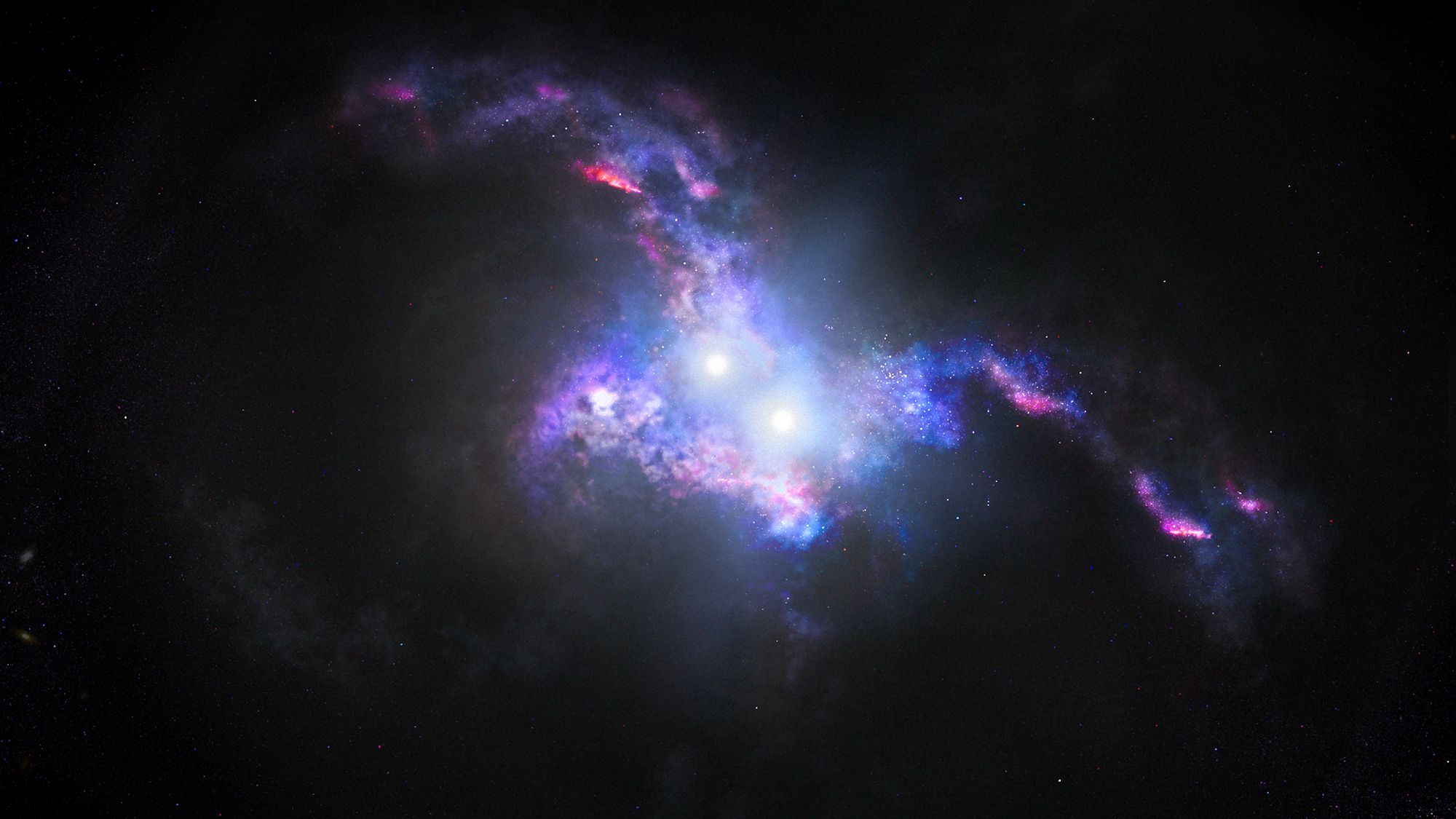
Some of the brightest objects in the universe may also hold the key to understanding how galaxies evolve — especially when gravity transforms them into giant cosmic magnifying glasses.
Using artificial intelligence to search through data from the Dark Energy Spectroscopic Instrument (DESI), astronomers have identified seven promising candidates for quasars acting as gravitational lenses — natural cosmic magnifying glasses created when a massive object's gravity bends and magnifies light from a more distant object.
These unusual systems could help researchers better understand how actively growing supermassive black holes evolve, according to a statement from Ohio State University.
"Quasars are like the baby pictures of a supermassive black hole," Everett McArthur, lead author of the study and a graduate student in astronomy at The Ohio State University, said in the statement. "So exploring how we get from quasars to those black holes is really important."
Quasars are the intensely bright centers of galaxies powered by actively feeding supermassive black holes. Studying these objects can help researchers understand how black holes evolve into the enormous ones found throughout the modern universe. But as these black holes pull in gas and dust, they release so much energy that they can outshine their entire host galaxies, making those galaxies difficult to study.
Rare cases where a quasar acts as a gravitational lens offer a way around that problem, giving astronomers a unique opportunity to observe both the quasar and the distant galaxy whose light is magnified by its gravity.
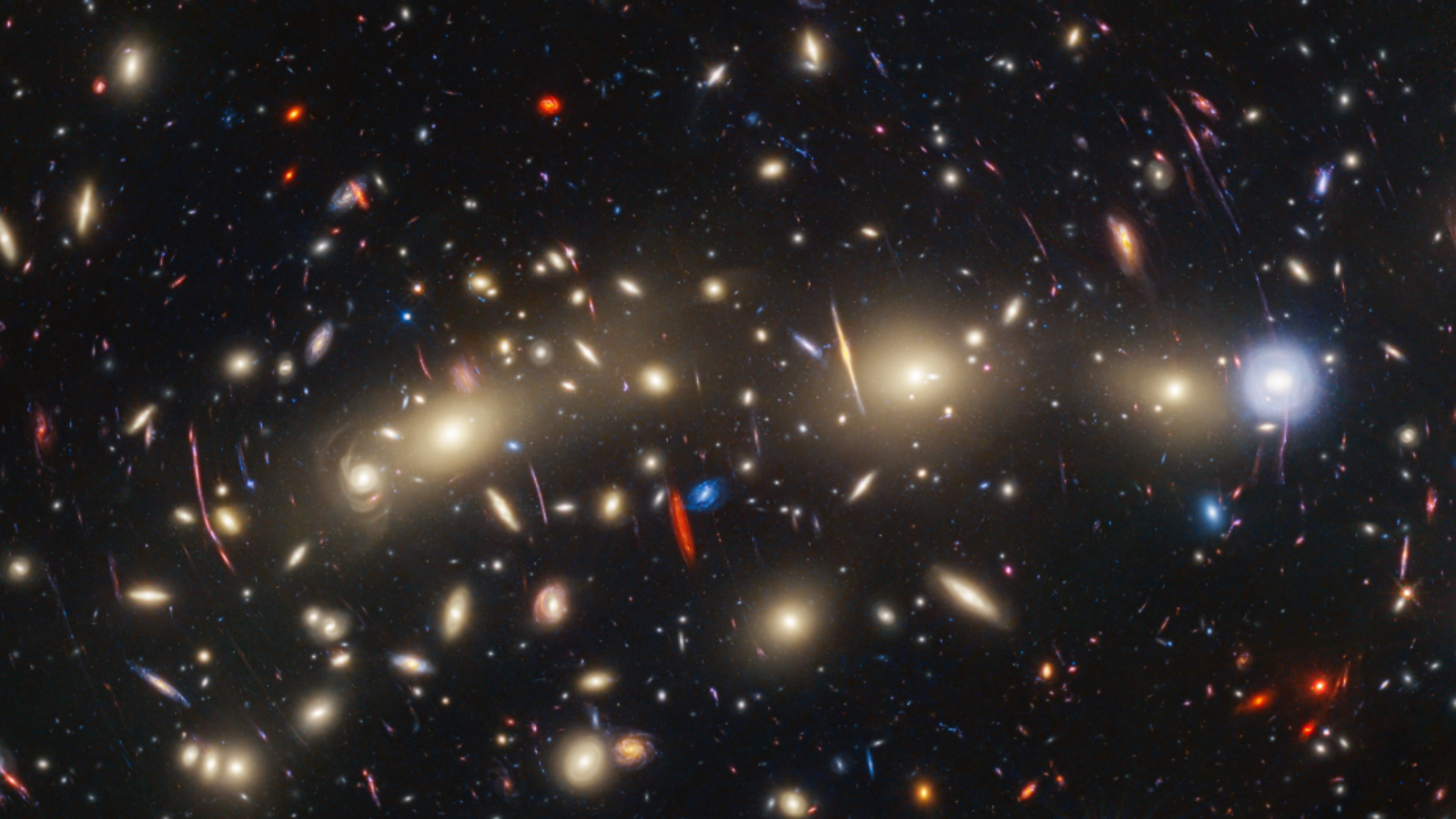
However, finding these rare alignments can be exceptionally challenging. To uncover them, the research team began with a catalog of roughly 800,000 quasars identified by DESI and used a machine-learning model to search for subtle signatures of gravitational lensing.
Because so few quasars acting as gravitational lenses are known, researchers had little real-world data to train their AI model. Instead, they generated simulated examples of these cosmic alignments, allowing the algorithm to learn what to look for before searching the DESI catalog. The algorithm narrowed the search to about 200 candidates, which researchers then reviewed manually. That process resulted in seven new quasar lens candidates.
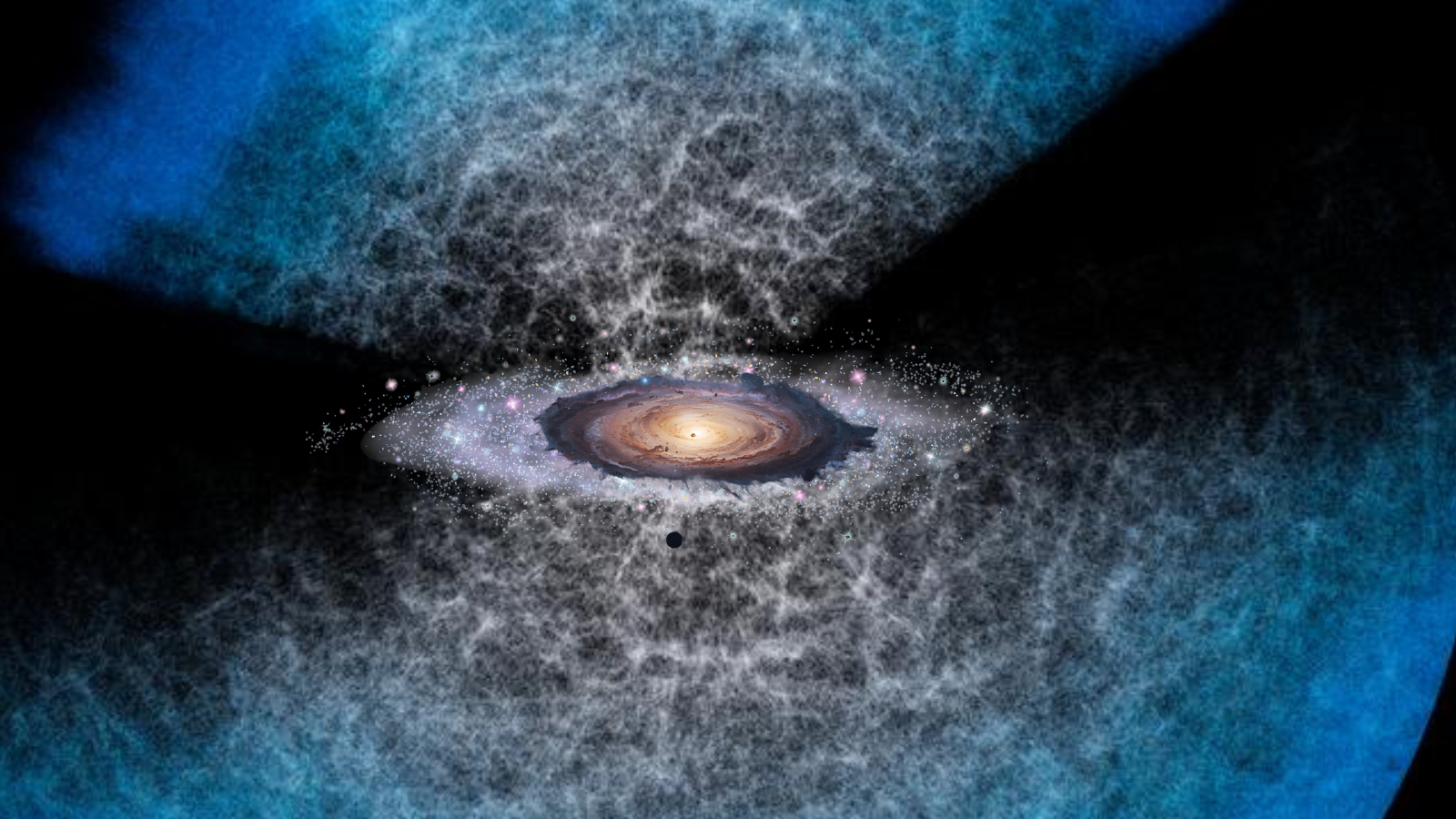
The discoveries roughly double the number of known systems found through similar survey searches, according to the statement.
While artificial intelligence played a key role in finding the candidates, the discoveries highlight the scientific potential hidden within the massive datasets produced by modern astronomy. DESI is mapping millions of galaxies and quasars, creating an enormous archive that would be nearly impossible to search by hand.
Follow-up observations will be needed to confirm the newly identified quasar lenses and study their properties in greater detail. If verified, they could offer astronomers a powerful new way to investigate how supermassive black holes shaped the galaxies around them while demonstrating how AI can uncover rare cosmic phenomena hidden within the enormous datasets produced by modern sky surveys.
Their findings were published July 22 in The Astrophysical Journal.

























/https%3A%2F%2Fsportsmole-media-prod.s3.gra.io.cloud.ovh.net%2Fuploads%2F2026%2F07%2Fwc26-stencil-generic-1-player-email-6a5efced3be22784676779.jpg)
 Bengali (BD) ·
  English (US) ·