.png)
 4 hours ago
8
4 hours ago
8
On July 31, 1971, Apollo 15 astronauts drove on the moon for the first time.
David Scott, the commander of Apollo 15, and James Irwin, the lunar module pilot explored the moon for three days by driving around in the Lunar Roving Vehicle. Apollo 15 command module pilot Al Worden remained in orbit around the moon. This moon buggy was folded up and stowed inside the lunar module and deployed after landing. Unpacked, it measured about 10 feet long, 7 feet wide and 45 inches high.
The lunar rover could travel up to 8.6 miles per hour and allowed the astronauts to venture farther from their landing site than previous Apollo astronauts could. For their first drive, Scott and Irwin went to Elbow Crater to gather samples and take photos. Throughout their stay on the moon, they drove more than 17 miles.
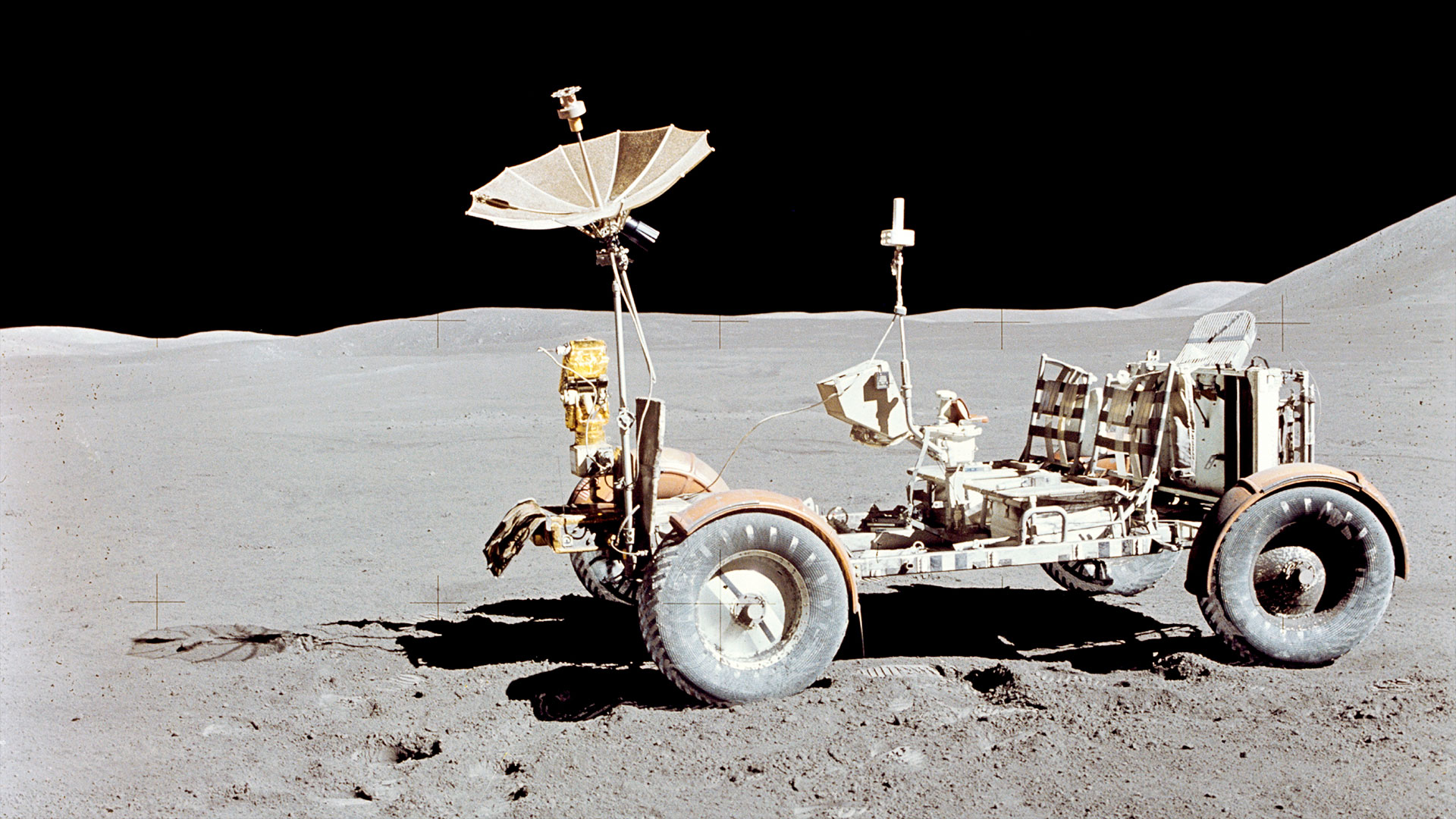
The Apollo 15 mission launched to the moon on July 26, 1971. The mission landed on July 30, with Scott and Irwin ultimately performing three moonwalks in addition to their lunar rover test drive. The Apollo 15 crew left the moon's surface on Aug. 2 and left lunar orbit on Aug. 4. They returned to Earth on Aug. 7, splashing down in the Pacific Ocean.
Why it mattered
Apollo 15's moon rover made space history as the first human-driven rover on the moon, let alone another world entirely.
While developing the rover, NASA had to wrangle many issues at once. How do you build a rover light enough to land on the moon with the Apollo 15 lunar lander? How do you make it compact as well?
The result was an aluminum, foldable moon car built by Boeing and powered by batteries that could carry up to 1,080 pounds (490 kg) of cargo — about twice its own weight — while carrying two astronauts. The rover design flew on Apollo 15, Apollo 16 and Apollo 17. Those three rovers are still on the lunar surface awaiting fresh batteries.
Today, NASA is looking to new companies to build unpressurized rovers like the Lunar Roving Vehicle, as well as pressurized vehicles that would allow crews to drive without a spacesuit on. Those rovers will be a critical asset for Artemis astronauts as they build a permanent moon base, NASA has said.
























/https%3A%2F%2Fsportsmole-media-prod.s3.gra.io.cloud.ovh.net%2Fuploads%2F2026%2F07%2Fwc26-stencil-generic-1-player-email-6a5efced3be22784676779.jpg)
 Bengali (BD) ·
  English (US) ·