.png)
 2 days ago
16
2 days ago
16
Article content
“Depending on the characteristics of a specific location, different forms of advanced left-turn signal phasing may be warranted and implemented to address operational or safety concerns,” Stuart Edison, manager of the city’s traffic operations, wrote in a statement.
Article content
Lo added city traffic counts also looked at more granular details, including how many cars were waiting for more than one red light to turn left, as well as if the intersection had enough storage capacity to handle the upgrade.
Article content
“And that counter-generates a score for the intersection, and you have to meet a certain score for an intersection to be considered for any sort of upgrade,” he said.
Article content
He said it was only within the past year that the Greenbank and Highbury Park intersection scored high enough to be recommended for an upgrade, as he said there previously weren’t enough vehicles waiting through more than one red light to turn left.
Article content
“It has to be more than half of the vehicles that arrive in the queue have to wait for more than one red light before being able to do that left turn,” he said. “It was just not the case until this year.”
Article content
Article content
But, as the neighbourhood continued to grow and as school boundary changes meant more students travelled from the west side of Greenbank to attend St. Mother Teresa High School, he said he kept pushing for the upgrade.
Article content

Article content
In Orléans, Dudas said similar guidelines around the number of cars waiting through more than one red light to turn left hadn’t yet been met at St. Joseph and Orléans boulevards.
Article content
“(The intersection) has not proven that more cars are queuing than is permissible,” she said. “It has shown in the past that cars are able to continue their turn movements and clear the lane.”
Article content
While the city recognizes the value of left-turn signals to improve traffic and pedestrian safety, it also acknowledges that the green arrow can be a bit of a give-and-take.
Article content
“Left-turn phases facilitate left-turning traffic and usually improve the safety of the intersection for left-turning vehicles,” the city stated on its website. “However, this is done at the expense of the amount of green time available for traffic and will usually reduce the capacity of the intersection.”
Article content
Article content
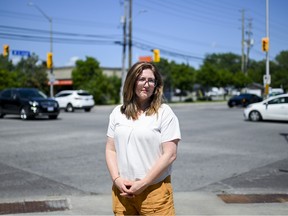
Luxton says she’s been frustrated in the black-and-white response from the city around how it can’t recommend the upgrade if the guidelines aren’t met despite the safety risks that the turn may pose to members of the community.
Article content
Article content
“It doesn’t seem to need to stop where it has been stopping, which is just well, ‘This is the recommendation. We can’t do anything, and then going back and just continuing to wait for the report to recommend it,'” she said.
Article content
While the Ontario Traffic Manual offers guidelines rather than strict requirements for left-turn signal upgrades, the city says it’s generally rare for staff to overrule the pre-defined criteria.
Article content
“If an intersection does not meet the criteria for a left-turn signal upgrade, city staff would not typically recommend the installation of that treatment,” Edison wrote. “However, staff may evaluate whether alternative traffic control measures or operational improvements are appropriate to address identified concerns.”
Article content
As the city continues to grow, Lo says he plans to look into how these protected left-turn arrows can be part of new intersections along arterial roads as they’re constructed rather than having to go through a “reactive process” every time an intersection outgrows the basic model.
Article content
“I think it’s a longer conversation that we need to have about the process and about how, perhaps, we should consider defaulting to a certain arrow, defaulting to a certain setup at busier roadways,” he said.

![[EN IMAGE] Un aéronef s’écrase à Lavaltrie](https://m1.quebecormedia.com/emp/emp/Image_32_copieb33fb6dd-06f4-45b7-b0c4-072ad24414f4_ORIGINAL.jpg?impolicy=crop-resize&x=0&y=83&w=480&h=270&width=1200)
















/https%3A%2F%2Fsportsmole-media-prod.s3.gra.io.cloud.ovh.net%2Fuploads%2F2026%2F01%2Fdanny-welbeck-5-6956bfa3ea945973722124.jpg)
 Bengali (BD) ·
  English (US) ·