.png)
 1 hour ago
10
1 hour ago
10
When she unveiled her cabinet Tuesday, Quebec’s new premier, Christine Fréchette, pledged to “co-operate better” with cities across the province.
In fact, she vowed to be more of a “partner” to Ottawa, Quebec’s regions, Indigenous people, small- and medium-size businesses and community groups.
Her promise of a less adversarial style is surely welcome news at Montreal City Hall after nearly eight years of relations with a Coalition Avenir Québec government that often amounted to neglect and at times bordered on antagonistic.
But will Fréchette finally treat Montreal with the respect it deserves as a metropolis?
That is far from assured — even as Mayor Soraya Martinez Ferrada and Fréchette smiled for the cameras Wednesday, both sporting Habs jerseys while making history as the second woman elected to lead Montreal and the second woman to serve as Quebec’s premier sitting down for their first official meeting together.
 Montreal Mayor Soraya Martinez Ferrada and Quebec Premier Christine Fréchette show their team spirit at their first meeting at Montreal City Hall on Wednesday April 22, 2026. Fréchette wore No. 26 to mark the election year. John Mahoney / Montreal Gazette
The city’s list of things it needs from the provincial government is as long as it is urgent. And Martinez Ferrada has been expressing increasing frustration that Quebec isn’t giving the metropolis its due.
The mayor was literally reduced to tears a few weeks ago when two unhoused people died in less than 24 hours, despite her administration making the fight against homelessness a top priority.
“Montreal needs the other levels of government to be present … because otherwise we won’t make it,” Martinez Ferrada said, dabbing her eyes.
Fréchette (re)appointed Lionel Carmant as minister of social services this week, giving him a mandate to address rising homelessness. But with the scourge surging outside of Montreal, from Abitibi-Témiscamingue to the Gaspé, there will be competition for his attention.
Karine Boivin Roy, a former city councillor and one of only two Montreal MNAs in the CAQ caucus, was named Quebec’s minister of housing. But time is short before the October election for the cabinet newcomer to make good on her mandate to cut red tape and increase the supply of affordable housing.
Last week, Martinez Ferrada said she was “fed up” with the provincial and federal governments’ inability to come to an agreement to unlock Quebec’s share of a $25-billion fund for developing public transit.
The CAQ has long been stingy with money to cover operations and maintenance of existing transit infrastructure.
Reading between the lines, securing Quebec’s fair share of these and other federal funds is Fréchette’s intent when stating she wants to “better partner” with Ottawa. She put more conciliatory members of her cabinet in key roles for this purpose, making Jean Boulet the minister of Canadian relations and Benoit Charette the minister of transport.
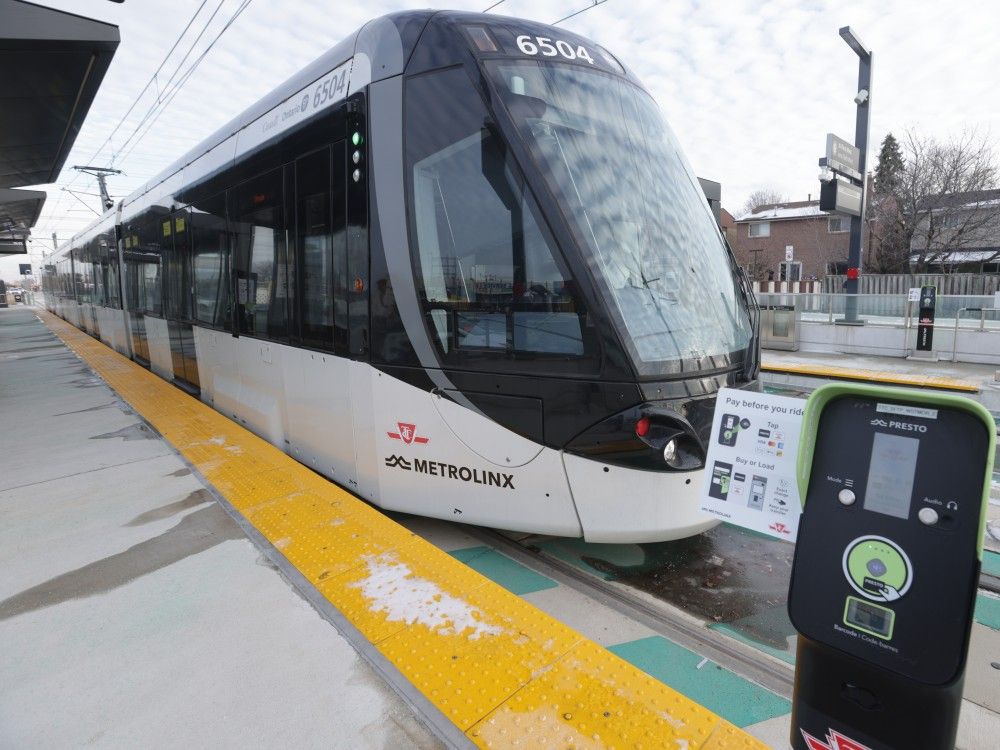
But getting more money from the federal government to expand public transit should be a bare minimum for Fréchette, who is now leading a government that in two mandates hasn’t got any new projects off the ground in Montreal that weren’t already in the works. In fact, last year it quietly dropped plans for a tramway to Lachine from its list of planned infrastructure.
It’s the same story for active transport. Martinez Ferrada was forced to put plans for a new branch of the REV bike path network on hold this week, after previously saying it was on track, because the Transport Ministry hasn’t left room for it on an overpass it will reconstruct.
In January, Martinez Ferrada also made a plea for the government to reverse course on immigration and grandfather the Programme de l’expérience québécoise, which it abruptly replaced. The move put hopes and dreams in limbo for many immigrants already living and working in Montreal, while leaving key economic sectors scrambling.
“The credibility of Quebec and Montreal is at stake,” the mayor said. “We are already losing talent and minds, which Montreal and Quebec greatly need.”
Fréchette listened to reason, promising a more “human” approach to immigration and announcing a temporary revival of the closed program. She also handed the hot-button file to a new minister, François Bonnardel, who is less of an immigration hardliner.
Editor’s Picks


There are some hopeful signs that the new premier is more willing to listen to Montreal and take its interests into account.
But it remains to be seen whether Fréchette’s government treats Montreal as North America’s only French-speaking metropolis and Quebec’s economic engine — or just another municipality.
On that, the indicators are less positive.
Fréchette’s new municipal affairs minister, Samuel Poulin, is from the rural Beauce area. She has also appointed Mathieu Lévesque as a new minister of regions.
There’s nothing wrong with giving outlying areas greater representation, per se, but not if it comes at the city’s expense. And Montreal has routinely been shortchanged by the CAQ, which draws the bulk of its support from suburban, small-town and far-flung ridings.
The choice of Chantal Rouleau as the minister responsible for Montreal may reflect a dearth of options — after all, she is one of only two caucus members in the city. She held this role previously without delivering much. Plus ça change …
The CAQ government also diminished the city’s weight within the Communauté métropolitaine de Montréal last year. It was a blow to the city’s influence on an important regional decision-making body.
After almost eight years, symptoms of the government’s disregard toward Montreal are etched in the landscape, in crumbling schools, decaying hospitals, potholed off-ramps and congested highways.
Fréchette may be saying reassuring things about better co-operation and treating Montreal as a partner. But she will be judged by her actions.

The post Hanes: Will Fréchette treat Montreal with the respect it deserves? appeared first on Montreal Gazette.
















/https%3A%2F%2Fsportsmole-media-prod.s3.gra.io.cloud.ovh.net%2Fuploads%2F2026%2F04%2Ficonsport-362425-0006-1-69cd324521f82764565288.jpg)

 Bengali (BD) ·
  English (US) ·