.png)
 2 hours ago
7
2 hours ago
7
Flying around the far side of the moon earlier this month, astronauts on board the Artemis II space mission observed Earthset, a phenomenon only a handful of humans have witnessed before.
They beamed back photos of this beautiful, blue planet disappearing behind the moon, like the sun vanishing over the horizon back home when night falls.
Those aboard the tiny craft, including Canadian Jeremy Hansen, described it as a spiritual experience. For the earthlings who saw the pictures, it was a potent sign of the miracle of our existence in a vast galaxy seemingly devoid of other life.
But it was an all too brief moment of reverence.
Back down on Earth, things are a mess.
Wars rage and floodwaters rise as human-made crises threaten the planet and civilization.
American and Israeli bombs falling on Iran and the country’s retaliatory strikes on its neighbours are not only killing people, but are destroying the environment. Damage to oil infrastructure has contaminated air, water and soil.
 A plume of heavy smoke and fire rise from an oil refinery in southern Tehran after it was hit in an overnight Israeli strike on June 15, 2025. ATTA KENARE / AFP via Getty Images
Russia’s four-year-old invasion of Ukraine has targeted nuclear facilities on several occasions, risking untold carnage to humans, animals and nature.
Conflicts like these exacerbate the already significant toll of climate change while pushing it to the back burner of priorities for governments and citizens alike.
That is until something inevitably happens to put the climate crisis front of mind again, as has been the case in Quebec this week on the eve of Earth Day on Wednesday.
The melting of the snowpack has authorities on high alert for spring flooding. The Outaouais region has been hardest hit so far, with inundations also reported in the Laurentians, Lanaudière and Montérégie.
 Flooding from the Mille-Îles River at 43rd and 45th Aves. in Laval is seen on Monday, April 20, 2026. Dave Sidaway / Montreal Gazette
Waters are rising in and around Montreal, an island metropolis surrounded by rivers.
It may not be as dire as 2017 or 2019, but the 100-year flood is now the every-few-years flood.
The Quebec government has updated its flood-zone mapping for the first time in decades, a manoeuvre that will negatively affect thousands of homeowners’ insurance rates, mortgage eligibility and property values. But many of those newly designated at risk may soon understand why.
And that’s not counting the menace of flooding from extreme weather events that have become more commonplace with climate change.
The remnants of Hurricane Debby shattered rainfall records in Montreal in August 2024, pooling in underpasses, washing away roads, backing up sewers and filling basements.
Editor’s Picks


If it’s not water, it’s wind, fire or ice causing havoc.
Every year seems to bring a new natural disaster.
Each year seems to become the new hottest on record.
In fact, the last 11 years have been the 11 warmest, according to the World Meteorological Organization, with 2025 in the top three, despite starting and ending with the cooling effects of La Niña.
And hold on to your hats, because the government of Canada is already forecasting temperatures will probably climb to new heights again in 2026.
And yet the same government has taken its foot off the accelerator of climate policies intended to help Canada reduce emissions and reach its Paris Agreement commitments.
The carbon tax has been scrapped because it was too controversial.(Everywhere but Quebec, that is, which has a parallel system, although pressure is building for similar relief.) Electric vehicle mandates have been parked because the auto industry is hurting from U.S. tariffs.
Putting a price on carbon was supposed to wean us off the fossil fuels that drive climate change. When the war in the Middle East pushed up prices at the pump, the federal government announced a temporary break on the gas tax. But what’s good for the pocketbook may not be so great for efforts to curb emissions.
 Patrollers scan the high waters off Île Mercier on Tuesday April 21, 2026. The 100-year flood is now the every-few-years flood, Allison Hanes writes. Dave Sidaway / Montreal Gazette
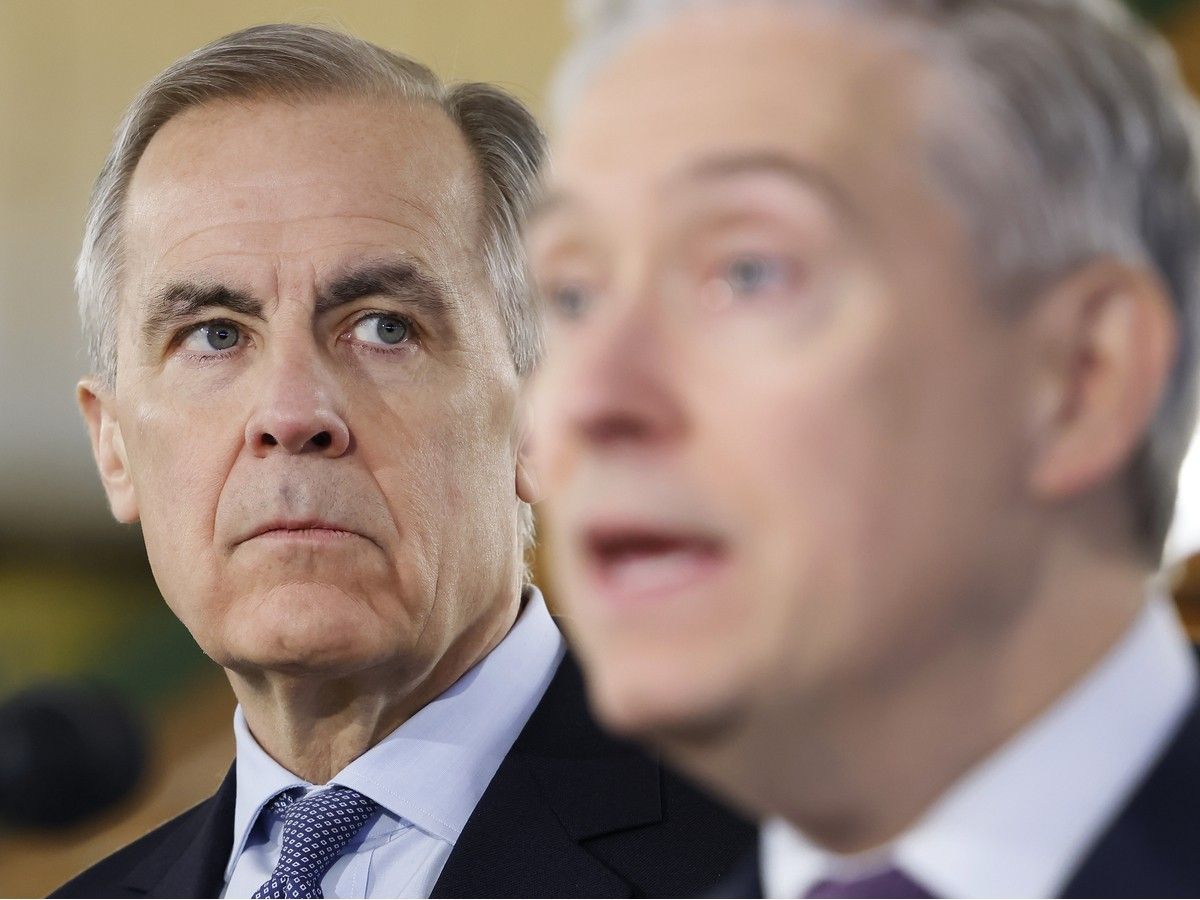
That said, Montreal MP Steven Guilbeault, a former federal environment minister who quit Prime Minister Mark Carney’s cabinet over the abandonment of key climate policies, says he has remained part of the government because its targets remain “ambitious.”
At the Montreal Climate Summit last week, Guilbeault hinted new initiatives are imminent while praising a $3.8-billion investment in protecting nature in the federal budget.
But at the same event, Montreal Mayor Soraya Martinez Ferrada said she is fed up with the provincial and federal governments failing to reach an agreement to secure Quebec’s share of a $25-billion fund for public transit. Montreal, where mass transit is facing a crunch because the Quebec government is starving it of operational funds and money to maintain existing infrastructure, is caught in the middle of the standoff.
Expanding and building public transit is essential to fighting climate change in Quebec, where emissions from transportation are the largest and fastest-growing source of greenhouse gases. And yet it’s one of the most apparent ways the Coalition Avenir Québec’s climate strategy has fallen short.
 The residents of Île Mercier are often among the first to see high water levels during Quebec’s flood season. Spring floods across the province this week have put the climate crisis front of mind again. Dave Sidaway / Montreal Gazette
So this Earth Day, transit funding is stalled, floodwaters are rising, storms may be brewing and summer may be a scorcher — all symptoms of global warming that imperils ecosystems and humanity.
May the recent glimpse of Earth from afar by the Artemis II crew be both a humbling reminder that life on this planet is as fragile as it is precious, and a call to action to save the planet from becoming uninhabitable before it’s too late.

The post Hanes: Coming back down to Earth on the climate crisis appeared first on Montreal Gazette.




















/https%3A%2F%2Fsportsmole-media-prod.s3.gra.io.cloud.ovh.net%2Fuploads%2F2026%2F04%2Ficonsport-362425-0006-1-69cd324521f82764565288.jpg)
 Bengali (BD) ·
  English (US) ·