.png)
 2 hours ago
7
2 hours ago
7
Welcome back to In the Loop, TIME’s twice-weekly newsletter about AI. We're publishing these editions both as stories on Time.com and as emails. If you're reading this in your browser, why not subscribe to have the next one delivered straight to your inbox?
What to Know: Musk and Altman head to court
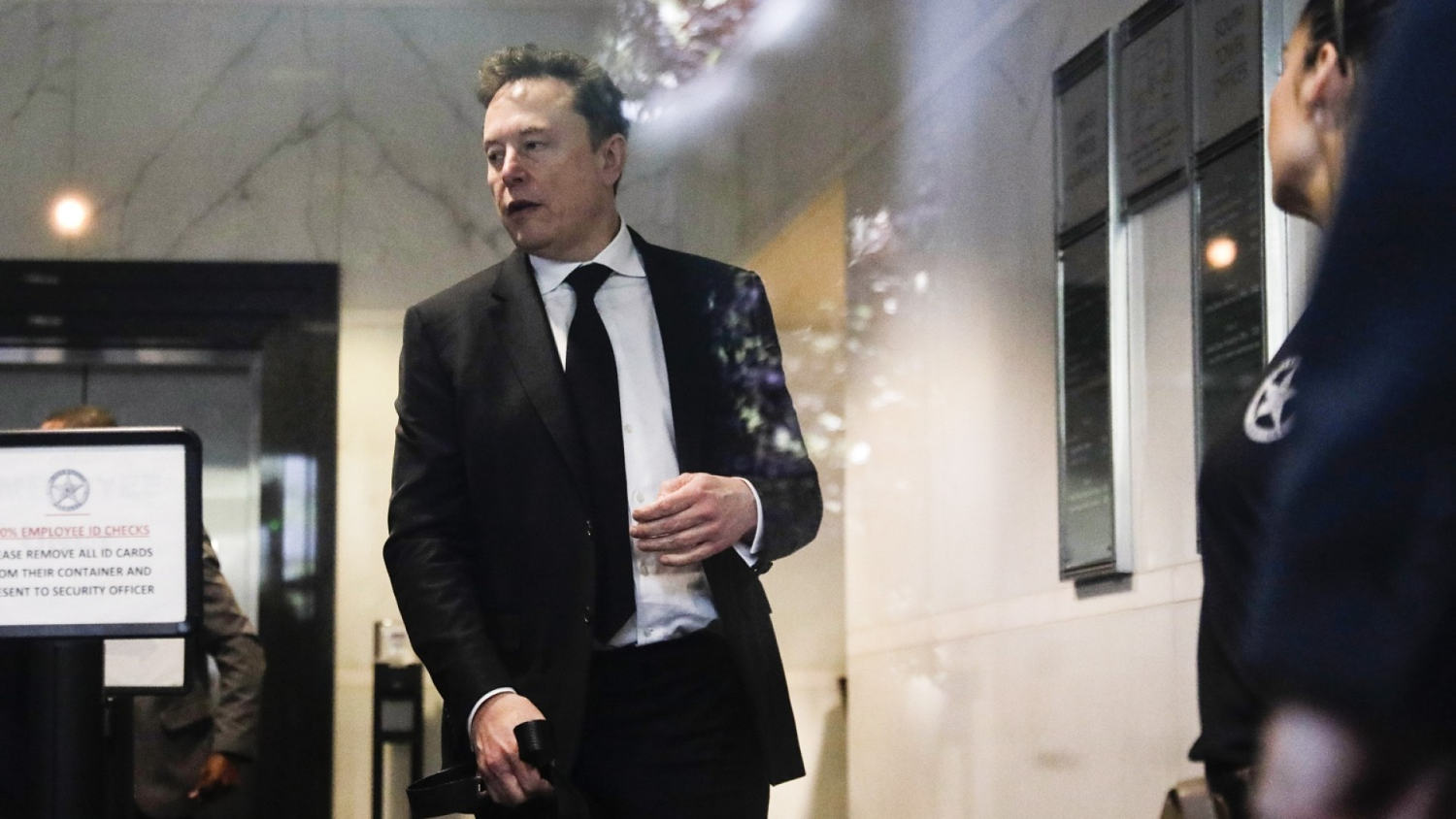
Jury selection began yesterday for Elon Musk’s lawsuit against Sam Altman, in a trial that marks the culmination of a bitter, years-long feud between the two men—and could determine the future of OpenAI.
Musk alleges that Altman, OpenAI’s CEO, betrayed the founding mission of OpenAI, which the two men co-founded in 2015 as a non-profit organization devoted to developing AI for the benefit of humanity as a whole.
On the docket — OpenAI has since restructured into a for-profit company, a move that Musk alleges is a breach of charitable trust relating to the roughly $38 million he donated to OpenAI in its earliest days. He has also accused Altman and OpenAI’s President, Greg Brockman, of unjust enrichment. (This month, Musk dropped a third allegation from the suit, that he had been fraudulently misled about OpenAI’s plans to convert to a for-profit.) OpenAI’s lawyers argue that Musk’s suit is baseless, and motivated by a competitive desire to stifle OpenAI’s position in the AI race. Musk runs a competitor to OpenAI, xAI, which he recently subsumed into his rocket company SpaceX.
On the stand — The trial, which is expected to last until late May barring any last-minute settlement, will feature potentially explosive witness testimony from some of the biggest names in AI, including Musk, Altman, Brockman, Microsoft CEO Satya Nadella, and former OpenAI chief scientist Ilya Sutskever. Mira Murati, OpenAI’s former chief technology officer, is also scheduled to testify. Discovery has already yielded thousands of pages of documents, including diary entries and emails from OpenAI’s early years, as well as new details of Altman’s brief ouster as CEO in 2023.
On the cards — The suit’s outcome could determine the future of OpenAI. Musk is seeking $150 billion in damages, which he has said he would redistribute to the OpenAI nonprofit. He is also pushing for OpenAI to be forced to unwind its for-profit conversion—a move that, if successful, could make it almost impossible for the company to raise the huge quantities of capital required to compete at the frontier of AI. Musk is also seeking for Altman and Brockman to be removed from leadership roles.
In the background — The lawsuit is intensely personal. Musk quit OpenAI in 2018 after he attempted to take control of the company and merge it with Tesla, following disagreements in direction with Altman and Brockman. He has made no secret of his dislike for Altman ever since. He has labeled OpenAI “ClosedAI” for abandoning an early pledge to open-source most of its work. He has pitched his own AI chatbot, Grok, as a free-speech-focused alternative that is unconstrained by so-called woke censorship. Still, Musk’s companies have continued to lag behind OpenAI, both in frontier AI leaderboards and the race to commercialize the technology. Now, OpenAI and SpaceX are each racing to become the first company to complete an initial public offering at a valuation above $1 trillion, perhaps as soon as later this year.
If Musk emerges victorious, however, the biggest winner might not be his own companies. Instead, the real winners might be Musk’s other bitter rivals who are nipping at OpenAI’s heels: Anthropic and Google.
An OpenAI spokesperson pointed TIME to a company blog post that said Musk was “motivated by jealousy, regret for walking away from OpenAI and a desire to derail a competing AI company.” SpaceX did not respond to a request for comment by publication.
Who to Know: Cursor CEO Michael Truell
Elsewhere in Musk’s bid to catch up to OpenAI, SpaceX struck a deal last week to secure the rights to acquire the AI coding startup Cursor for $60 billion later this year—or pay $10 billion if it opts to not go through with the transaction.
The eye-watering sum ($16 billion more than Musk paid for Twitter in 2022) reflects just how central coding prowess has become in the race to build the best AI systems.
The deal makes obvious sense for SpaceX, which will be able to integrate Cursor’s capabilities into its Grok models, and access its huge trove of training data about how the world’s developers use Cursor—whose application allows developers to choose between Cursor’s own Composer models and competitors like Claude Code.
But it also makes plenty of sense for Cursor, which has been under threat from better-funded competitor applications like Claude Code, OpenAI’s Codex, and Google’s Antigravity. With access to Elon Musk’s compute (the world’s richest man also owns the world’s largest data center), Cursor will suddenly have access to enough firepower to train its own frontier-grade models, rather than relying on the same AI labs it is competing against.
When I spoke with Cursor’s 25-year-old CEO Michael Truell late last year, he described several potential ways that Cursor could build a “moat” around its business to defend against competitors. One of them was leveraging the detailed data that Cursor collects about how customers use its software. Another was access to compute. “If you can marshal the resources of lots of GPUs, you can do especially good work,” he said.
But the deal also carries some risks, especially for Cursor. In January, Anthropic cut off xAI’s access to Claude, accusing xAI—which is now part of SpaceX—of breaking its rules by using its AI to build a competing product. If Cursor is acquired by SpaceX, there’s a risk that Anthropic could cut off Claude for Cursor as a whole, potentially alienating the many customers who use Claude as their model of choice within Cursor’s software. I texted Truell yesterday asking whether he was concerned about that possibility. He did not reply, and a Cursor spokesperson declined to comment. Anthropic did not respond to a request for comment.
AI in Action
An AI startup co-founded by the former DeepMind executive David Silver raised $1 billion on Monday, valuing it at $4 billion. The London-based company, called Ineffable Intelligence, says it intends to build AI that can learn continuously, rather than all in one go like current AI models do. The U.K. government said it had invested between £1 and £10 million in the round—a small percentage of the overall raise, to be sure, but a signal that states are increasingly looking to invest in AI companies, both as a means of encouraging local industry and growing public finances.
What We’re Reading
The most highly-paid workers are far more likely to be using AI in the workplace, according to a survey carried out by the FT. More than 60% of high-income workers in the U.S. and U.K. use AI on most days in the workplace, compared to less than 10% of workers in the bottom income bracket. Some of this will reflect that it is easier for high-paid desk workers to use AI than, say, delivery drivers. But it may also reflect a growing economic divide.
























 Bengali (BD) ·
  English (US) ·