.png)
 1 hour ago
7
1 hour ago
7
Ideological certainty, reinforced in environments where dissenting views are scarce, is a problem.
Published May 03, 2026 • Last updated 21 minutes ago • 3 minute read
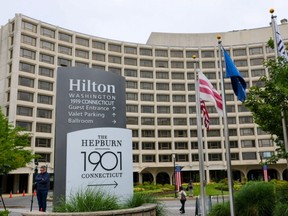
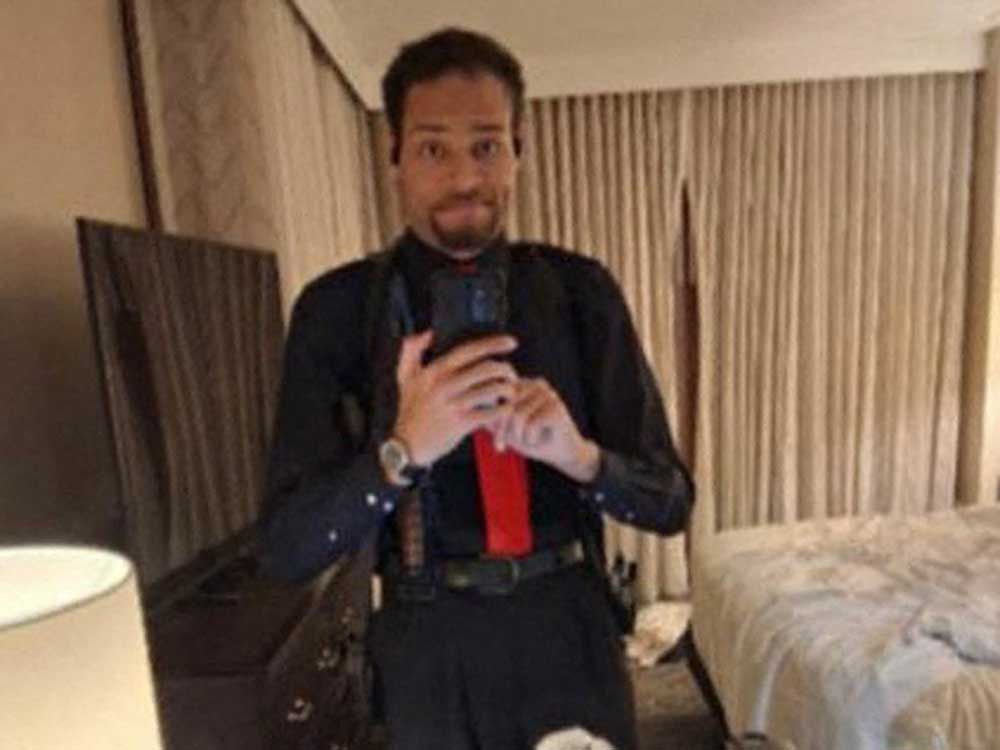
Much has been made of the advanced education of the latest would-be assassin of U.S. President Donald Trump, whom the suspect described in a manifesto as a “pedophile,” “rapist” and “traitor.” He graduated from the California Institute of Technology, one of the most selective schools in the United States.
Advertisement 2

THIS CONTENT IS RESERVED FOR SUBSCRIBERS ONLY
Subscribe now to read the latest news in your city and across Canada.
- Unlimited online access to articles from across Canada with one account.
- Get exclusive access to the Toronto Sun ePaper, an electronic replica of the print edition that you can share, download and comment on.
- Enjoy insights and behind-the-scenes analysis from our award-winning journalists.
- Support local journalists and the next generation of journalists.
- Daily puzzles including the New York Times Crossword.
SUBSCRIBE TO UNLOCK MORE ARTICLES
Subscribe now to read the latest news in your city and across Canada.
- Unlimited online access to articles from across Canada with one account.
- Get exclusive access to the Toronto Sun ePaper, an electronic replica of the print edition that you can share, download and comment on.
- Enjoy insights and behind-the-scenes analysis from our award-winning journalists.
- Support local journalists and the next generation of journalists.
- Daily puzzles including the New York Times Crossword.
REGISTER / SIGN IN TO UNLOCK MORE ARTICLES
Create an account or sign in to continue with your reading experience.
- Access articles from across Canada with one account.
- Share your thoughts and join the conversation in the comments.
- Enjoy additional articles per month.
- Get email updates from your favourite authors.
THIS ARTICLE IS FREE TO READ REGISTER TO UNLOCK.
Create an account or sign in to continue with your reading experience.
- Access articles from across Canada with one account
- Share your thoughts and join the conversation in the comments
- Enjoy additional articles per month
- Get email updates from your favourite authors
Article content
As to Caltech, Daniel McCarthy of the Intercollegiate Studies Institute writes: “In the most recent City Journal college rankings, Caltech took the top spot for ‘value added to career,’ but languished at a dismal 95th place for ‘student ideological diversity.’
Article content
Recommended Videos
Article content
“The rankings noted the school’s ‘disproportionately large Diversity, Equity and Inclusion bureaucracy’ — with ‘roughly ten DEI staff members per 1,000 students’ — and its ‘overwhelmingly liberal’ student body, ‘16 liberal students for every conservative.’ ”
Education, by itself, is not the problem. The problem is something else: Ideological certainty reinforced in environments where dissenting views are scarce.
In 2024, The Duke Chronicle wrote: “In the Harvard Crimson’s spring 2023 faculty survey, 31.8% of respondents drawn from Harvard Faculty of Arts and Sciences and the John A. Paulson School of Engineering and Applied Sciences identified as ‘very liberal,’ while 45.3% of respondents identified as ‘liberal.’ Fewer than 3% of respondents identified as ‘conservative’ (2.5%) or ‘very conservative’ (0.4%).”
By signing up you consent to receive the above newsletter from Postmedia Network Inc.
Article content
Advertisement 3
Article content
What happens when smart people are surrounded mostly by others who think the same way? Often, it produces not wisdom, but moral certainty — an unshakable belief that one’s conclusions are not just correct, but righteous.
A survey from the Skeptic Research Center suggested those with graduate degrees are nearly twice as likely to believe “violence is often necessary to create social change.” The Skeptic Research Center wrote: “In the politically tumultuous Summer of 2020, PEW reported the results of a survey indicating that 80% of Americans have ‘none’ or ‘just a few’ friends with political views different from their own. A few years later, the American Psychiatric Association found that around 20% of Americans had become estranged from family due to political disagreements, with an additional 20% skipping family events because of political disagreements. Another recent study found that around one in six Americans have ended or considered ending a romantic relationship because of a political disagreement.”
Advertisement 4
Article content
My closest friend — someone I had known for more than 40 years — ended our friendship over Trump. A law professor, he received a perfect score on his SAT. He has a son with special needs. But he became convinced that Trump had mocked a disabled reporter out of cruelty.
I explained that Trump did mock the reporter, but not because of the reporter’s disability. Trump ridiculed the reporter because, in Trump’s opinion, the reporter distanced himself from his own article when Trump used it to corroborate an assertion Trump made that on 9/11 some Muslims in New Jersey were seen cheering the collapse of the Twin Towers. I referred my friend to a website called Catholics4Trump with video from several other instances where Trump used his hand-waving “mocking” gesture to make fun of himself, an able-bodied general and others.
“Why,” I asked my friend, “would I support someone who would do such a thing? Why would his supporters? And what politician would think is a good idea to get votes by mocking a disabled person?”
Advertisement 5
Article content
But this narrative stuck. In 2016, before the election, NBC News wrote: “When asked in a recent Bloomberg poll what bothered them most about Donald Trump — of a slew of controversies — likely voters picked one action above all others: When the candidate mocked a reporter with a disability last November.”
Trump, of course, denied the accusation and insisted he was unaware of the reporter’s disability. The reporter, in fact, is a calm and articulate speaker who does not comically wave his hands as Trump did.
None of this mattered to my friend. And it struck me. Once someone, no matter how intelligent or well-educated, is invested in hating Trump, no amount of information or alternative explanation would make him unhate Trump.
As to the would-be assassin, the question is not how much he learned, but whether he ever learned to question his beliefs — and whether in his environment this was encouraged, tolerated or punished.
Read More
-

ELDER: On CNN, Democrat 'Election Deniers' get a pass
-

ELDER: The implosion of Eric Swalwell: What was he thinking?


Article content




















/https%3A%2F%2Fsportsmole-media-prod.s3.gra.io.cloud.ovh.net%2Fuploads%2F2026%2F02%2Fimago1072832028-1-1-6996d086195c8904803070.jpg)
 Bengali (BD) ·
  English (US) ·