.png)
 4 hours ago
9
4 hours ago
9
Article content
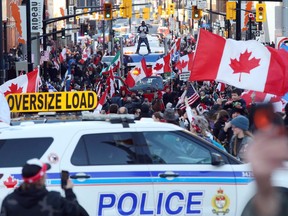
Man bites dog dep’t: Last Thursday the National Magazine of the Canadian Bar Association published an op-ed praising the Ontario Court of Appeal for an act of rock-solid common sense. A couple of weeks ago, the court overturned some Superior Court acquittals for Freedom Convoy organizer Pat King, who had been successfully convicted on mischief and other charges related to the 2022 trucker protests that besieged parts of Ottawa. But the judge trying King, the Hon. Charles Hackland, had declined to convict King on three charges related to the Criminal Code offence of “intimidation,” which can carry a sentence of up to five years’ imprisonment.

THIS CONTENT IS RESERVED FOR SUBSCRIBERS
Enjoy the latest local, national and international news.
- Exclusive articles by Conrad Black, Barbara Kay and others. Plus, special edition NP Platformed and First Reading newsletters and virtual events.
- Unlimited online access to National Post.
- National Post ePaper, an electronic replica of the print edition to view on any device, share and comment on.
- Daily puzzles including the New York Times Crossword.
- Support local journalism.
SUBSCRIBE FOR MORE ARTICLES
Enjoy the latest local, national and international news.
- Exclusive articles by Conrad Black, Barbara Kay and others. Plus, special edition NP Platformed and First Reading newsletters and virtual events.
- Unlimited online access to National Post.
- National Post ePaper, an electronic replica of the print edition to view on any device, share and comment on.
- Daily puzzles including the New York Times Crossword.
- Support local journalism.
REGISTER / SIGN IN TO UNLOCK MORE ARTICLES
Create an account or sign in to continue with your reading experience.
- Access articles from across Canada with one account.
- Share your thoughts and join the conversation in the comments.
- Enjoy additional articles per month.
- Get email updates from your favourite authors.
THIS ARTICLE IS FREE TO READ REGISTER TO UNLOCK.
Create an account or sign in to continue with your reading experience.
- Access articles from across Canada with one account
- Share your thoughts and join the conversation in the comments
- Enjoy additional articles per month
- Get email updates from your favourite authors
Sign In or Create an Account
or
Article content
Article content
The crime of intimidation, according to the letter of the Code (Section 423.1), is anything from a list of actions that is done “wrongfully and without lawful authority” in order to compel someone else’s action or inaction. The list explicitly includes “block(ing) or obstruct(ing) a highway,” which was the very essence of the Freedom Convoy’s Ottawa protest. The record of the protest shows pretty unambiguously that one of King’s goals was to create obstructive chaos for Ottawa residents of all kinds — preventing them from getting about or even using airports — as a means of creating wider political pressure on the establishment. However sympathetic you are to the goals or ideology of the convoy, which was otherwise nonviolent and nondestructive, the legal analysis is bound to seem cut-and-dried to the layman.
Article content
Article content
By signing up, you consent to receive the above newsletter from Postmedia Network Inc.
Article content
But Justice Hackland, not deterred by the relative simplicity of Section 423.1, let King off the hook on the intimidation charges. The protesters did not necessarily intend to intimidate anyone, Hackland ruled; they simply hoped to “pressure, inconvenience, and annoy … downtown residents and workers, as a way of pressuring the government to alter its COVID-19 policies.” Even though blocking a road is included per se on the Criminal Code’s list of “intimidating actions,” the judge read the Criminal Code as though the offence of “intimidation” required the added use of threats or violence.
Article content
Article content
He also observed several times that “otherwise lawful protests” are deserving of special protection under the Charter of Rights, failing to explain how this could be consistent with convicting King on other charges, and expressed concerns about giving an “unduly broad” interpretation to the apparent strict meaning of the Code. (His ruling included no actual Charter analysis at all, mind you; he thought the mere mention of the Charter was enough.)
Article content
It wouldn’t do for your National Post to overlook the Court of Appeal’s firm and unanimous response, which includes dozens of quotes from past Canadian caselaw to the effect that, hey, you can’t do something illegal just because you’re a protester protesting. The appeal panel pats Hackland on the head for a “well-intentioned effort to interpret the law to accommodate political protest,” and then administers a loud caning. It is settled law, they insist, that “mass obstruction of public highways is not a form of peaceful protest.” Hackland, in practically reading “blocking highways” altogether out of the text of s. 423.1, was engaged in “impermissible legislating” (!) and in contrived invocation of the Charter. “Blockading a highway is an inherently aggressive and potentially violent form of conduct, designed to intimidate and impede the movement of third parties.” Period.





















/https%3A%2F%2Fsportsmole-media-prod.s3.gra.io.cloud.ovh.net%2Fuploads%2F2026%2F07%2Fwc26-stencil-generic-1-player-email-6a5efced3be22784676779.jpg)
/https%3A%2F%2Fsportsmole-media-prod.s3.gra.io.cloud.ovh.net%2Fuploads%2F2026%2F04%2Fimago1075785696-69f1c41377d96073966575.jpg)
 Bengali (BD) ·
  English (US) ·