Bulldozers tear down home as Israel cracks down in the West Bank

1 day ago 13

Bulldozers tore down Palestinian businessman Riyad Mureish’s home in Hebron in the occupied West Bank on Friday, as Israeli officials launched a fresh crackdown on residents there.

Mureish, 49, who put his life savings into the house, told NBC News that Israeli soldiers gave his family just minutes to collect their valuables and identity documents before ordering them out.

He said the house had been subject to a long-running dispute with Israeli authorities, who retain significant power over construction permits in the area. A court decree was in place that should have prevented any demolition, Mureish added, but the soldiers were unswayed by his pleas.

“They demolished and took me out by force,” he said.

Now sheltering in a small room at a neighbor’s house with his wife and children, Mureish says he is still struggling to comprehend what has happened. He said: “No house, no land, no money, what can I do?”
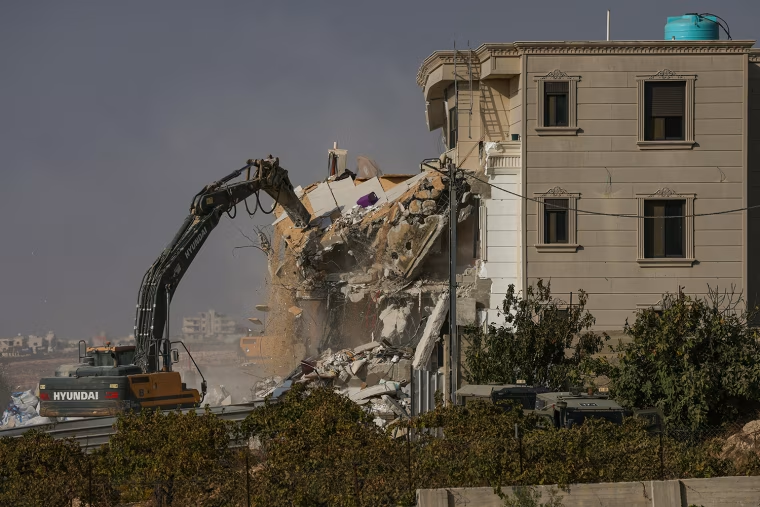
Israelis demolish houses in the West BankIsraeli bulldozers demolish a Palestinian building in the West Bank city of Hebron on Oct. 23, 2026. Hazem Bader / AFP via Getty

Videos captured the moment that bulldozers began to rip through the property. The scenes unfolded the same day that Israeli Prime Minister Benjamin Netanyahu stood in another part of Hebron, wearing a military-style vest, and vowed to intensify operations across the occupied West Bank.

After a shooting attack that left two Israeli soldiers and two gunmen dead, Netanyahu said the military would enter neighborhoods from which attackers had emerged, evacuate residents and go “house to house” to tackle any threat.

01:25

IDF helmet cam shows gunfight with Palestinian gunmen

00:0000:00

“We are going to destroy terrorist infrastructure, and we are going to build the infrastructure for settlement,” he told cameras, speaking days before Israel’s pivotal Oct. 27 election that will decide whether he stays in power.

Israeli forces have since “sealed off all the entrances” to the city, “making it impossible for anyone to enter or leave,” according to Yousef al-Jabari, the Palestinian mayor of Hebron.

He told NBC News a key mosque had been forced to close and residents in some areas were being removed from their homes, adding that soldiers have “effectively besieged an entire densely populated area and are demanding that its residents leave.”

Hebron is the largest city in the West Bank, home to approximately 320,000 people.

Israeli human rights organization B’Tselem said approximately 240 Palestinian families were forced from their homes in the Jildah and ‘Ein Deir Bahah neighborhoods of Hebron on Friday and Saturday.

“Soldiers have taken over numerous homes and remain inside them, raising Israeli flags over several buildings. Arrests and interrogations are also continuing,” the group said in a statement.

Tensions have soared in the West Bank in the weeks before the Israeli election, with a spate of settler violence and military activity centered on the start of the olive harvesting season. Palestinians, activists and American journalists have been among those attacked and detained.

Al-Jabari called the latest lockdown a “form of collective punishment” and suggested Netanyahu’s intervention was motivated by politics.

“With the Israeli elections only days away, Netanyahu is seeking to secure as many votes as possible by appeasing the settlers,” he said.

Netanyahu has long faced pressure from his far-right allies to embrace harder stances in the West Bank. In his comments Friday, he praised settlers as “heroic,” saying they were “an example to the people of Israel and to the state of Israel.”

The leader, facing a tough re-election battle, has focused much of his campaign ahead of Tuesday’s vote on security. His government has repeatedly warned of potential attacks by the country’s “enemies” in the lead-up to the election, without providing evidence.

In the wake of Friday’s attack, he said that he had “warned several weeks ago about our enemies’ attempts to harm us, our civilians and our soldiers ahead of the elections. That is what they tried to here.”

U.N. spokesperson Stéphane Dujarric said at a press briefing Friday that “closures severely restrict Palestinians’ freedom of movement, access to basic services and livelihoods.”

Mayy El Sheikh, a spokesperson for the Office of the United Nations High Commissioner for Human Rights in the Occupied Palestinian Territory, said in a statement Friday that the lockdown was “yet another episode in a never-ending stream of suffocating measures making life more and more unbearable for Palestinians.”

“It follows a pattern of collective punishment whenever Palestinians commit acts of violence against Israeli settlers or soldiers,” she said.

H.A. Hellyer, a senior associate fellow at the Royal United Services Institute in London, told NBC News that Netanyahu could be showing a “strong arm” ahead of the elections by locking down the West Bank, but he said the link was not clear, noting that the main candidates in the election were broadly aligned.

Even if Netanyahu loses, he said, “I don’t expect there to be change on the West Bank.”

Israeli officials did not immediately respond to a request for comment.

Bulldozers tore down Palestinian businessman Riyad Mureish’s home in Hebron in the occupied West Bank on Friday, as Israeli officials launched a fresh crackdown on residents there.

Mureish, 49, who put his life savings into the house, told NBC News that Israeli soldiers gave his family just minutes to collect their valuables and identity documents before ordering them out.

He said the house had been subject to a long-running dispute with Israeli authorities, who retain significant power over construction permits in the area. A court decree was in place that should have prevented any demolition, Mureish added, but the soldiers were unswayed by his pleas.

“They demolished and took me out by force,” he said.

Now sheltering in a small room at a neighbor’s house with his wife and children, Mureish says he is still struggling to comprehend what has happened. He said: “No house, no land, no money, what can I do?”

Israelis demolish houses in the West BankIsraeli bulldozers demolish a Palestinian building in the West Bank city of Hebron on Oct. 23, 2026. Hazem Bader / AFP via Getty

Videos captured the moment that bulldozers began to rip through the property. The scenes unfolded the same day that Israeli Prime Minister Benjamin Netanyahu stood in another part of Hebron, wearing a military-style vest, and vowed to intensify operations across the occupied West Bank.

After a shooting attack that left two Israeli soldiers and two gunmen dead, Netanyahu said the military would enter neighborhoods from which attackers had emerged, evacuate residents and go “house to house” to tackle any threat.

01:25

IDF helmet cam shows gunfight with Palestinian gunmen

00:0000:00

“We are going to destroy terrorist infrastructure, and we are going to build the infrastructure for settlement,” he told cameras, speaking days before Israel’s pivotal Oct. 27 election that will decide whether he stays in power.

Israeli forces have since “sealed off all the entrances” to the city, “making it impossible for anyone to enter or leave,” according to Yousef al-Jabari, the Palestinian mayor of Hebron.

He told NBC News a key mosque had been forced to close and residents in some areas were being removed from their homes, adding that soldiers have “effectively besieged an entire densely populated area and are demanding that its residents leave.”

Hebron is the largest city in the West Bank, home to approximately 320,000 people.

Israeli human rights organization B’Tselem said approximately 240 Palestinian families were forced from their homes in the Jildah and ‘Ein Deir Bahah neighborhoods of Hebron on Friday and Saturday.

“Soldiers have taken over numerous homes and remain inside them, raising Israeli flags over several buildings. Arrests and interrogations are also continuing,” the group said in a statement.

Tensions have soared in the West Bank in the weeks before the Israeli election, with a spate of settler violence and military activity centered on the start of the olive harvesting season. Palestinians, activists and American journalists have been among those attacked and detained.

Al-Jabari called the latest lockdown a “form of collective punishment” and suggested Netanyahu’s intervention was motivated by politics.

“With the Israeli elections only days away, Netanyahu is seeking to secure as many votes as possible by appeasing the settlers,” he said.

Netanyahu has long faced pressure from his far-right allies to embrace harder stances in the West Bank. In his comments Friday, he praised settlers as “heroic,” saying they were “an example to the people of Israel and to the state of Israel.”

The leader, facing a tough re-election battle, has focused much of his campaign ahead of Tuesday’s vote on security. His government has repeatedly warned of potential attacks by the country’s “enemies” in the lead-up to the election, without providing evidence.

In the wake of Friday’s attack, he said that he had “warned several weeks ago about our enemies’ attempts to harm us, our civilians and our soldiers ahead of the elections. That is what they tried to here.”

U.N. spokesperson Stéphane Dujarric said at a press briefing Friday that “closures severely restrict Palestinians’ freedom of movement, access to basic services and livelihoods.”

Mayy El Sheikh, a spokesperson for the Office of the United Nations High Commissioner for Human Rights in the Occupied Palestinian Territory, said in a statement Friday that the lockdown was “yet another episode in a never-ending stream of suffocating measures making life more and more unbearable for Palestinians.”

“It follows a pattern of collective punishment whenever Palestinians commit acts of violence against Israeli settlers or soldiers,” she said.

H.A. Hellyer, a senior associate fellow at the Royal United Services Institute in London, told NBC News that Netanyahu could be showing a “strong arm” ahead of the elections by locking down the West Bank, but he said the link was not clear, noting that the main candidates in the election were broadly aligned.

Even if Netanyahu loses, he said, “I don’t expect there to be change on the West Bank.”

Israeli officials did not immediately respond to a request for comment.

*** Disclaimer: This Article is auto-aggregated by a Rss Api Program and has not been created or edited by Bdtype.

(Note: This is an unedited and auto-generated story from Syndicated News Rss Api. News.bdtype.com Staff may not have modified or edited the content body.

Please visit the Source Website that deserves the credit and responsibility for creating this content.)

Watch Live | Source Article