.png)
 3 hours ago
11
3 hours ago
11
Article content
OTTAWA — B.C.’s premier argued Thursday for blocking the U.S. from accessing Canada’s critical mineral supply in response to tariffs on his province’s lumber exports and other sectors.

THIS CONTENT IS RESERVED FOR SUBSCRIBERS
Enjoy the latest local, national and international news.
- Exclusive articles by Conrad Black, Barbara Kay and others. Plus, special edition NP Platformed and First Reading newsletters and virtual events.
- Unlimited online access to National Post.
- National Post ePaper, an electronic replica of the print edition to view on any device, share and comment on.
- Daily puzzles including the New York Times Crossword.
- Support local journalism.
SUBSCRIBE FOR MORE ARTICLES
Enjoy the latest local, national and international news.
- Exclusive articles by Conrad Black, Barbara Kay and others. Plus, special edition NP Platformed and First Reading newsletters and virtual events.
- Unlimited online access to National Post.
- National Post ePaper, an electronic replica of the print edition to view on any device, share and comment on.
- Daily puzzles including the New York Times Crossword.
- Support local journalism.
REGISTER / SIGN IN TO UNLOCK MORE ARTICLES
Create an account or sign in to continue with your reading experience.
- Access articles from across Canada with one account.
- Share your thoughts and join the conversation in the comments.
- Enjoy additional articles per month.
- Get email updates from your favourite authors.
THIS ARTICLE IS FREE TO READ REGISTER TO UNLOCK.
Create an account or sign in to continue with your reading experience.
- Access articles from across Canada with one account
- Share your thoughts and join the conversation in the comments
- Enjoy additional articles per month
- Get email updates from your favourite authors
Sign In or Create an Account
or
Article content
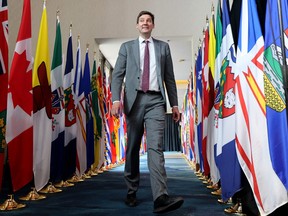
B.C. Premier David Eby said at the first ministers meeting in Charlottetown that it was “inexplicable” for the U.S. to destabilize Canadian export industries, including forestry, while trying to gain greater access to Canada’s mineral wealth.
Article content
Article content
Article content
“We can’t have a country, on one hand, attacking one group of families and workers, while hoping to have access to the resources in Canada that the rest of the world wants,” said Eby.
Article content
Article content
He pointed to the U.S. ambassador to Canada, Pete Hoekstra, regularly meeting with top Canadian mining executives and calling for co-operation while the White House continued to crank up economic pressure on other industries.
Article content
Eby’s comments come after the Trump administration announced a new wave of 50 per cent tariffs on a range of targeted Canadian goods, starting Aug. 19. The White House said the tariffs were in response to Canadian trade actions, including provinces boycotting U.S. alcohol, Canadian tariffs on U.S. autos, and restrictions on dairy imports.
Article content
Article content
The list of newly targeted goods includes several forestry products made in B.C., including wooden furniture and tableware.
Article content
Analysts say the new tariffs are expected to hit Ontario, Quebec and B.C. the hardest, while leaving Alberta and Saskatchewan relatively unscathed. The latter two provinces have not been boycotting American alcohol. But Eby has said there’s “not a chance in hell” his province will put U.S. booze back on the shelf.
Article content
Article content
According to one estimate, 13.7 per cent of B.C. exports will be affected by the tariff, the highest proportion of any province in Canada.
Article content
Article content
Eby strongly suggested he was willing to leverage B.C.’s critical minerals as part of a national response to the newly announced tariffs. Several provinces have mines or projects for critical minerals, including B.C., Alberta, Saskatchewan, Manitoba, Ontario and Quebec.
Article content
“If the prime minister calls British Columbia and says he needs support with some big sticks to have conversations at the table, then we’ll be there,” said Eby.
Article content
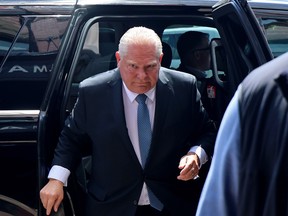
Ontario Premier Doug Ford suggested Tuesday that Canada block exports to the U.S. of oil and potash, a vital agricultural mineral used in fertilizer, in response to the new tariff threat. The idea was quickly shut down by Saskatchewan Premier Scott Moe, whose province is the country’s sole producer of potash.
Article content
Article content
Heather Exner-Pirot, director of energy research at the Macdonald-Laurier Institute, said that threatening U.S. access to Canadian minerals would be a dangerous escalation of trade conflict, given the importance of minerals in high-tech applications, including defence. China is currently dominant in global critical mineral supplies.
























/https%3A%2F%2Fsportsmole-media-prod.s3.gra.io.cloud.ovh.net%2Fuploads%2F2026%2F03%2Ficonsport-361551-0102-1-69b560866f7b6508942731.jpg)
 Bengali (BD) ·
  English (US) ·