.png)
 1 day ago
17
1 day ago
17
The problem: In many cases, these topical antibiotics don't work any better than plain old petroleum jelly.
Author of the article:

Washington Post
Trisha Pasricha, MD, The Washington Post
Published Oct 13, 2026 • Last updated 6 minutes ago • 3 minute read
Advertisement 2

THIS CONTENT IS RESERVED FOR SUBSCRIBERS ONLY
Subscribe now to read the latest news in your city and across Canada.
- Unlimited online access to articles from across Canada with one account.
- Get exclusive access to the Toronto Sun ePaper, an electronic replica of the print edition that you can share, download and comment on.
- Enjoy insights and behind-the-scenes analysis from our award-winning journalists.
- Support local journalists and the next generation of journalists.
- Daily puzzles including the New York Times Crossword.
SUBSCRIBE TO UNLOCK MORE ARTICLES
Subscribe now to read the latest news in your city and across Canada.
- Unlimited online access to articles from across Canada with one account.
- Get exclusive access to the Toronto Sun ePaper, an electronic replica of the print edition that you can share, download and comment on.
- Enjoy insights and behind-the-scenes analysis from our award-winning journalists.
- Support local journalists and the next generation of journalists.
- Daily puzzles including the New York Times Crossword.
REGISTER / SIGN IN TO UNLOCK MORE ARTICLES
Create an account or sign in to continue with your reading experience.
- Access articles from across Canada with one account.
- Share your thoughts and join the conversation in the comments.
- Enjoy additional articles per month.
- Get email updates from your favourite authors.
THIS ARTICLE IS FREE TO READ REGISTER TO UNLOCK.
Create an account or sign in to continue with your reading experience.
- Access articles from across Canada with one account
- Share your thoughts and join the conversation in the comments
- Enjoy additional articles per month
- Get email updates from your favourite authors
Article content
I saw online that we actually shouldn’t be applying topical antibiotic ointments for minor scrapes and cuts. What’s the harm? Don’t they help prevent infections?
Article content
Article content
Parents of tiny playground warriors often carry antibiotic ointments everywhere they go – after all, scrapes are inevitable, and the ointment helps everyone feel like they’re doing something (beyond, of course, the therapeutic application of a colourful bandage).
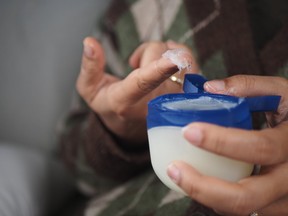
The problem: In many cases, these topical antibiotics don’t work any better than plain old petroleum jelly.
That’s what a large randomized controlled trial of almost 1,000 patients who had undergone minor skin surgeries concluded 30 years ago in a paper published in JAMA. The researchers cleaned the patients’ wounds, then randomized them to either topical antibiotic bacitracin or petroleum jelly, before covering the wounds with gauze and a bandage. A month later, both groups had similarly low rates of infections – and both groups’ wounds had healed just as well. Since then, those findings have been replicated in similar studies.
By signing up you consent to receive the above newsletter from Postmedia Network Inc.
Article content
Advertisement 3
Article content
You could argue there’s no harm with the antibiotics, but there’s another issue: skin allergies. Allergic contact dermatitis due to topical over-the-counter antibiotics like neomycin shows up in around 5 percent of children and 2 percent of adults. These allergies can make the skin red and itchy. They may also require other medications, such as steroid creams, to help resolve them.
In fact, the inflammation caused by an allergy to the topical antibiotic can sometimes be mistaken for a wound infection, said Shoshana Marmon, an assistant professor of dermatology and director of clinical research at New York Medical College.
Combine that with the fact that petroleum jelly is cheap and well-tolerated, it’s no wonder that many dermatologists are speaking out.
“People often assume that adding an antibiotic ointment automatically makes a minor wound safer,” Marmon said. “For most clean, uncomplicated cuts and scrapes, good wound care – cleaning the wound, keeping it moist with petroleum jelly and keeping it covered – is usually enough.”
Advertisement 4
Article content
The American Academy of Dermatology recommends topical antibiotics only for surgical wounds showing signs of infection – and not as a preventative default.
To be clear, most clinical trial data have looked at what happens to clean surgical wounds or – on the other end of the spectrum – wounds that are gnarly enough that someone has gone to the emergency room. And while most of my own minor scrapes in daily life are fairly clean, research directly studying household or playground wounds is limited.
Still, most dermatologists agree that antibiotics should be used sparingly.
“Use a topical antibiotic only if there is redness, red streaks surrounding the scrape, warmth, pus, fever or chills,” said Adelaide Hebert, chief of pediatric dermatology at UTHealth McGovern Medical School in Houston.
On a public health level, antibiotic resistance is already a problem, she added, so reducing your use if you can is a good idea.
And if you do have any of the symptoms listed above, be sure to check in with a health care provider.
Advertisement 5
Article content
Wounds need two things to heal: moisture and coverage. Here’s how to give your cut or scrape what it needs.
A few years ago, I walked right into a sculpture in the middle of a courtyard at Harvard University. I was talking to a mentee and wasn’t watching where I was going. I arrived home with a gash about a centimeter long and two millimeters deep – and it was still oozing.
Even as a doctor, I waffled: Did I need stitches? Or just more time and pressure? I did finally go to an emergency room, and it turns out, I had plenty of red flags that I actually did need stitches.
Here’s how to know:
If you don’t moisten and cover your wounds properly, scabs form. Scabs aren’t inherently bad; it’s your body trying to do the job of the bandage for you. But they’re itchy and constantly tempt you to pick at them prematurely (cover them with a bandage if it’s too tantalizing). If a scab is still stuck on, it means the area has not yet healed. Leave it alone.
And if you tend to form keloids – a type of raised scar – Hebert suggests a silicone-based over-the-counter dressing once the skin is closed (don’t apply to a fresh open wound).
For more health news and content around diseases, conditions, wellness, healthy living, drugs, treatments and more, head to Healthing.ca – a member of the Postmedia Network.
Article content





























 Bengali (BD) ·
  English (US) ·