.png)
 4 hours ago
9
4 hours ago
9
It took seven years for Rachel Levasseur to find a treatment that worked for a complex form of obsessive-compulsive disorder, which creates the persistent belief that she’s a harm to others. In the interim, she attempted suicide numerous times.
Subscribe to read this story ad-free
Get unlimited access to ad-free articles and exclusive content.

Things changed last year when Levasseur’s parents reached out to a therapist at Sheppard Pratt, a psychiatric hospital in Maryland. The hospital’s self-pay, residential treatment program — called The Retreat — connects patients to a personalized care team of psychiatrists and therapists, among other providers.
After a year in the program, Levasseur, 24, noticed she was improving. She had not attempted suicide while being there. Her parents said she went from quiet and closed off to increasingly social. She was finally willing to go out to dinner or to a concert with a friend.

But Levasseur’s insurance provider, CareFirst BlueCross BlueShield, has only paid for a small share of her treatment thus far, and her stay in the program was cut short in March after her parents couldn’t afford the nearly $3,000-per-day cost.
“It’s just confusing how insurance can’t recognize that I am getting better finally,” Levasseur said. “They’re just focused on the money instead of my life.”
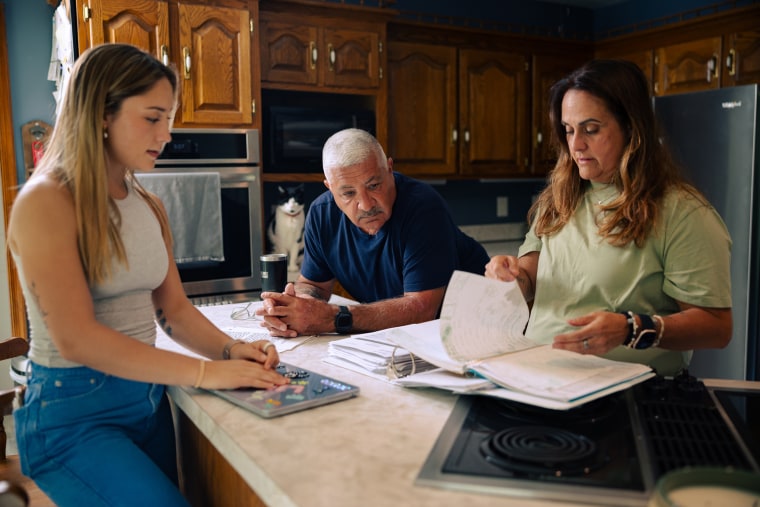 Ellie Levasseur works with her parents on resolving insurance claim issues with her sister’s treatment.Maansi Srivastava for NBC News
Levasseur’s parents, Larry and Kandy Levasseur, said they owe the hospital about $1.3 million, even after taking out a second mortgage on their home and draining Larry’s retirement savings to foot the initial portion of her stay. NBC News was not able to independently verify the family’s balance, which the Levasseurs said was communicated over the phone.
CareFirst declined to comment on Levasseur’s case. Sama Abduljawad, a spokesperson for Sheppard Pratt, also declined to answer questions about The Retreat or Levasseur’s stay there, citing privacy laws. Levasseur had given permission to Sheppard Pratt to discuss her medical information with NBC News.
The Levasseurs said their daughter’s story is an example of how difficult it is to find exceptional mental health providers that are covered by insurance, let alone ones that can handle complex cases. More than a third of psychologists surveyed by the American Psychological Association last year said they didn’t accept insurance, citing reasons such as insufficient reimbursements from insurance companies and denied coverage for services they felt were necessary for their patients.
 A letter Rachel Levasseur wrote to the insurance company asking for help covering the cost of her treatment.Maansi Srivastava for NBC News
The Levasseurs said Rachel’s condition is regressing outside of the specialized program. She is currently staying at the hospital’s inpatient unit, which is in-network with her insurance plan, but Larry and Kandy said the hospital won’t readmit her to the Retreat program until the family resolves their outstanding sum.
Her case is complicated from both insurance and medical perspectives.
Since childhood, Levasseur’s OCD has contributed to an extreme fear of germs or illness. She is often convinced that she has a deadly infection that she could pass on to others, which can instigate thoughts of suicide. Her condition is compounded by autism spectrum disorder, which makes her more prone to thinking in black and white and can make it harder to identify irrational thoughts.
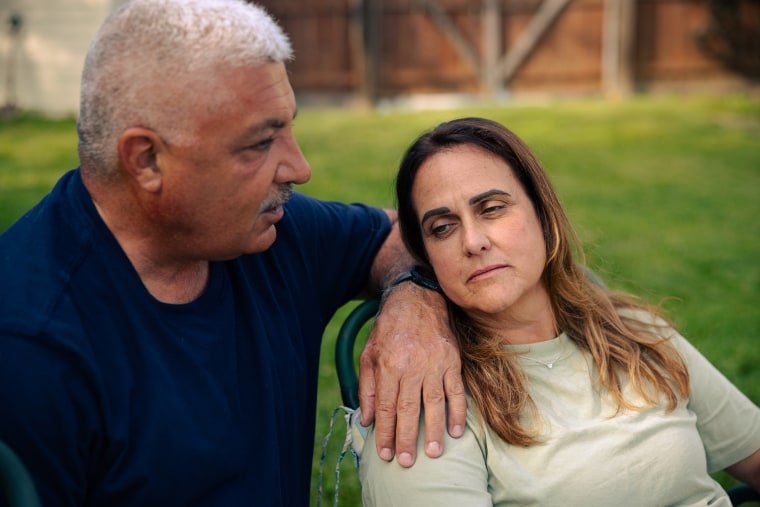 Larry and Kandy Levasseur said they owe about $1.3 million, even after having taken out a second mortgage on their home and drained their retirement savings to foot the initial part of Rachel's stay. Maansi Srivastava for NBC News
Before the program, Larry said, his daughter required constant monitoring at home.
“We basically took shifts where I would watch her through the day,” he said. “I’m a little bit heavier of a sleeper than Kandy, so she would take the night and we would have to check on her every few minutes to make sure she was OK and alive.”
While other treatment programs have targeted certain aspects of Levasseur’s medical issues, the Sheppard Pratt program seemed to be the only one that addressed them collectively, her parents said.
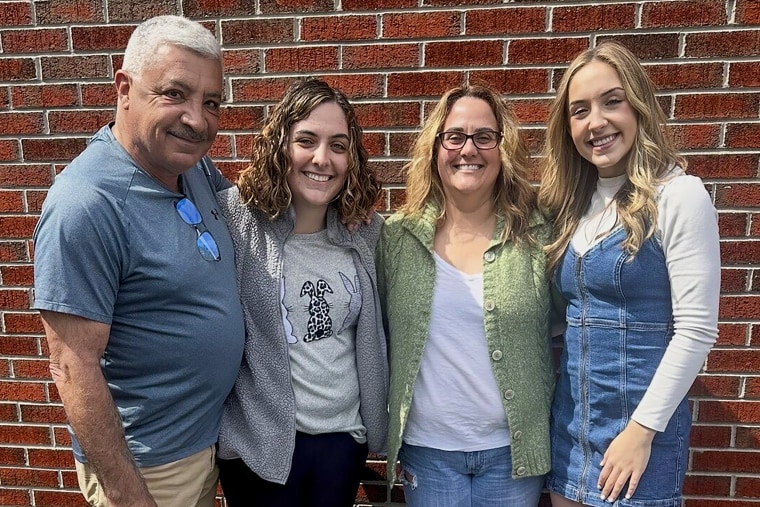 Larry, Rachel, Kandy and Ellie Lavesseur.Courtesy Levasseur Family
“I truly believe that if Rachel wouldn’t have gone to The Retreat this last year, she would not be alive today,” Kandy said.
Exhausting all options
The Levasseurs knew the specialized program was not in their insurance company’s network of covered providers, but they say CareFirst representatives led them to believe the company could make an exception, given that their daughter had seen little to no improvement at other treatment programs over the past seven years.
In situations where no in-network providers are available, CareFirst will sometimes enter into what’s called a “single case agreement,” which allows a patient to apply their in-network benefits to an out-of-network provider. Larry said several company representatives told him over the phone that if the family could prove Rachel was getting care she couldn’t get anywhere else, the insurance company would likely cover the cost.
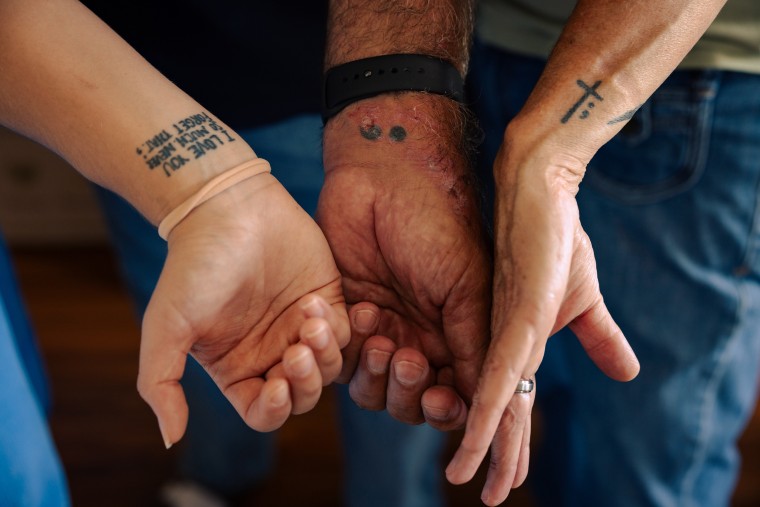 Ellie, Larry and Kandy Lavesseur show the tattoos they got to honor and support Rachel after her suicide attempts.Maansi Srivastava for NBC News
Larry and Kandy wrote a letter to CareFirst in early 2025, asking the company to reconsider its coverage amount for the program. At the time, CareFirst was paying $521 of the $3,300 daily sum, they said.
But CareFirst declined to change its contribution, forcing the Levasseurs — who have an insurance plan for Maryland state employees and retirees — to appeal to the Maryland Insurance Administration, then to the Maryland Department of Budget and Management’s Employee Benefits Division.
If you are dealing with bills that seem to be out of line or a denial of coverage, care or repairs, whether for health, home or auto, please email us at [email protected].
In April, the Employee Benefits Division said the Levasseurs had exhausted their options, stating that the hospital “has not been willing to enter into a single case agreement.”
However, the vice president of Sheppard Pratt, Bryan Mroz, told the Levasseurs in a May email that the hospital “would be willing to enter into a single case agreement to address the current outstanding balance.”
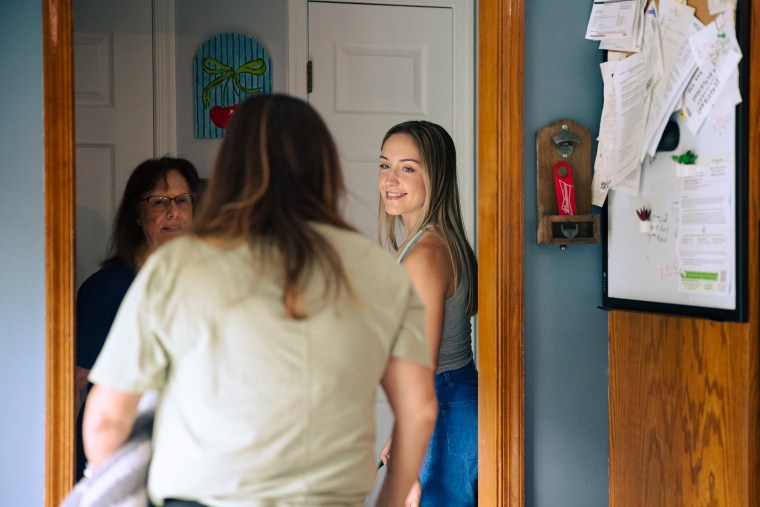 Ellie Levasseur with her grandmother Darlene Fink.Maansi Srivastava for NBC News
The Employee Benefits Division told NBC News the Levasseurs had been in communication with an alternative in-network facility. It added that the state does not negotiate with providers and is not part of Levasseur’s care team.
But the Levasseurs said they have not been in touch with an in-network facility. They said they’ve asked their insurance company to share in-network options that would provide comparable care but were never given any.
‘It was different, because no one was giving up on me’
Levasseur’s childhood bedroom is visual proof of how hard she has worked to overcome her mental health challenges.
In her bathroom is a neatly arranged collage of motivational sayings, including one that says: “I’m so proud of you for still being alive, despite it all.” A newspaper clip hanging across from her bed reads, “The World is Not Better Without You.” On the adjacent wall is the number of the suicide and crisis lifeline.
Larry and Kandy believe a barrier to their daughter’s feeling better has been finding a treatment that accounts for her autism diagnosis.
 Rachel Levasseur’s childhood bedroom is filled with motivational sayings. An E. coli toy on a bookshelf is a reminder of the onset of her OCD, when she became convinced that she was sick and would pass the infection to others. Maansi Srivastava for NBC News
A common treatment for people with suicidal ideation — dialectical behavior therapy — wasn’t the right fit for her, they said. The therapy helps people who have difficulty controlling intense, negative emotions.
In the specialized program, Levasseur received a different treatment called radically open dialectical behavior therapy, which focuses on tapping into suppressed emotions and helping people move away from black-and-white thinking patterns.
That approach, combined with a care team that was more attuned to her needs, seems to have made the difference, Levasseur said.
“When I got to The Retreat, it was different, because no one was giving up on me,” she said. “It just felt like much more of a place where people were very focused on me getting better, and I had a lot more of individualized support.”
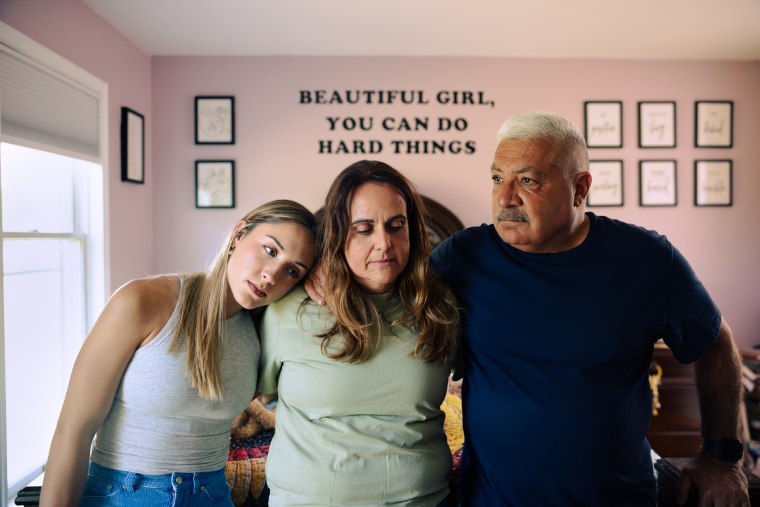 The Levasseurs in Rachel's bedroom. The room is visual proof of how hard she has worked to overcome her mental health challenges. Maansi Srivastava for NBC News
The program seemed to agree that she was improving. Her written treatment plan from last year states: “It is possible she is finally in the appropriate setting she needs to be able to make sustainable progress.”
The Levasseurs believe that, in the long run, the program could save their insurance company money, since in-network providers have delayed her progress so far.
“If they would just cover The Retreat for a time period enough for me to get better, then it would actually probably end up costing less, because then I could stop being in treatment,” Levasseur said.
If you or someone you know is in crisis, call or text 988 or go to 988lifeline.org to reach the 988 Suicide & Crisis Lifeline, or visit SpeakingOfSuicide.com/resources.

























/https%3A%2F%2Fsportsmole-media-prod.s3.gra.io.cloud.ovh.net%2Fuploads%2F2026%2F05%2Fns-collage-background-v2-email-3-6a086d6eaa1a0057506880.jpg)
 Bengali (BD) ·
  English (US) ·