.png)
 9 hours ago
9
9 hours ago
9
It is rare in Hollywood to see directors like Christopher Nolan, whose particular strength as a filmmaker is that he has made a life’s work out of the feeling that certainty is a hoax. In Nolan’s movies, memory and identity are fictions we create in order to stay on the surface. It is then surprising that a man selling doubt is one of the few people (if not the only one) whose name is enough to make a film successful in Hollywood today. Even his most inaccessible movies (Dunkirk and Oppenheimer come to mind) become an event. People, it turns out, still want to be challenged.
The following list is not an evaluation of who is “best.” That concept turns sour the instant it enters the context of business and box office. Rather, it is a measure of who made the industry conform to their obsessions and not vice versa. This ranking measures influence rather than personal taste. Here are the most influential living directors in Hollywood, ranked from bottom to top.
Let’s dive in.
10 Ridley Scott Built the Blockbuster’s Visual Language
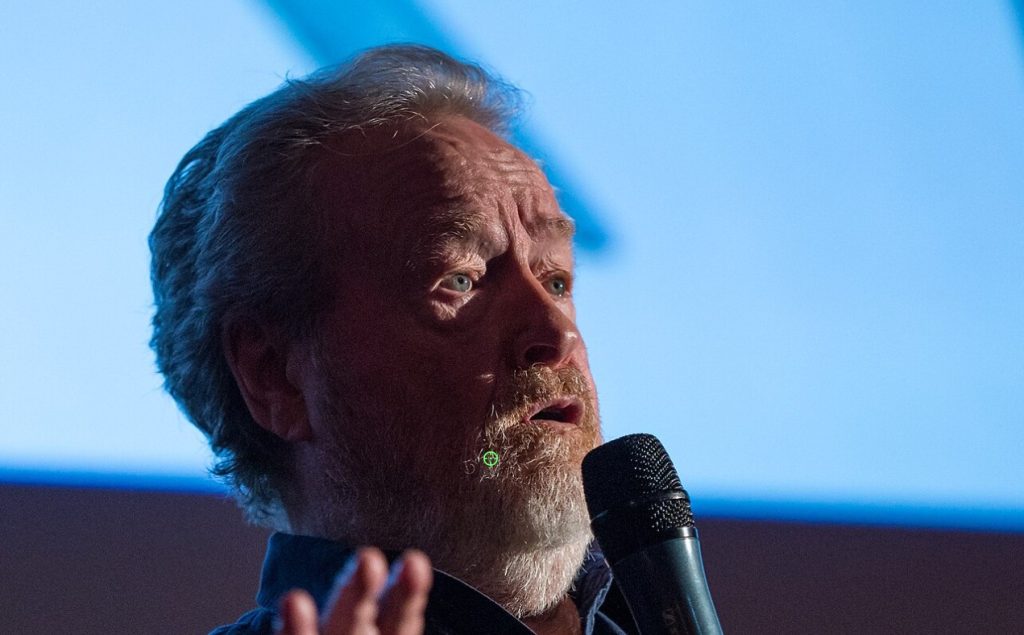 Ridley Scott built the visual vocabulary of two genres | Credits: Image by Bill Ingalls, licensed under the Public domain, via Wikimedia Commons
Ridley Scott‘s Alien is a movie about the body’s treachery, the fear of realizing the body you live inside was never yours to rule, packaged as a haunted-house story on board a garbage scow in outer space. Blade Runner is the impossible effort of proving your own humanity to everybody else and yourself. Scott provided two whole new movie genres (sci-fi horror and cyberpunk) with their full visual arsenal and vocabulary of dread, the industrial passage as bodily cavity, the neon labyrinth as the mind unable to grasp its own limits. Alien remains one of the best sci-fi horror movies ever made.
And then he spent four decades in search of scale, in the Alien prequels nobody needed an explanation for. What he should have continued was the terror and specificity that made the original movies horrifying in the way that only horror movies can be. The fact that he is an influential filmmaker is beyond discussion. The fact that he has been spending decades stripping his own dread from horror is the tragedy behind it.
9 Peter Jackson Rewrote Fantasy’s Rulebook
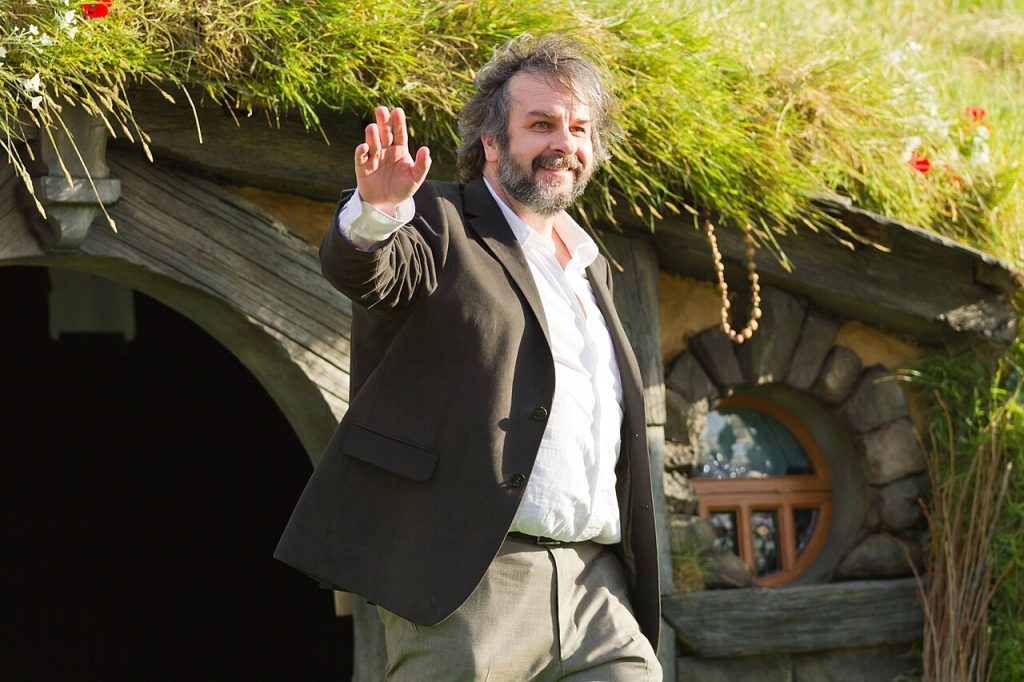 Peter Jackson proved fantasy could dominate at the box office and the Oscars | Credits: Image by Mike Walen, licensed under the CC BY-SA 3.0 via Wikimedia Commons
There is an interpretation of Peter Jackson‘s The Lord of the Rings — which would likely be most forcefully contested by Jackson himself — in which the true theme of the trilogy is not good vs evil but rather the exhaustion of the regular folk caught up in a war of ideologies they did not choose and cannot really understand. This is the reading that allows us to see why the films resonate so deeply beyond being merely fancy cosplay for those who grew up with the novel (yes, there is only one The Lord of the Rings novel), and why Jackson proved that fantasy can dominate at the Oscars and the box office in one swoop. These movies remain some of the best fantasy movies in the last few decades, perhaps ever.
Next, we get to The Hobbit, which illustrates exactly what taking studio mathematics to the process of mythology-building results in: three movies drawn from one slim volume (300 pages), CGI substituted for the tangible grime and lived-in feel of the earlier trilogy’s setting rather than rendered.
8 Guillermo del Toro Turned Genre Into Art
 Guillermo del Toro spent a career arguing that genre deserves the same seriousness as prestige drama | Credit: Image by Gage Skidmore, licensed under the CC BY-SA 2.0 Via Wikimedia Commons
The whole of Guillermo Del Toro’s filmography is a statement that monstrosity is where the truth can be found: the monster with all those sharp teeth is truer to the ugliness of life than the handsome gentleman in the suit. Oh, and fascism is best expressed in fairy tale, for fairy tales have always been about the nature of power and who devours whom. Pan’s Labyrinth and The Shape of Water are not films made in a certain genre and just happened to earn acclaim; rather, they prove that the divide between genre and prestige was a myth from the start.
The fact that Guillermo Del Toro‘s convictions were finally vindicated is less cause for celebration and more cause for delayed acknowledgment. A fair point to make would be that his fixations have become more self-quotation than evolution. But the former is still better than the latter.
7 David Fincher Redefined the Psychological Thriller
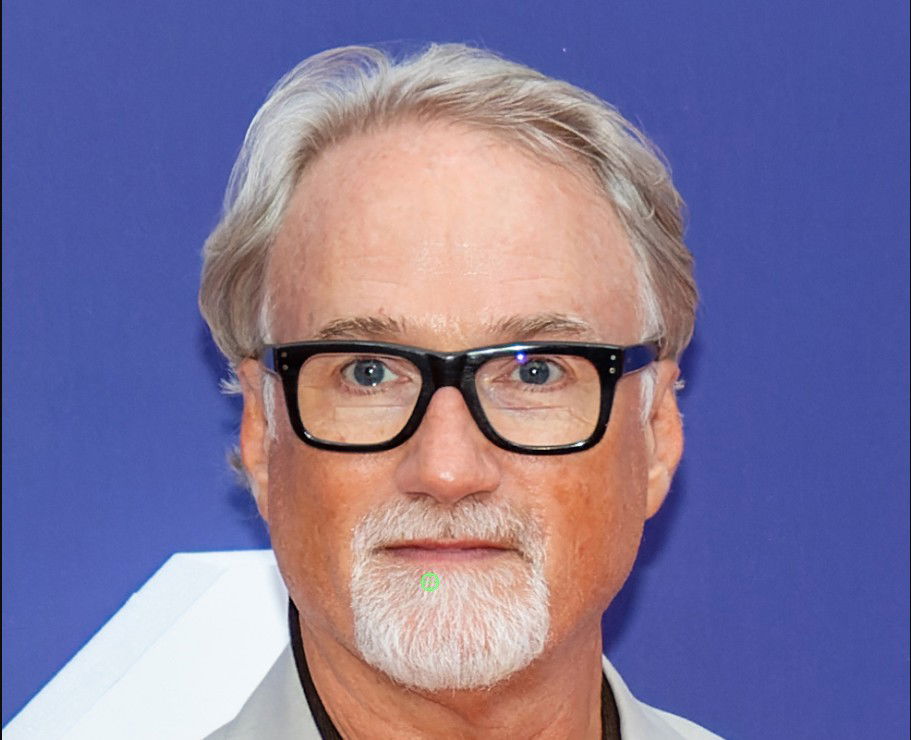 David Fincher built a visual language of cold procedural despair | Credits: Image by Raph_PH, licensed under the CC BY 2.0, via Wikimedia Commons
The movies of David Fincher, despite the cynicism for which he is well-known, are investigations into how thoroughly modern institutions — the police, the corporation, the marriage — let the individuals putting their faith in them down and how that disillusionment manifests itself in chilly procedural despair rather than catharsis. There is no closure for anybody in the movie Zodiac, for instance, and that is the entire point of the story
That sense of controlled despair evolved into its own aesthetic language through the use of desaturation and the chilly, surveillance-camera distance regarding the characters he was depicting. The look but not the feeling of that visual style have been mined by decades of prestige TV that mimicked the style without really understanding it.
6 Denis Villeneuve Made Cerebral Sci-Fi a Box Office Draw
The original Dune had been all along a cautionary tale about how the allure of powerful and charismatic men who offer deliverance via bloodshed works — how the followers of a messiah play into the murder he performs in their wake. It is to Denis Villeneuve‘s very great credit that he has not allowed himself to succumb to that temptation. The urge is not new to him — Arrival took the same risk years ago, hiding within its alien premise a harrowing inquiry into grief and the power of choice.
There is an almost inescapable appropriateness about the success of Dune: a film that warns against the peril of worshipping the wrong hero achieving its success because a hero to worship has been present all along.
The weakness here is that until now, most of what he’s done has consisted of adaptations: Dune, Blade Runner 2049, and even Arrival, which is based on a Ted Chiang short story. It’s second-hand work, and it raises the question if he can sustain that rigor on his own. That said, we cannot wait for Dune: Part Three.
5 Steven Spielberg Invented the Blockbuster Playbook
 Steven Spielberg built the machine that manufactures blockbusters | Credits: Image by Martin Kraft, licensed under the CC BY-SA 4.0
Steven Spielberg‘s Jaws movie, one of the best creature features in Hollywood history, isn’t really about a shark. It’s about how the economic reliance of a town on the tourist dollar takes precedence over its survival instinct, how capitalism devours its people, and the shark just comes after. One must keep in mind that the movie which pioneered the summer blockbuster formula was, under all the histrionics, a somewhat bitter statement on Nixon-era political cynicism.
The fact that Spielberg went on to construct, over the next half century, the most emotionally indulgent and boyishly heartfelt filmography ever made in American cinema — films like E.T. the Extra-Terrestrial, Close Encounters of the Third Kind, Jurassic Park — is the paradox no one can quite get a handle on. Spielberg’s alien movies alone would make a career of most directors working today. The argument against elevating him above his peers isn’t an argument against his films. It’s just that Spielberg, more than anyone below him, built something bigger than himself rather than something inseparable from himself.
4 Martin Scorsese Is Still the Industry’s Gold Standard
Martin Scorsese‘s The Irishman is a film, in structure, about a man whose whole life is spent serving violent men until he dies after having lived long enough not to hear from anyone that it was all worth anything – three-and-a-half hours of a man realizing too late that being loyal to power is a form of self-obliteration.
The fact that Scorsese made such a film at the age of seventy-seven, with no agenda to fulfill, is why he continues to be relevant. His argument with cinema-versus-theme-park wasn’t just old-man crankiness or petulance. It was the greatest living filmmaker perfectly identifying what ailed the medium. The industry couldn’t just write him off. It says something that Scorsese’s best movies are also some of Hollywood’s best movies.
3 Quentin Tarantino Changed How Hollywood Writes Dialogue
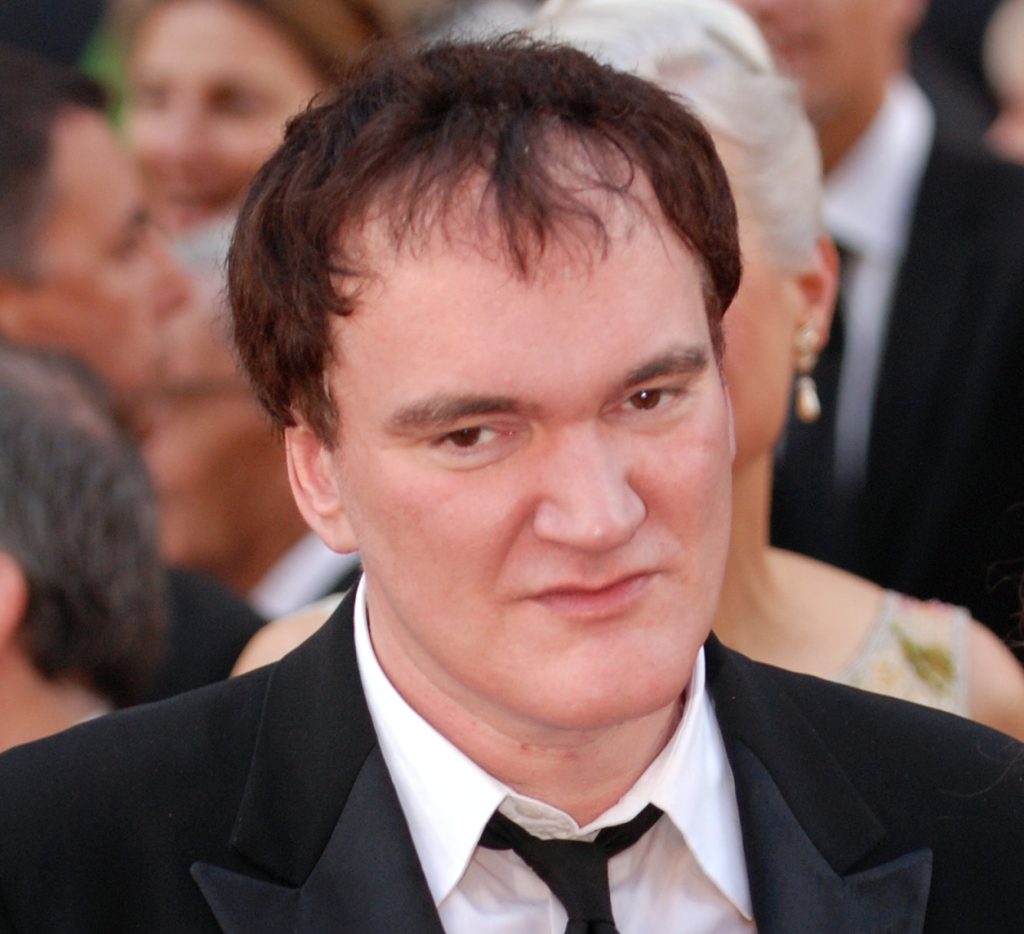 Quentin Tarantino’s characters are always performing cool for each other | Credits: Image by Sgt. Michael Connors, licensed under the Public domain, via Wikimedia Commons
Quentin Tarantino is the best writer in Hollywood if one only considers dialogue. But his dialogue makes sense only insofar as his characters are always in a performative act of trying to be cool in relation to one another, knowing that they are being watched even within the fictional construct of their world. Every conversation then is really just a power struggle masquerading as idle chitchat.
The particular anxiety of that performative act has been parroted by screenwriters and directors of an entire generation, and not just in Hollywood. They get the cadence but miss the terror underneath it — the real critique, and a serious one. However, an influence that is so widely and so poorly imitated is, still, an influence.
2 James Cameron Keeps Dragging Hollywood Into the Future
-

Credits: Image by Kevin Paul, CC BY 4.0, via Wikimedia Commons
-

Credits: Paramount Pictures
-

Credits: 20th Century Fox


James Cameron‘s fixation on technology cannot be divorced from his fixation on bodies pushed beyond their limits: drowned, burned, fused with machines, struggling against the barrier of the physical, and whatnot. His insistence while directing Avatar on creating a 3D infrastructure for which the movie industry was not yet prepared can be read less as a technical flex than as an extension of that second obsession: a director who won’t accept the body’s limits doesn’t accept the camera’s either.
The man waited almost ten years to make the film because he felt that cinema technology had not yet evolved to the point where his vision could be realized. The fair observation is that his stories have always lagged behind his technology, but that is almost a moot point. Cameron’s influence isn’t narrative; it’s structural.
1 Christopher Nolan Turned Blockbusters Back Into Events
Christopher Nolan‘s Oppenheimer is the story of a brilliant man deluding himself into thinking that he is not guilty of horror as long as he can understand it intellectually, that if he knows the physics, then he must be off the hook for any questions of ethics. For this very idea to become the highest-grossing biographical film in movie history (until it was beaten by this year’s Michael), made into a three-hour-long, ruminative film in which a man sits in rooms answering questions posed by men in suits, is a little miracle of our culture that Hollywood has yet to fully come to terms with. Nolan himself interpreted its success as proof of an industry that operates beyond franchises, beyond IP (via Variety), an industry that most studios still cannot believe in despite all the evidence right in front of them. It also, finally, won Nolan his first Best Director Oscar.
The Odyssey took that bet and ran with it right into the mythical territory. It earned him his career-best debut weekend performance with $264 million at the global box office. It was an adaptation of a three-thousand-year-old story about a guy who just can’t find his way home. That is generally not an easy sell in a summer that is usually packed with IP-driven movies and franchise sequels for Hollywood directors. There is a certain defiance in that move, as if Nolan was proving that his film was right and that Homer’s stories were just as pressing and current as anything else. And he proved himself right at the box office. The honest criticism comes from Nolan’s habit of being cold and cerebral, rather than warm and welcoming. His films are a puzzle box that need to be solved before they can be experienced, but that coldness is not really a flaw. It is a stylistic preference. His command of visual scale makes a strong case that a Western should be next on Nolan’s list.
All the directors, summarized:
| 10 | Ridley Scott | Alien, Blade Runner, Gladiator | Established the visual language of sci-fi horror and cyberpunk while influencing epic filmmaking. |
| 9 | Peter Jackson | The Lord of the Rings, The Hobbit | Proved fantasy epics could dominate both the Oscars and the global box office. |
| 8 | Guillermo del Toro | Pan’s Labyrinth, The Shape of Water, Hellboy | Elevated fantasy and monster cinema into prestige filmmaking. |
| 7 | David Fincher | Se7en, Fight Club, Zodiac, Gone Girl | Redefined the psychological thriller with his meticulous visual style and procedural storytelling. |
| 6 | Denis Villeneuve | Dune, Arrival, Blade Runner 2049, Sicario | Made cerebral science fiction a mainstream blockbuster genre. |
| 5 | Steven Spielberg | Jaws, E.T., Jurassic Park, Schindler’s List | Created the modern blockbuster while remaining one of cinema’s most versatile storytellers. |
| 4 | Martin Scorsese | Goodfellas, Taxi Driver, The Irishman, Killers of the Flower Moon | Continues to set the benchmark for auteur-driven American cinema. |
| 3 | Quentin Tarantino | Pulp Fiction, Kill Bill, Inglourious Basterds, Django Unchained | Changed the way Hollywood writes dialogue and approaches nonlinear storytelling. |
| 2 | James Cameron | Avatar, Titanic, The Terminator, Aliens | Repeatedly pushed filmmaking technology forward and reshaped blockbuster filmmaking. |
| 1 | Christopher Nolan | Oppenheimer, The Dark Knight, Inception, Interstellar, The Odyssey | Turned original, auteur-driven blockbusters into global cinematic events. |
Do you agree with this ranking, or would you swap someone in (or out) of the top 10? Tell us which other living directors you think have had the biggest impact on Hollywood in the comments below.

























/https%3A%2F%2Fsportsmole-media-prod.s3.gra.io.cloud.ovh.net%2Fuploads%2F2026%2F03%2Ficonsport-361551-0102-1-69b560866f7b6508942731.jpg)
 Bengali (BD) ·
  English (US) ·