.png)
 1 hour ago
5
1 hour ago
5
Everyone seems to have an opinion about the hydration breaks at this summer's World Cup. Many scoff at the need, suggesting they are another FIFA grab at an ad buy. Others question why they occur at every match, regardless of the local temperature or if the stadium has air conditioning. Those criticisms are fair, but they distract us from a more important story.
Whether or not FIFA has gotten this policy exactly right, the need for hydration breaks underscores a new reality: extreme heat is changing the way the world’s best athletes compete. Instead of debating whether elite players should break for water, we should be asking what a hotter climate means for all athletes, especially the millions of young athletes playing in scorching temperatures this summer.
Heat can be hard for people to take seriously because it doesn’t look like a disaster. Storms, wildfires, and floods come with dramatic imagery of destruction. But heat is often paired with images of kids running through sprinklers or people relaxing at the beach. Research has found those types of images make people less concerned about the dangers of heat. What those images don’t show is what happens in the body. As body temperature rises and humidity limits the body’s ability to cool itself, mild symptoms such as cramps and headaches can progress to shortness of breath, dizziness, confusion, nausea, and ultimately life-threatening heat stroke. In fact, heat stress is the leading cause of weather-related deaths globally and in the US.
Soccer is not the only sport that is being forced to confront the realities of extreme heat. Last summer, a Seattle Mariners pitcher almost collapsed on the mound during a game. Tennis saw Jannik Sinner struggle with the heat at the French Open, and Wimbledon recently activated its heat rule requiring additional breaks. The Tour de France shortened Stage 9, and a lead cyclist questioned whether a summer calendar even made sense anymore. Formula 1’s recent Austrian Grand Prix was officially designated a “heat hazard,” triggering mandatory cooling precautions for drivers. Across sports, elite competition is adapting because the playing environment itself has changed.
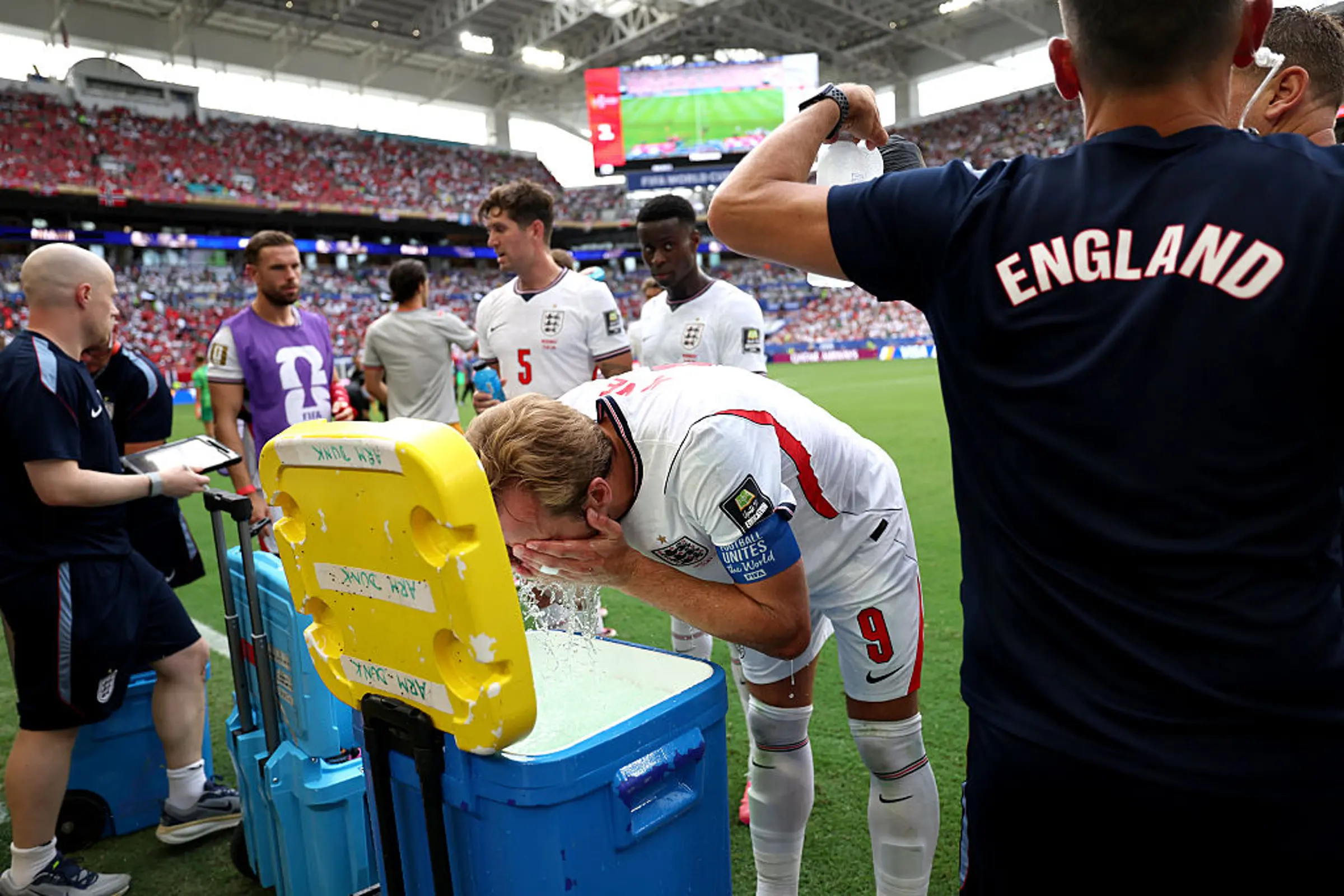
Harry Kane splashes his face with ice water during a hydration break for a FIFA World Cup 2026 Quarter Final match on July 11, 2026 in Miami, Florida. Eddie Keogh—The FA/Getty Images
Yet for our children, fragmented youth sports and camp systems and an unrelenting culture to “just push through it” leave them vulnerable.
I’ve seen the consequences firsthand as a parent on the sidelines. Have you ever noticed the shimmering waves of heat rising off the turf? That’s a playing surface that could be 10 to 30 degrees hotter than the surrounding air. During an early-season heatwave this spring, my daughter’s lacrosse game went ahead, even though the school's softball game was canceled. The temperature was 93 degrees, not including additional heat from turf or the effects of humidity. The team had one sub, no shade, and no additional water breaks. Research shows heat hurts cognitive performance, including reaction time and decision-making. What unfolded wasn’t just a health risk; it was bad lacrosse: dropped passes, sloppy checks, and poor decisions. Playing in these conditions, without adapting to the heat, does little to make kids better players. It makes them less safe and less able to perform at their best.
Too often, adults’ knee-jerk response is to say, “It was hot when I was a kid, and I played in it.” We did have hot days, but our children are growing up in a different climate. April's record-breaking temperatures are different. June was the second-hottest on record behind only June 2024. Heat was a risk when we were kids, but today’s more frequent and intense heat waves make the risks to kids today much greater.
Others may say that athletes, young and old, just need to be tougher. But resilience shouldn’t require ignoring preventable health risks, especially when we know how to reduce them. We don’t ask people to prove they are tough by playing through a concussion or a thunderstorm.
Basic adjustments aren’t complicated: hydration breaks, shade, cold towels, misters, and objective standards to adjust schedules can all help. But they only work if athletes, coaches, and parents recognize the risks and understand the warning signs. We all must recognize the early signs of heat illness and remember three simple steps to take when our bodies tell us it’s time to stop: Speak up. Sit out. Cool down.
During the World Cup final game, there will undoubtedly be more debate about whether the hydration breaks are necessary. But the better conversation is what those breaks tell us. Adapting to the heat isn't about making sports easier; it’s about preserving the game and protecting athletes in a hotter world.
If our best athletes can show the world that adaptation is not only possible, but necessary, we should ensure the same for our kids.


























/https%3A%2F%2Fsportsmole-media-prod.s3.gra.io.cloud.ovh.net%2Fuploads%2F2026%2F07%2Fdaniel-mcgregor-huyer-zuma-press-wire-luciano-gonzalez-anadolu-abacapress-com-estadio-azteca-harry-kane-jude-bellingham-composite-6a49eb8857b70695441164.png)
 Bengali (BD) ·
  English (US) ·