.png)
 9 hours ago
10
9 hours ago
10
Article content
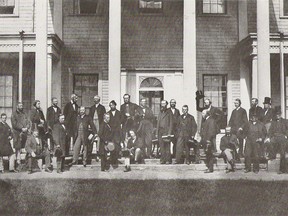
In a landmark 1864 speech, Sir John A. Macdonald, the future first prime minister of Canada, admonished listeners who might be inclined to see the neighbouring United States as a “failure.”

THIS CONTENT IS RESERVED FOR SUBSCRIBERS
Enjoy the latest local, national and international news.
- Exclusive articles by Conrad Black, Barbara Kay and others. Plus, special edition NP Platformed and First Reading newsletters and virtual events.
- Unlimited online access to National Post.
- National Post ePaper, an electronic replica of the print edition to view on any device, share and comment on.
- Daily puzzles including the New York Times Crossword.
- Support local journalism.
SUBSCRIBE FOR MORE ARTICLES
Enjoy the latest local, national and international news.
- Exclusive articles by Conrad Black, Barbara Kay and others. Plus, special edition NP Platformed and First Reading newsletters and virtual events.
- Unlimited online access to National Post.
- National Post ePaper, an electronic replica of the print edition to view on any device, share and comment on.
- Daily puzzles including the New York Times Crossword.
- Support local journalism.
REGISTER / SIGN IN TO UNLOCK MORE ARTICLES
Create an account or sign in to continue with your reading experience.
- Access articles from across Canada with one account.
- Share your thoughts and join the conversation in the comments.
- Enjoy additional articles per month.
- Get email updates from your favourite authors.
THIS ARTICLE IS FREE TO READ REGISTER TO UNLOCK.
Create an account or sign in to continue with your reading experience.
- Access articles from across Canada with one account
- Share your thoughts and join the conversation in the comments
- Enjoy additional articles per month
- Get email updates from your favourite authors
Sign In or Create an Account
or
Article content
“On the contrary, I consider it a marvellous exhibition of human wisdom,” said Macdonald. “It was as perfect as human wisdom could make it.”
Article content
Article content
Macdonald would of course come to be the central figure in the creation of Canada, a country whose entire purpose was to prevent the top half of North America from becoming the United States.
Article content
Article content
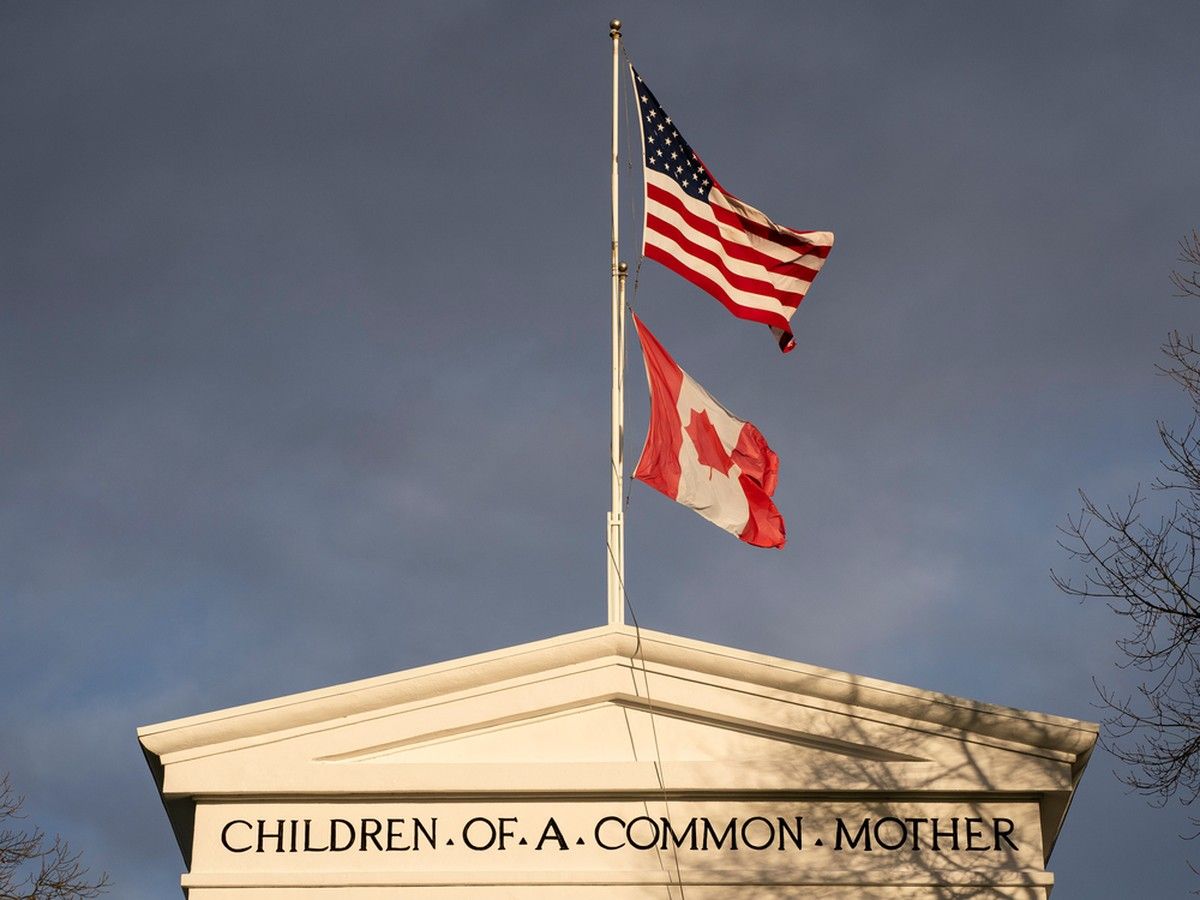
Despite this, there’s little if any America hate to be found in the various speeches, letters and debates that led to Canada’s founding. On the contrary, Canada’s creators admired and respected their southern neighbour, and sought their own country in part because they thought they could build a better version.
Article content
By signing up you consent to receive the above newsletter from Postmedia Network Inc.
Article content
During an 1865 Confederation debate, Quebec politician Henri-Gustave Joly de Lotbinière referred to Americans as a “great people” whose example “dazzled” the average Canadian.
Article content
That same debate would have another representative reference George Washington as the founder of a “great country.” Yet another would praise the U.S. Constitution as a document “laid down by some of the wisest and ablest statesmen.”
Article content
The Legislature of Nova Scotia began its own Confederation debates with a tribute to the United States.
Article content
U.S. President Abraham Lincoln had just been assassinated, and after passing a resolution expressing their “most profound regret” at the “atrocious crime,” they suspended legislative proceedings for the week out of respect.
Article content
In his own landmark 1865 speech making the case for an independent Canada, Father of Confederation George Brown read out a series of U.S. economic statistics in order to argue if Canada did everything right, they might be able to match the “wondrous material progress” of their American neighbours.
Article content
Article content
George-Étienne Cartier, Quebec’s main representative on Confederation, had even lived in the United States for a time as a political exile. As a younger man, he had needed to hide out in Vermont after participating in the 1837 Lower Canadian rebellion against British rule.
Article content
Article content
When British Columbians met in 1870 to debate their entry into Canada, they acknowledged that their prosperity up until that point had been owed to a “powerful and active” United States.
Article content
“The United States hem us in on every side; it is the Nation by which we exist; it is the Nation which has made this Colony what it is,” said B.C. representative Dr. John Sebastian Helmcken.
Article content
This was an era in which Canadians had no shortage of legitimate grievances against their U.S. neighbour.
Article content
The U.S. and Canada had enjoyed a kind of early free trade agreement starting in 1854, only for Canadian industry to be sidelined by the U.S. Congress suddenly cancelling the agreement in 1866.
Article content
What’s more, in this era British North America was regularly plagued by miniature invasions of their territory staged from U.S. soil. Those would be the Fenian Raids, a series of armed invasions of Canadian territory by U.S.-based Irish nationalists.

























/https%3A%2F%2Fsportsmole-media-prod.s3.gra.io.cloud.ovh.net%2Fuploads%2F2026%2F06%2Fkyle-rodden-cal-sport-media-sipa-usa-ivory-coast-winger-yan-diomande-gestures-on-june-25-2026-6a417eae132a5831825833.jpg)
/https%3A%2F%2Fsportsmole-media-prod.s3.gra.io.cloud.ovh.net%2Fuploads%2F2026%2F06%2Fthor-wegner-defodi-images-norway-striker-erling-haaland-watches-on-on-june-26-2026-6a417f27894d6515047302.jpg)
 Bengali (BD) ·
  English (US) ·