.png)
 2 hours ago
8
2 hours ago
8
Article content
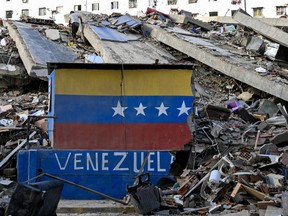
Earthquake victims are overwhelming healthcare centres in Venezuela’s coastal state of La Guaira and beyond, pushing an already fragile health system past its limits.

THIS CONTENT IS RESERVED FOR SUBSCRIBERS
Enjoy the latest local, national and international news.
- Exclusive articles by Conrad Black, Barbara Kay and others. Plus, special edition NP Platformed and First Reading newsletters and virtual events.
- Unlimited online access to National Post.
- National Post ePaper, an electronic replica of the print edition to view on any device, share and comment on.
- Daily puzzles including the New York Times Crossword.
- Support local journalism.
SUBSCRIBE FOR MORE ARTICLES
Enjoy the latest local, national and international news.
- Exclusive articles by Conrad Black, Barbara Kay and others. Plus, special edition NP Platformed and First Reading newsletters and virtual events.
- Unlimited online access to National Post.
- National Post ePaper, an electronic replica of the print edition to view on any device, share and comment on.
- Daily puzzles including the New York Times Crossword.
- Support local journalism.
REGISTER / SIGN IN TO UNLOCK MORE ARTICLES
Create an account or sign in to continue with your reading experience.
- Access articles from across Canada with one account.
- Share your thoughts and join the conversation in the comments.
- Enjoy additional articles per month.
- Get email updates from your favourite authors.
THIS ARTICLE IS FREE TO READ REGISTER TO UNLOCK.
Create an account or sign in to continue with your reading experience.
- Access articles from across Canada with one account
- Share your thoughts and join the conversation in the comments
- Enjoy additional articles per month
- Get email updates from your favourite authors
Sign In or Create an Account
or
Article content
Two powerful 7.2 and 7.5 earthquakes struck within a minute of each other on Wednesday evening, toppling buildings and severely damaging the country’s main international airport. By Friday afternoon, authorities reported nearly 3,400 injured people and a death toll approaching 1,000 nationwide. More than 200 aftershocks had occurred.
Article content
Article content
Article content
The first wave of patients was mainly survivors suffering crush injuries and multiple fractures after being pulled from collapsed buildings. But physicians warn the crisis is entering a more dangerous phase as people trapped for days beneath the rubble began arriving with kidney failure, crush syndrome and limbs that can no longer be saved. Skin infections, gastrointestinal illnesses and psychological trauma are expected to follow in the coming weeks.
Article content
By signing up you consent to receive the above newsletter from Postmedia Network Inc.
Article content
The earthquakes are testing a healthcare system weakened by years of economic collapse, shortages and the exodus of medical workers.
Article content
“This new national tragedy strikes while Venezuela remains in a prolonged humanitarian emergency,” said Huníades Urbina, a pediatric intensive care physician and member of Venezuela’s National Academy of Medicine. “We already lacked the capacity to care for patients on an ordinary day. Imagine what happens when hundreds of people emerge from collapsed buildings needing emergency treatment.”
Article content
According to Urbina, public hospitals entered the disaster with shortages of emergency supplies and surgical material, about half the hospital beds they once had, and radiology equipment that is largely obsolete or no longer functioning. Around 30% of the country’s physicians and 70% of its nurses have left Venezuela over the past decade, he said, citing figures from the Venezuelan Medical Federation.
Article content
Article content
The shortages are evident inside La Guaira’s healthcare centres. At one outpatient clinic on Thursday, electricity was available only through a backup generator powering the vaccine refrigerator. Patients were lying on mattresses, benches and the parking lot pavement because treatment rooms were full, while doctors improvised additional care areas outside the building.
Article content
Article content
Venezuela’s healthcare system was struggling long before the earthquakes, said Jaime Lorenzo, director of the nonprofit organization Médicos Unidos de Venezuela. Patients routinely pay out-of-pocket for diagnostic tests and are often expected to bring their own medical supplies.
Article content
At Ricardo Baquero González Hospital in Caracas, nurses, physicians and medical students worked through the night after the earthquakes. The hospital had only 12 nurses on duty, but “they multiplied themselves by 10,” Lorenzo said.
Article content
By 10 p.m. Wednesday, just four hours after the quakes, the hospital had exhausted critical supplies, including elastic bandages and tetanus vaccines. Residents began arriving with whatever they could spare, including one man who donated diapers that had belonged to his late mother.





















/https%3A%2F%2Fsportsmole-media-prod.s3.gra.io.cloud.ovh.net%2Fuploads%2F2026%2F05%2Fscheffler-6a034d9fca412032057779.jpg)
/https%3A%2F%2Fsportsmole-media-prod.s3.gra.io.cloud.ovh.net%2Fuploads%2F2026%2F06%2Ficonsport-111147-0089-1-6a27d006a81d1227497324.jpg)
/https%3A%2F%2Fsportsmole-media-prod.s3.gra.io.cloud.ovh.net%2Fuploads%2F2026%2F06%2Fimago-xinhua-nestory-irankunda-celebrates-scoring-for-australia-in-the-world-cup-on-june-14-2026-6a2f348854d1b663111439.jpg)
 Bengali (BD) ·
  English (US) ·