.png)
 1 day ago
13
1 day ago
13
Article content
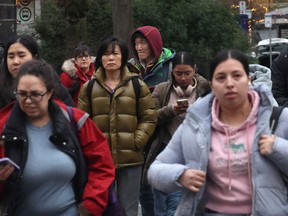
Vancouver’s population shrank by more than 8,000 people from 2024 to 2025, the largest decrease going back more than 20 years, B.C. Stats figures show.

THIS CONTENT IS RESERVED FOR SUBSCRIBERS ONLY
Subscribe now to read the latest news in your city and across Canada.
- Unlimited online access to articles from across Canada with one account.
- Get exclusive access to the Vancouver Sun ePaper, an electronic replica of the print edition that you can share, download and comment on.
- Enjoy insights and behind-the-scenes analysis from our award-winning journalists.
- Support local journalists and the next generation of journalists.
- Daily puzzles including the New York Times Crossword.
SUBSCRIBE TO UNLOCK MORE ARTICLES
Subscribe now to read the latest news in your city and across Canada.
- Unlimited online access to articles from across Canada with one account.
- Get exclusive access to the Vancouver Sun ePaper, an electronic replica of the print edition that you can share, download and comment on.
- Enjoy insights and behind-the-scenes analysis from our award-winning journalists.
- Support local journalists and the next generation of journalists.
- Daily puzzles including the New York Times Crossword.
REGISTER / SIGN IN TO UNLOCK MORE ARTICLES
Create an account or sign in to continue with your reading experience.
- Access articles from across Canada with one account.
- Share your thoughts and join the conversation in the comments.
- Enjoy additional articles per month.
- Get email updates from your favourite authors.
THIS ARTICLE IS FREE TO READ REGISTER TO UNLOCK.
Create an account or sign in to continue with your reading experience.
- Access articles from across Canada with one account
- Share your thoughts and join the conversation in the comments
- Enjoy additional articles per month
- Get email updates from your favourite authors
Sign In or Create an Account
or
Article content
The only other decrease in population during this time was in 2021, when it fell by around 5,000, which was attributed to COVID-19.
Article content
Article content
Across Metro Vancouver, the population is growing much more slowly after years of massive growth, driven primarily by changes in federal immigration policy. But there is also the impact of the high cost of living, especially in the urban core, experts say.
Article content
Article content
The effects of the “tectonic shift” in Canadian immigration will likely be seen over the next 12 to 18 months, said Jock Finlayson, chief economist with the Independent Contractors and Businesses Association and senior fellow with the Fraser Institute.
Article content
By signing up you consent to receive the above newsletter from Postmedia Network Inc.
Article content
“For someone who owns property and has been renting out to newcomers, foreign students or temporary foreign workers, there is less demand and downward pressure on rents, which is good for renters, but bad for owners,” he said. “It’s also bad for businesses that rely on consumer spending. For those still looking to hire, the pool of candidates is dwindling.”
Article content
Later this fall, the federal government will table an updated plan for 2027 to 2029 immigration levels, he said, and while it might relax restrictions a bit, it’s unlikely to be a significant change.
Article content
“It was a big mess and now they are trying to course-correct, but when you do that, it can cause some turbulence,” said Finlayson.
Article content
For over 20 years the populations in Vancouver, Surrey, Burnaby, Richmond and Coquitlam grew pretty steadily every year.
Article content
Starting in 2022, there was a sharp increase as federal immigration policies led to hundreds of thousands of new permanent and temporary residents arriving to bolster post-pandemic economic growth.
Article content
Article content
But in 2025, Ottawa took a U-turn and reduced the target numbers because the demand for housing, infrastructure and public services was driving up costs.
Article content
Article content
Vancouver wasn’t alone in seeing its population drop that year. July 2025 figures show the population in Richmond dropped by just over 2,500 residents, while Coquitlam grew by only 780 and Burnaby by 3,573.
Article content
While Surrey saw the largest population growth in the region in 2025, by 13,372 people, that growth was far more subdued compared with previous years when the population went up by 21,767 (in 2022); 33,463 (in 2023); and 37,788 (in 2024).
Article content
Article content
“Ottawa has changed the rules on temporary residents. They’re forcing students and temporary workers to go home and the city of Vancouver is one of the places hit hardest by that,” said David van Hemmen, vice-president of the Greater Vancouver Board of Trade.
Article content
But van Hemmen said Vancouver remains an “incredibly desirable place to live” and doesn’t foresee major employers turning their backs on Vancouver any time soon.
Article content
“Vancouver is the province’s economic core and no major employer I talk to believes that will change any time soon,” he said. “Many employers still offer some form of remote or hybrid work, too. The economic base is Vancouver, but only three days a week instead of five.”




























 Bengali (BD) ·
  English (US) ·